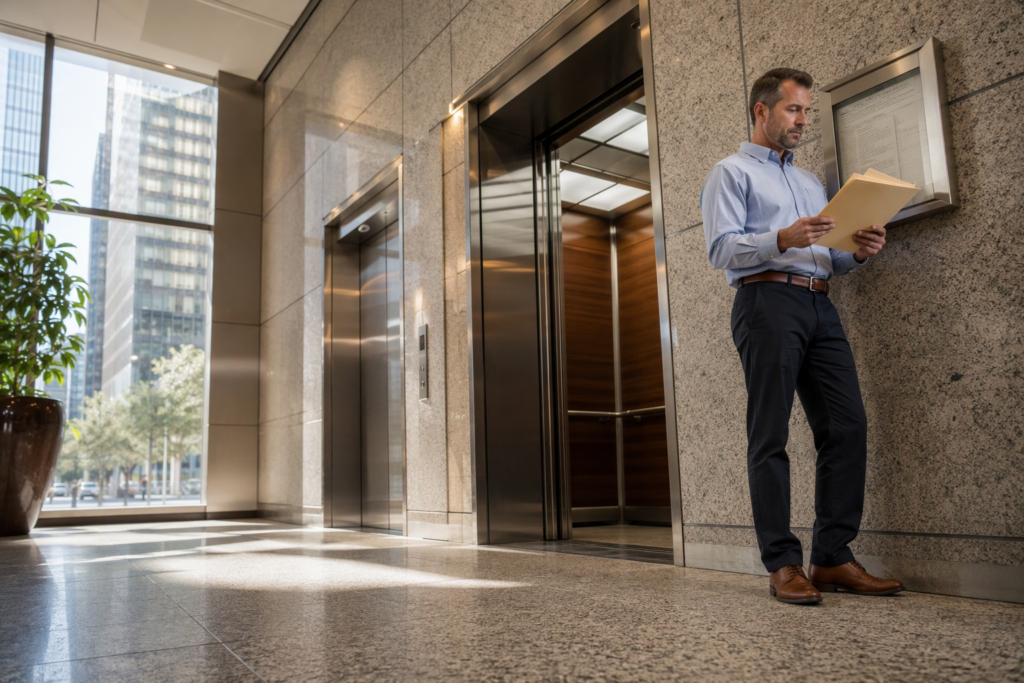
Elevator Modification in Houston, TX | AmeriTex Elevator
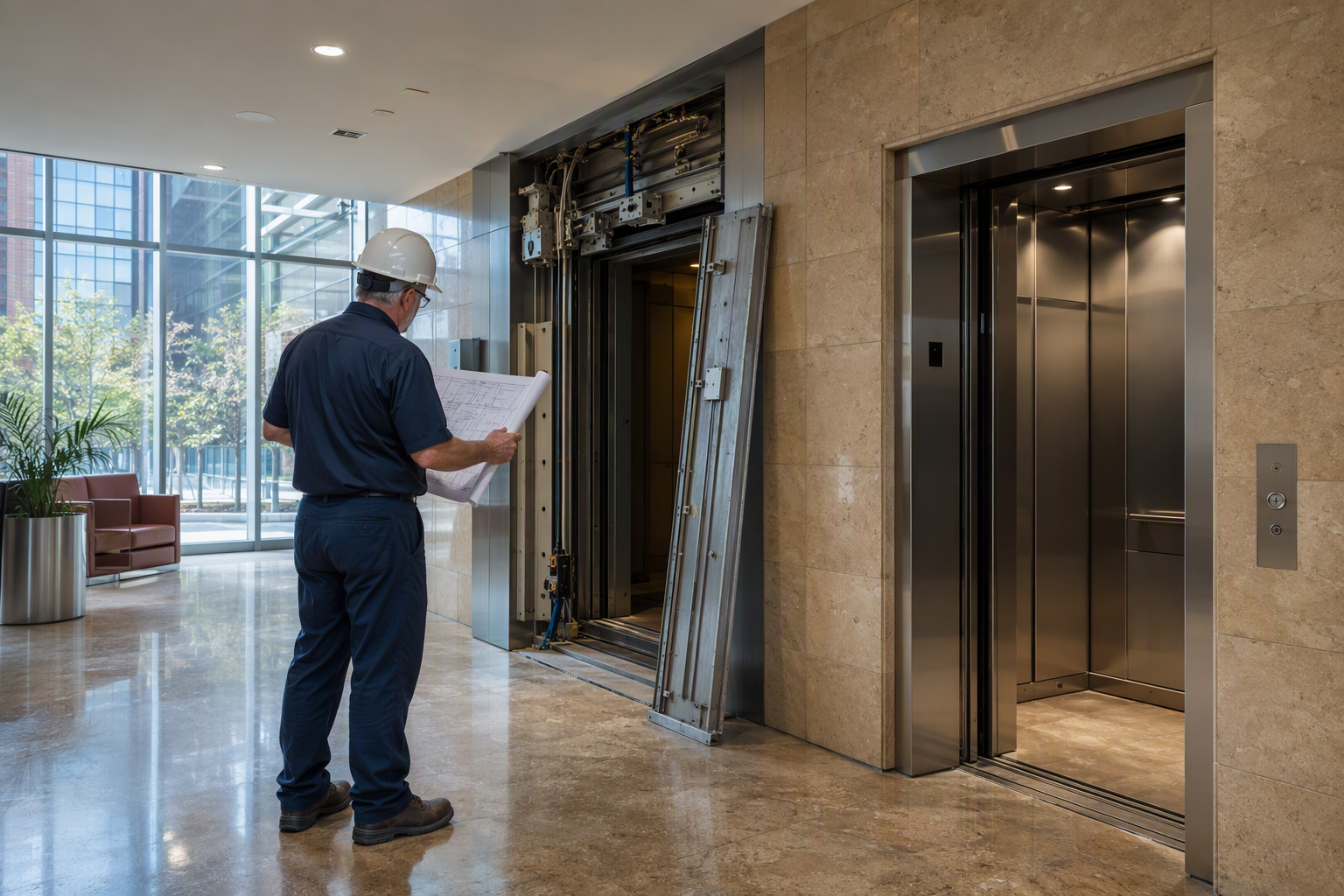
When a Houston building owner needs to modernize aging equipment, expand capacity, upgrade controls, or bring an elevator into compliance with current accessibility requirements, elevator modification is the structured path forward. AmeriTex Elevator provides certified modification services throughout the Greater Houston area, guiding building owners through every phase—from initial assessment and plan submission to final inspection and return to service.
What Is Elevator Modification and When Is It Required?
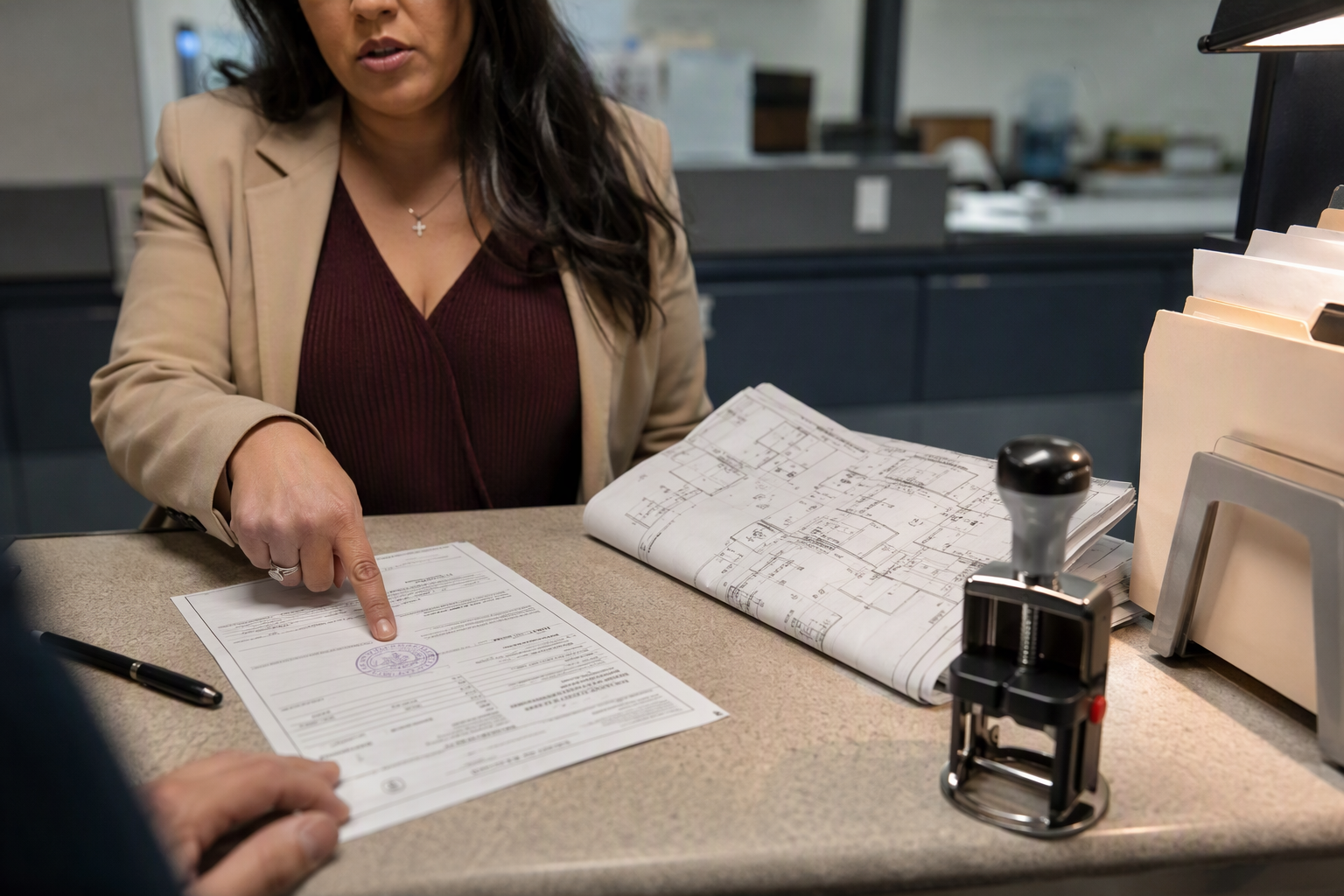
Elevator modification—sometimes called modernization or alteration—covers any change to an elevator’s mechanical, electrical, or structural systems beyond routine maintenance. Common modification scopes include control system upgrades, cab interior renovations, door operator replacements, drive system conversions, and the addition of accessibility features required under the Americans with Disabilities Act (ADA).
Modification is typically triggered by one or more of the following situations:
- Aging components that no longer meet current safety or reliability standards
- Failure to achieve ADA-compliant accessibility for riders with disabilities
- Violations cited during an inspection that require corrective action
- A change in building occupancy or use that demands greater elevator capacity or performance
- Energy efficiency goals that can be met through drive system modernization
Who Regulates Elevator Modification in Houston, TX?
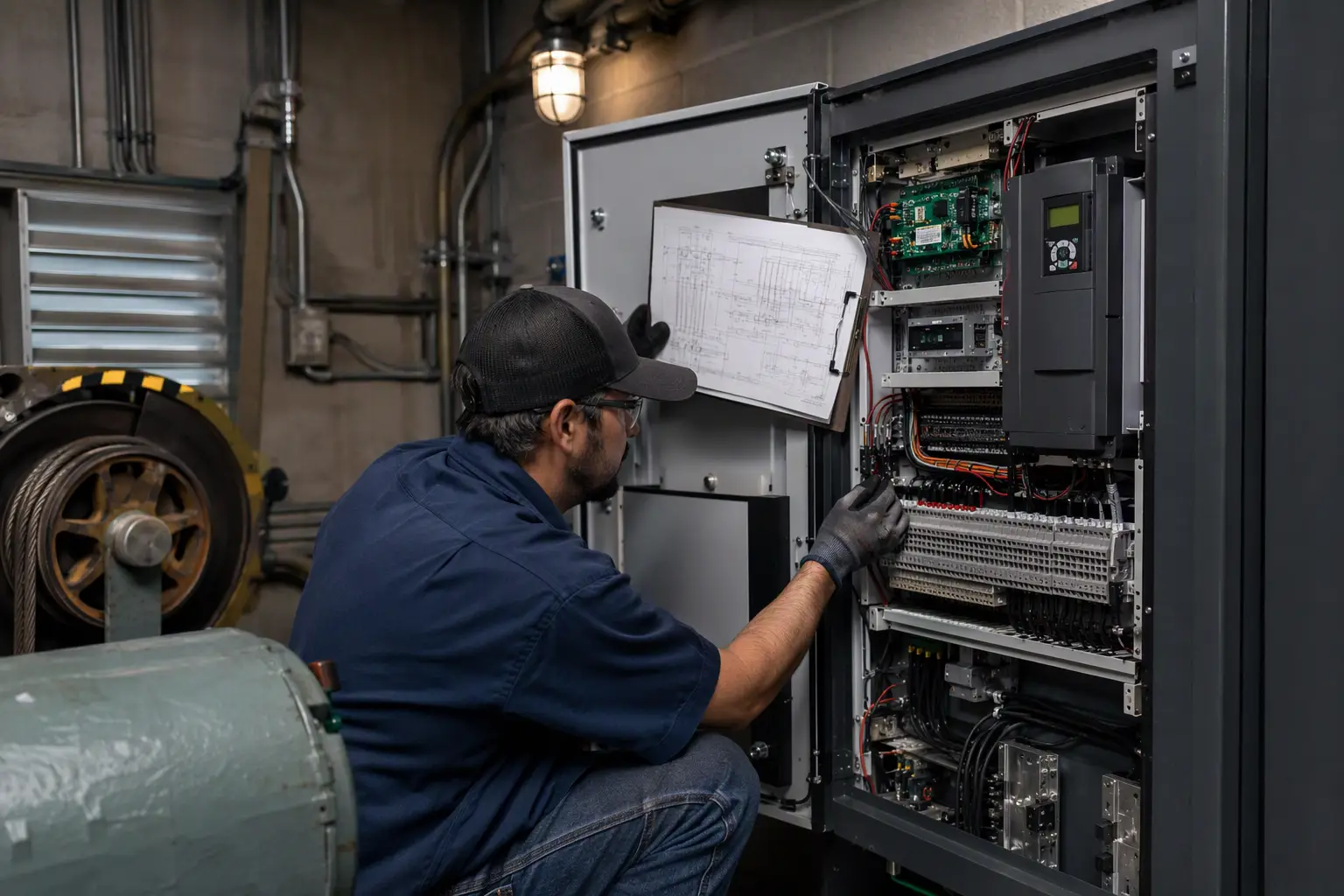
Houston is governed by its own municipal elevator program. Unlike many Texas jurisdictions where the Texas Department of Licensing and Regulation (TDLR) oversees elevator safety under Texas Health and Safety Code Chapter 754 and 16 Texas Administrative Code Chapter 74, the City of Houston operates an independent program with its own permitting and inspection authority. TDLR does not regulate elevators or escalators inside Houston city limits.
Building owners and contractors planning a modification in Houston must work directly with the City of Houston’s elevator program for permits, plan reviews, and inspections. AmeriTex Elevator coordinates with the appropriate local authority on behalf of clients to keep projects moving through the approval process efficiently.
What Permits and Approvals Are Needed Before Modifying an Elevator in Houston?
Because Houston administers its own program, the specific permit process follows the City’s requirements rather than the statewide TDLR framework. In general terms, any material alteration to elevator equipment requires:
- Pre-modification review: Identify the full scope of work and confirm which components are being altered so the correct permit category applies.
- Plan submission: Prepare and submit engineering drawings and specifications to the City of Houston’s elevator authority for approval before work begins.
- Permit issuance: Obtain the appropriate permit. Work should not commence until the permit is in hand.
- Modification work: A registered contractor performs all alteration work in accordance with the approved plans and applicable code requirements.
- Inspection: The City’s inspector examines the completed modification to verify compliance.
- Certificate of compliance: Once the unit passes inspection, the appropriate certificate or permit to operate is issued and displayed as required.
- Return to service: The elevator is cleared for public use only after all approvals are in place.
AmeriTex Elevator manages this workflow for clients, reducing the risk of delays caused by incomplete documentation or unanticipated code questions.
How Do Federal Safety Codes Apply to Houston Elevator Modifications?
Regardless of which local authority governs permitting, elevator modifications must satisfy the ASME A17.1/CSA B44 Safety Code for Elevators and Escalators, which sets the baseline for design, construction, and alteration of elevator equipment across North America. The applicable edition of the code is determined by the jurisdiction; because the City of Houston runs its own program, the specific adopted edition should be confirmed with the City directly.
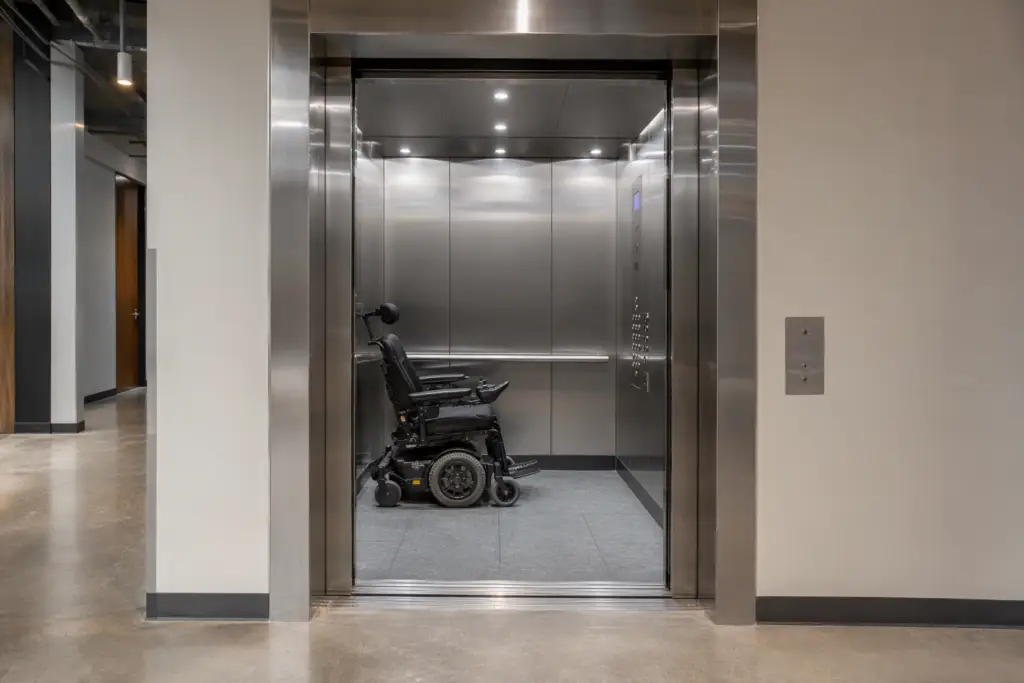
Federal accessibility law under the ADA also applies whenever a modification affects the usability of the elevator by people with disabilities. ADA requirements address door width, leveling accuracy, control button placement and labeling, two-way emergency communication, and cab dimensions, among other elements. AmeriTex Elevator incorporates ADA compliance review into every modification project to help building owners avoid post-construction accessibility complaints or enforcement actions.
Workplace safety requirements enforced by OSHA govern how modification work is performed on-site, including lock-out/tag-out procedures, confined space protocols, and fall protection during the alteration process.
What Are the Most Common Types of Elevator Modifications in Houston Buildings?
Houston’s building stock is diverse, ranging from mid-century office towers in the Texas Medical Center and Downtown to newer mixed-use high-rises, industrial facilities, and multifamily residential properties. Common modification projects across these property types include:
- Control system modernization: Replacing relay-based or older solid-state controllers with modern microprocessor systems to improve reliability, energy efficiency, and dispatching performance.
- Drive system upgrades: Converting hydraulic units or older traction drives to machine-room-less (MRL) or variable-voltage variable-frequency (VVVF) drive systems.
- Door operator replacement: Updating worn or unreliable door operators and safety edges to reduce door-related incidents and improve cycle times.
- Cab renovation: Refreshing interior finishes, flooring, lighting, and handrails to meet building standards or tenant expectations.
- Firefighters’ service upgrades: Ensuring Phase One and Phase Two firefighters’ service systems are fully operational—a critical compliance requirement in Texas, where a passenger elevator with non-working Phase One firefighters’ service must be removed from service immediately.
- Accessibility upgrades: Adding or repositioning controls, installing audible and visual indicators, improving leveling accuracy, and widening door clearances to achieve ADA compliance.
- Emergency communication upgrades: Modernizing two-way communication systems within elevator cabs.
How Long Does an Elevator Modification Project Typically Take?
Project duration depends on the scope of modifications, parts availability, permit processing times, and the operational constraints of the building. A targeted component replacement—such as a door operator swap—may be completed within days once materials are on hand and permits are issued. A full modernization of the control, drive, and cab systems in a multi-car installation is a more extensive undertaking that requires careful scheduling to minimize disruption to building occupants.
AmeriTex Elevator works with building owners and property managers early in the planning process to establish realistic timelines, identify long-lead equipment items, and develop phasing strategies that keep at least one elevator in service when a building operates multiple units.
What Should Building Owners Do After an Elevator Modification Is Completed?
- Confirm inspection and certificate status: Verify that the City of Houston has completed its post-modification inspection and issued the appropriate certificate before returning the elevator to full service.
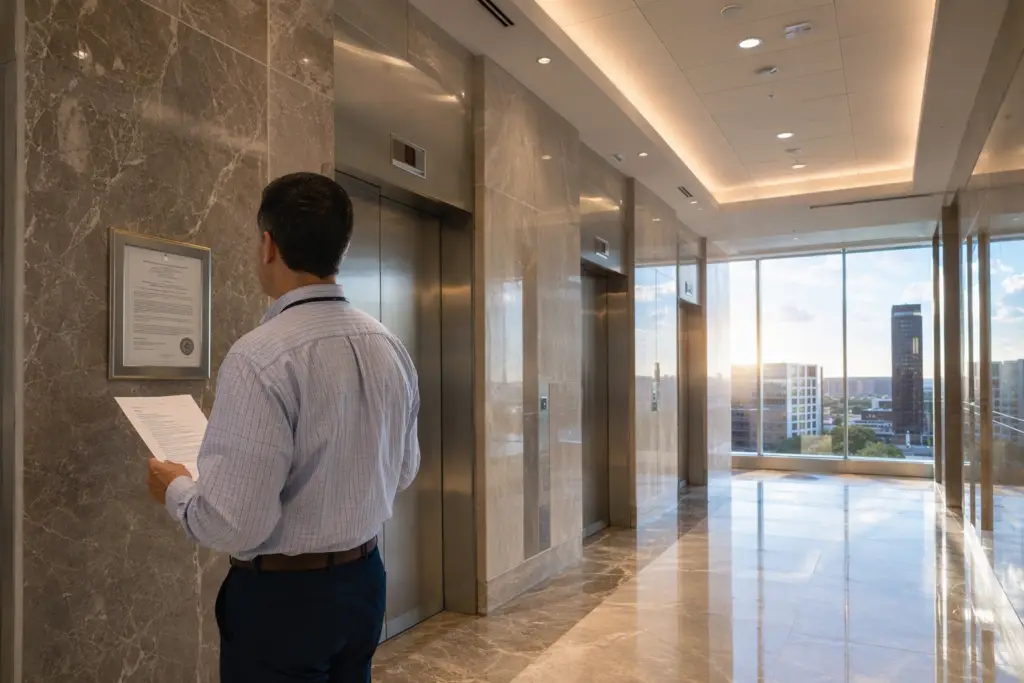
- Display required documentation: Ensure any certificate or permit to operate is displayed in a publicly visible location as required by the applicable authority.
- Update maintenance records: Record all altered components, installation dates, and inspection results so future service technicians and inspectors have an accurate maintenance history.
- Schedule the next annual inspection: Even after modification, elevators in Houston require ongoing periodic inspection. Building owners are responsible for keeping inspection schedules current.
- Establish or review a maintenance agreement: A preventive maintenance program is the most effective way to protect the investment made in a modification and maintain long-term reliability.
Why Do Houston Building Owners Choose AmeriTex Elevator for Modifications?
AmeriTex Elevator brings focused expertise to the Houston market across a wide range of property types—commercial office, healthcare, hospitality, retail, industrial, and multifamily residential. The team understands the City of Houston’s local elevator program requirements and coordinates directly with inspectors and plan reviewers to keep modification projects on track.
AmeriTex Elevator’s work scope spans the full modification lifecycle: initial assessment, scope development, permit coordination, equipment procurement, installation, testing, and post-modification maintenance. Clients receive a single point of contact throughout the project, with clear communication at every milestone. Emergency service availability means that if a recently modified elevator experiences an unexpected issue after return to service, building owners can reach AmeriTex Elevator for prompt support.
Schedule a free consultation with AmeriTex Elevator at 844-646-9660.
Need elevator service you can rely on? AmeriTex Elevator is ready to help.