Elevator Phone Replacement: Complete FAQ Guide for Building Owners
Elevator emergency phones are among the most safety-critical components in any elevator system. Whether a unit has failed, become non-compliant with updated codes, or simply reached the end of its service life, replacing it correctly requires understanding federal code requirements, state regulatory obligations in Texas and California, and the technical specifications of modern two-way communication devices. This guide answers the most common questions building owners, property managers, and facilities directors ask about elevator phone replacement.
What Is Elevator Phone Replacement and Why Is It Necessary?
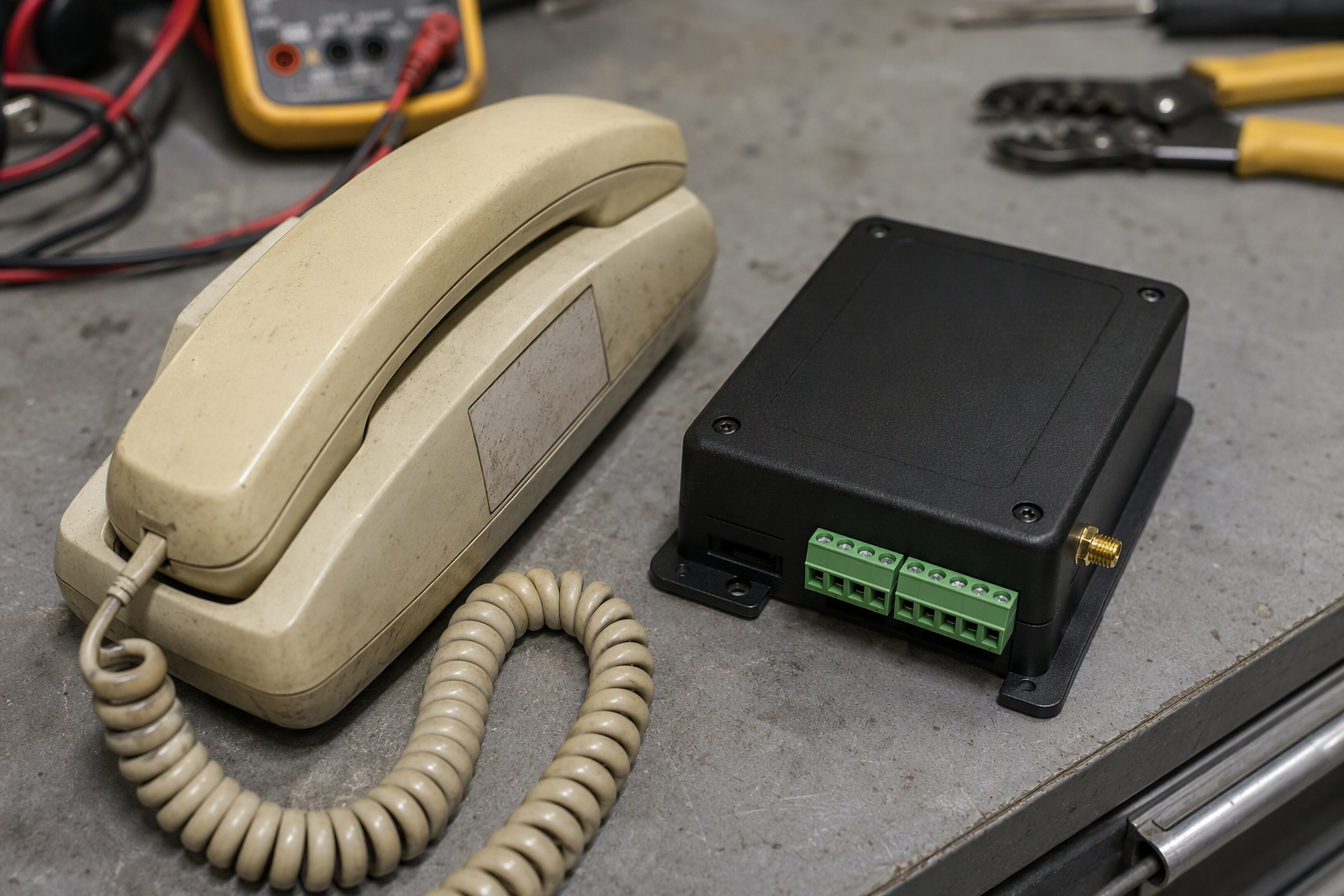
Elevator phone replacement is the process of removing an existing two-way emergency communication device from an elevator cab and installing a new, code-compliant unit that allows passengers to contact help during an entrapment or emergency.
The ASME A17.1 Safety Code for Elevators and Escalators requires that every elevator cab be equipped with a means of two-way communication that connects passengers directly to a location where assistance can be summoned. When a phone unit fails regular testing, loses its connection due to infrastructure changes, or falls out of compliance with the applicable code edition adopted in the jurisdiction, replacement is not optional — it is a legal and safety obligation. Beyond compliance, a non-functioning emergency phone can expose building owners to significant liability if a passenger becomes trapped and cannot call for help.
How Do I Know When an Elevator Phone Needs to Be Replaced?
An elevator phone needs replacement when it fails a monthly or annual communication test, produces no dial tone, cannot complete a call, is connected to a discontinued landline, or no longer meets the two-way communication requirements of the adopted code edition in the jurisdiction.
There are several practical indicators building owners should watch for. Traditional analog (POTS — Plain Old Telephone Service) landline networks have been progressively retired across the United States, which has rendered many older elevator phones non-functional without replacement. If the phone relies on a copper landline that has been disconnected or migrated to a digital network, the unit may appear intact while being completely inoperable in an emergency. Additionally, if an elevator undergoes a modernization or alteration, the communication system must be brought into compliance with current code requirements at the time of the alteration.
What Federal Codes Govern Elevator Emergency Phone Requirements?
Two federal frameworks govern elevator emergency communication at the national level.
First, ASME A17.1 establishes the performance requirement for two-way communication in elevator cabs. The code requires that passengers be able to initiate contact with a monitoring location without prior knowledge of the system and that the call be answered by a person capable of summoning assistance. The phone must operate hands-free so that a passenger who is injured or incapacitated can still communicate.
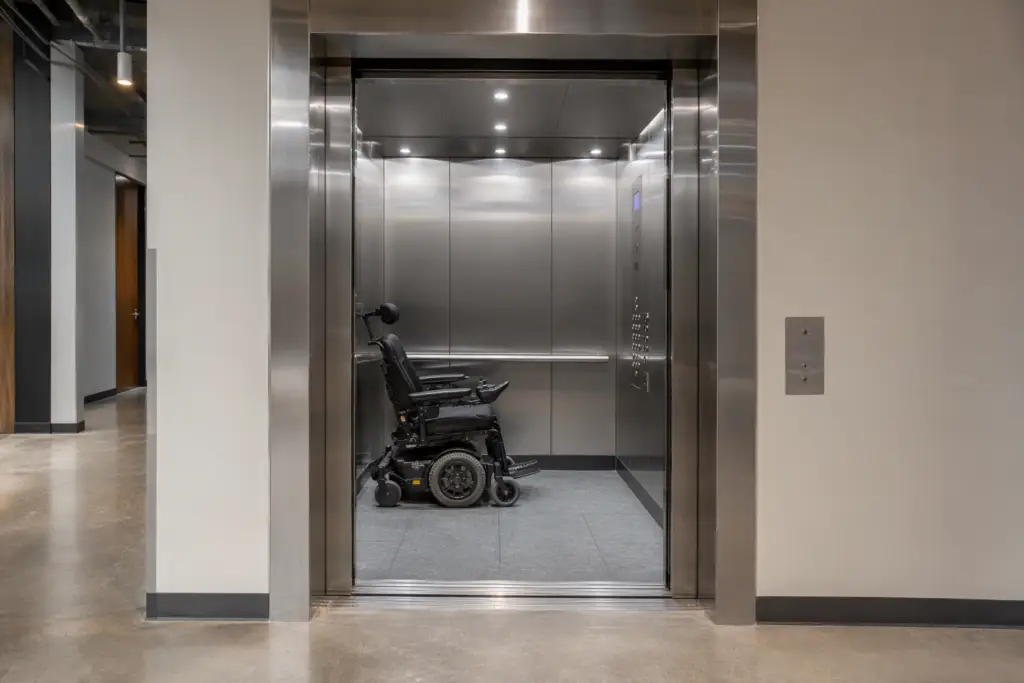
Second, the Americans with Disabilities Act (ADA) imposes accessibility requirements on elevator communication systems. Under ADA Standards for Accessible Design, the emergency communication system must be usable by individuals who are deaf or hard of hearing. The control buttons must be raised or flush, and the system must provide both audible and visual signals. Building owners should consult with their elevator contractor about how current ADA requirements apply to their specific installation, as interpretations and enforcement guidance can evolve.
How Does Texas Regulate Elevator Phone Compliance?
In Texas, elevator safety is administered by the Texas Department of Licensing and Regulation (TDLR) under the Elevator and Escalator Safety program, governed by Texas Health and Safety Code Chapter 754 and 16 Texas Administrative Code Chapter 74. Texas has adopted the ASME A17.1/CSA B44, 2016 edition as its state elevator code, effective November 1, 2018.
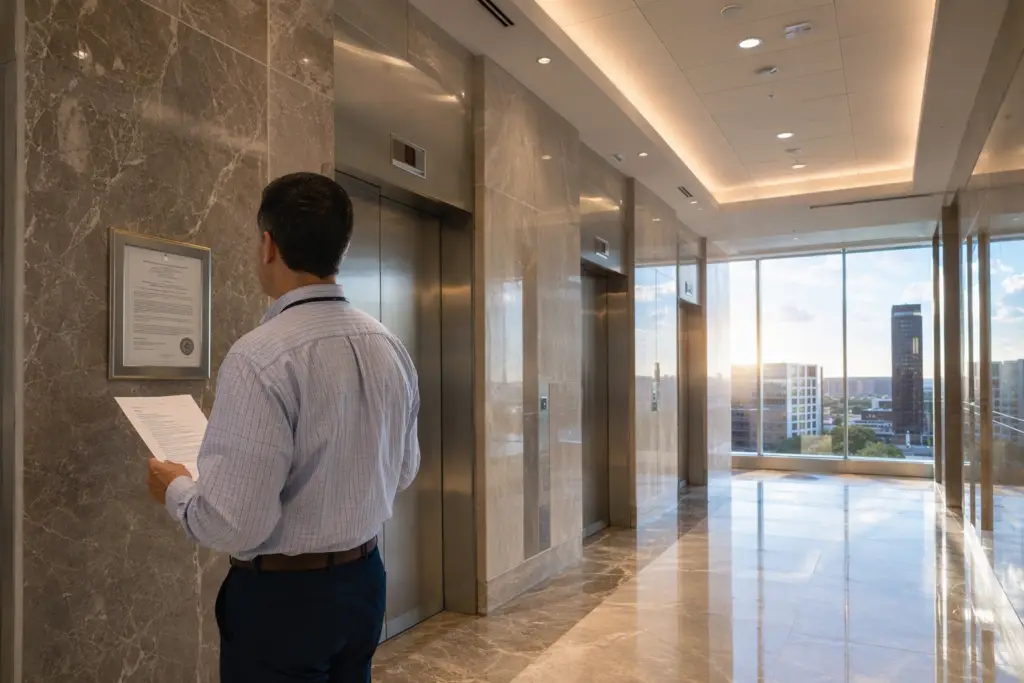
Under the Texas program, building owners must have each elevator inspected annually by a TDLR-registered elevator inspector and must obtain a TDLR Certificate of Compliance for each unit. That certificate must be displayed in a publicly visible area of the building. If an inspection reveals that the emergency phone is non-functional or non-compliant, the owner must have the violation corrected or under contract to be corrected within 30 days, or obtain a waiver or delay from TDLR.
It is important to note that TDLR does not regulate elevators inside Houston city limits. The City of Houston runs its own elevator program. Building owners with elevators in Houston should contact the City of Houston directly to confirm applicable requirements and inspection procedures.
Only contractors registered with TDLR may install, repair, alter, test, or maintain elevator equipment in Texas. Texas elevator contractor registrations expire one year after issuance, and contractors must carry general liability insurance of at least $1,000,000 per occurrence for bodily injury or death and $500,000 per occurrence for property damage. AmeriTex Elevator is a registered Texas elevator contractor and can manage phone replacement projects in full compliance with TDLR requirements.
How Does California Regulate Elevator Phone Compliance?
In California, elevator safety is administered by the Division of Occupational Safety and Health (Cal/OSHA), Elevator Unit, California Department of Industrial Relations. The program is governed by California Labor Code Sections 7300–7324.2 and the California Code of Regulations, Title 8, Elevator Safety Orders (Sections 3000–3146). California has adopted the ASME A17.1/CSA B44, 2004 edition under its Group IV Elevator Safety Orders, effective May 1, 2008, for installation contracts signed on or after that date.
No elevator may be operated in California without a valid, current permit to operate issued by Cal/OSHA. California law requires every conveyance to be inspected at least once a year, and arranging that annual reinspection is the building owner’s responsibility. A conveyance found safe receives a permit to operate for up to one year. Cal/OSHA may issue a permit for up to two years for an elevator in safe condition that is covered by a full maintenance contract with a C-11 licensed elevator company. The permit to operate must be posted conspicuously in the elevator car.
If a phone replacement constitutes a material alteration to the elevator, California law requires the owner to obtain a permit from Cal/OSHA before work begins. Only companies certified by Cal/OSHA as a Certified Qualified Conveyance Company (CQCC) — holding a C-11 Elevator Contractor license issued by the California Contractors State License Board (CSLB) — may perform the work. All hands-on work must be performed by a Cal/OSHA-certified Certified Competent Conveyance Mechanic (CCCM). AmeriTex Elevator holds the required California certifications and licenses to perform elevator phone replacement work throughout the state.
Building owners in Los Angeles should be aware that the City of Los Angeles, Department of Building and Safety (LADBS), runs its own elevator and conveyance inspection program. Owners with equipment in Los Angeles should confirm applicable local requirements directly with LADBS in addition to Cal/OSHA obligations.
California’s requirements regarding visual and audible components of elevator emergency communication systems involve interactions between the Elevator Safety Orders and other California building regulations that have not been fully resolved. AmeriTex Elevator recommends that California building owners consult with our team and, where appropriate, with Cal/OSHA to confirm the specific communication requirements that apply to their installation before selecting a replacement unit.
What Are the Main Types of Elevator Phone Replacement Units Available Today?
Modern elevator phone replacement units fall into several categories based on the underlying communication technology.
Cellular (4G LTE / 5G) units use a built-in SIM card and cellular network connection to place calls without any telephone landline. These have become the most common replacement solution as POTS networks are retired, and they eliminate dependence on a building’s telephone infrastructure. They require adequate cellular signal at the elevator location, which can be verified before installation.
VoIP (Voice over Internet Protocol) units connect through the building’s internet network. They are effective where cellular signal is limited but require the building’s internet connection to remain operational during a power outage unless backed up by an uninterruptible power supply.
Analog POTS units remain available but are appropriate only where an active, reliable copper landline is present and is not scheduled for retirement. Given the national trend toward POTS network discontinuation, AmeriTex Elevator generally advises against new POTS-based installations unless the landline infrastructure is confirmed to be stable for the expected service life of the equipment.
Combination units incorporate cellular and VoIP capability with automatic failover, providing redundancy if one communication pathway becomes unavailable.
All replacement units selected for projects AmeriTex Elevator performs are chosen for compliance with the ASME A17.1 edition adopted in the applicable jurisdiction and with ADA accessibility requirements.
What Does an Elevator Phone Replacement Project Involve?
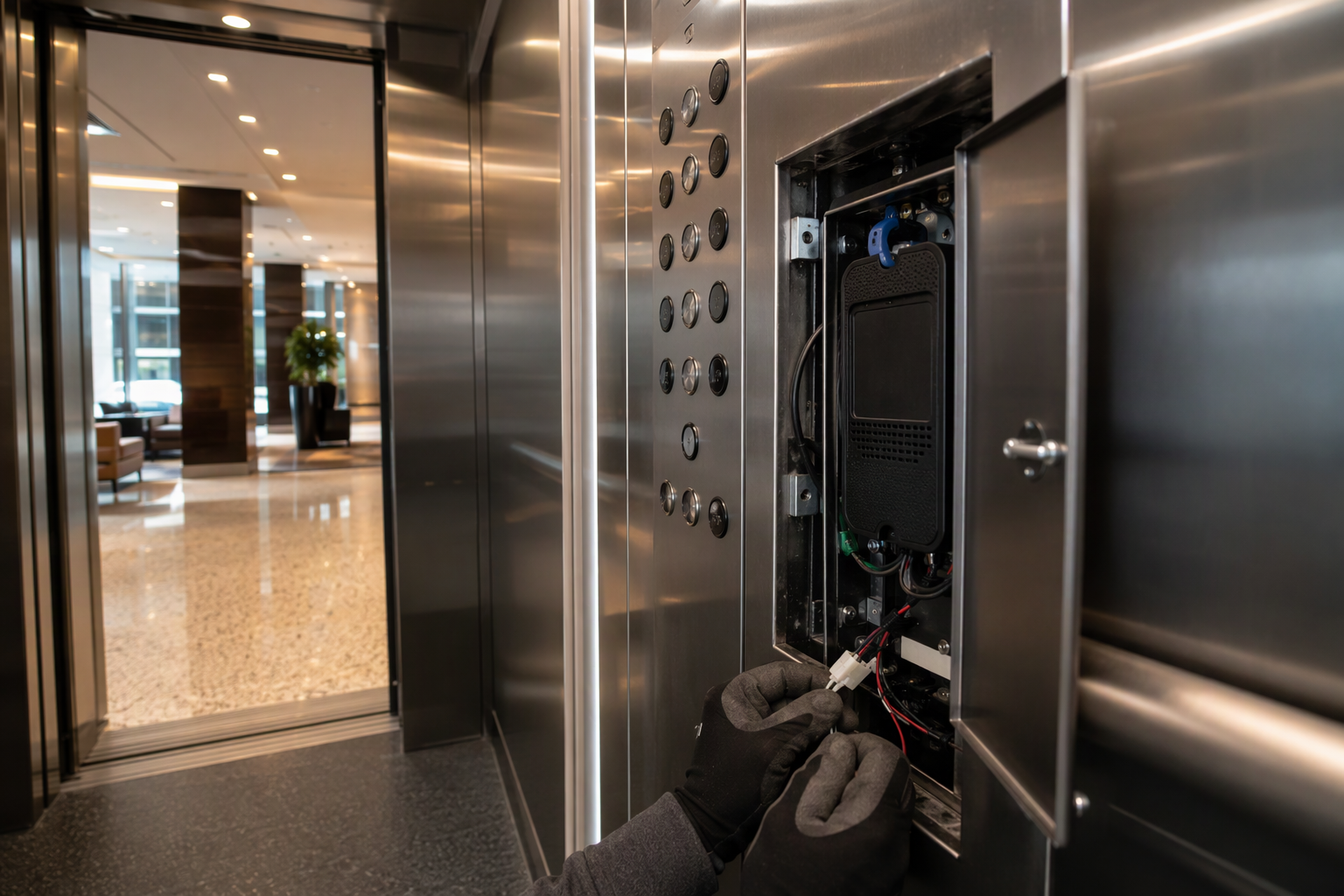
A typical elevator phone replacement project involves several sequential steps. First, AmeriTex Elevator conducts a site assessment to evaluate the existing communication infrastructure, cellular signal strength at the elevator location, power supply to the phone unit, and the condition of the cab panel where the phone is mounted.
Second, we confirm the code edition applicable to the elevator under the jurisdiction’s adopted ASME A17.1 edition and confirm ADA requirements that apply to the installation. For Texas installations subject to TDLR oversight, we confirm TDLR registration requirements. For California installations, we confirm whether the replacement constitutes a material alteration requiring a Cal/OSHA permit before work begins.
Third, we select an appropriate replacement unit, obtain any required permits, remove the existing phone, install and wire the new unit, program the monitoring call destination, and conduct a complete functional test of the two-way communication system.
Fourth, we provide the building owner with documentation of the completed work, test results, and any updated inspection or permit records required by the applicable state regulatory authority.
How Often Should Elevator Emergency Phones Be Tested?
ASME A17.1 requires periodic testing of the two-way emergency communication system. Building owners and facilities managers should perform a functional test of the phone on at least a monthly basis to confirm that a call connects successfully to the monitoring location and that two-way voice communication is clear. A more comprehensive test is performed as part of the annual inspection required in both Texas and California.
In Texas, the annual inspection by a TDLR-registered elevator inspector will include verification that the emergency communication system is functional. In California, Cal/OSHA’s annual inspection includes confirmation that the emergency communication system meets the requirements of the adopted code edition. Building owners should maintain a written log of monthly phone tests to demonstrate ongoing compliance and due diligence.
If a monthly test reveals that the phone is not functioning — no dial tone, no answer at the monitoring location, or one-way audio only — the issue should be treated as an urgent repair, not a routine maintenance item. An elevator with a non-functional emergency phone may need to be removed from service depending on the jurisdiction’s requirements and the nature of the failure.
What Is a Monitoring Service and Is It Required?
An elevator monitoring service is a staffed call center that answers emergency calls placed from elevator phones and dispatches assistance when a passenger is trapped or in distress. ASME A17.1 requires that two-way communication connect passengers to a location where assistance can be summoned — which in practice means either a staffed on-site location or a third-party monitoring center that operates continuously.
For most commercial and residential buildings, a third-party monitoring service is the practical solution, since on-site staff are not present around the clock. The monitoring service receives the call, communicates with the trapped passenger, and contacts the building’s elevator service company or emergency services as appropriate.
When replacing an elevator phone, building owners must confirm that the new unit is programmed to reach an appropriate monitoring location and that the monitoring service is active before the elevator is returned to service. AmeriTex Elevator can advise building owners on monitoring service options and ensure that the replacement unit is correctly programmed as part of the installation process.
What Happens if an Elevator Phone Fails During an Inspection?
If an elevator phone fails during an annual inspection in Texas, the TDLR-registered inspector will note the violation in the inspection report, which must be provided to the building owner within five calendar days. The owner must then have the violation corrected or under contract to be corrected within 30 days, or obtain a waiver or delay from TDLR. A Certificate of Compliance will not be issued for a unit with an uncorrected violation.
In California, if Cal/OSHA’s inspection reveals that the emergency communication system is non-functional or non-compliant, Cal/OSHA may withhold or revoke the permit to operate. An elevator without a valid permit to operate may not legally be used. The owner is responsible for arranging and funding corrective work by a CQCC-certified contractor before the elevator can be returned to service.
In both states, AmeriTex Elevator recommends treating emergency phone failures as priority repairs rather than waiting for an inspection to surface the issue. Proactive monthly testing and prompt repair of any identified failures is the most effective way to maintain compliance and avoid enforcement action.
Can a Building Owner Replace an Elevator Phone Without a Contractor?
In Texas, the law requires that any person who installs, repairs, alters, tests, or maintains elevator equipment must be registered as a contractor with TDLR. Self-performance by a building owner or their general maintenance staff is not permitted under the Texas elevator program.
In California, work on an elevator must be performed by a Certified Competent Conveyance Mechanic working for a Certified Qualified Conveyance Company. Building owners and general maintenance personnel are not authorized to perform this work.
Attempting to replace an elevator phone without a properly credentialed contractor not only creates regulatory and legal exposure but also risks improper installation that leaves the communication system non-functional in a real emergency. AmeriTex Elevator holds the required registrations and certifications in both Texas and California to perform elevator phone replacement work legally and correctly.
How Long Does an Elevator Phone Replacement Take?
In most cases, a straightforward elevator phone replacement — swapping a failed or obsolete unit for a new cellular or VoIP unit in an otherwise functional cab panel — can be completed in two to four hours per elevator. More complex situations, such as replacing wiring runs that have degraded, upgrading a panel to accommodate a different form-factor unit, or coordinating a permit-required alteration in California, will require additional time.
For buildings with multiple elevators or those requiring regulatory permits before work begins, AmeriTex Elevator recommends scheduling a site assessment well in advance of any inspection due date or compliance deadline to allow time for permitting, parts procurement, and scheduling without disruption to building operations.
What Should Building Owners Look for When Selecting an Elevator Phone Replacement Contractor?
Building owners in Texas should confirm that the contractor is registered with TDLR and carries the required general liability insurance of at least $1,000,000 per occurrence for bodily injury or death and $500,000 per occurrence for property damage. Owners should also confirm that the contractor’s registration is current, as Texas registrations expire annually.
Building owners in California should confirm that the contractor holds a valid CQCC certification from Cal/OSHA and a C-11 Elevator Contractor license issued by the CSLB. They should also confirm that the mechanics who will perform the work hold current CCCM certification from Cal/OSHA.
In both states, building owners should ask the contractor to explain which replacement unit they recommend, why it is appropriate for the specific elevator and building, how the unit will be programmed and tested, and what documentation will be provided upon completion. AmeriTex Elevator provides written documentation of all completed work and test results as a standard part of every phone replacement project.
Does POTS Retirement Affect Elevator Phone Compliance Deadlines?
The retirement of traditional copper telephone networks by major carriers does not create a separate regulatory deadline for elevator phone replacement beyond the requirement to maintain a functional two-way communication system at all times. However, the practical effect is immediate: once a POTS line is disconnected, an elevator phone that depends on it becomes non-functional, and a non-functional emergency phone is a compliance violation and a safety hazard.
Building owners should proactively identify whether any of their elevator phones rely on a POTS line and confirm with their telephone carrier whether that line is scheduled for retirement. If it is, scheduling a replacement before the disconnection date avoids an emergency repair situation and the risk of operating an elevator with a non-functioning communication system.
AmeriTex Elevator can assess existing elevator phone infrastructure and help building owners plan proactive replacements on a timeline that avoids compliance gaps.
What Documentation Should Be Retained After an Elevator Phone Replacement?
Building owners should retain the following documentation after an elevator phone replacement:
- The work order or contract specifying the scope of work performed, the replacement unit installed (make, model, serial number), and the date of installation.
- Any permits obtained before the work began, particularly in California where a permit may be required for a material alteration.
- The results of the functional test performed after installation, confirming successful two-way communication with the monitoring location.
- The name and registration or certification number of the contractor and mechanic who performed the work.
- Updated inspection records reflecting the new unit, once the elevator’s next inspection is completed.
In Texas, this documentation supports the owner’s ability to demonstrate compliance to TDLR and to respond to any inspection findings. In California, it supports the permit-to-operate renewal process with Cal/OSHA. In both states, it provides a record of due diligence that is valuable in the event of any incident or claim involving the emergency communication system.
How Much Does Elevator Phone Replacement Cost?
Elevator phone replacement costs vary depending on the type of unit selected, the complexity of the installation, whether any wiring or panel modifications are required, and whether regulatory permits are needed. Cellular units generally carry a higher upfront equipment cost than analog POTS units but eliminate ongoing landline service fees. VoIP units may require coordination with the building’s IT infrastructure.
AmeriTex Elevator provides detailed written proposals for elevator phone replacement projects after completing a site assessment. We do not publish standard pricing because the variables across different elevator types, cab configurations, building locations, and regulatory requirements in Texas and California make any generic figure potentially misleading. Contact our team for a project-specific quote.
Contact AmeriTex Elevator
AmeriTex Elevator provides elevator phone replacement services throughout Texas and California. Our team holds the registrations and certifications required to perform this work legally in both states, and we manage the full process from site assessment through permit coordination, installation, testing, and documentation. To schedule a site assessment or request a proposal, contact the AmeriTex Elevator team directly.
Need elevator service you can rely on? AmeriTex Elevator is ready to help.