Elevator Requirements and ADA Compliance for Senior Living and Assisted Living Facilities
Direct Answer: Senior living and assisted living facilities must comply with ASME A17.1 Safety Code for Elevators and Escalators for equipment safety and maintenance, the Americans with Disabilities Act (ADA) for accessible design, and applicable state and local building codes — all of which govern cab dimensions, door timing, call button height, leveling accuracy, and ongoing inspection schedules.
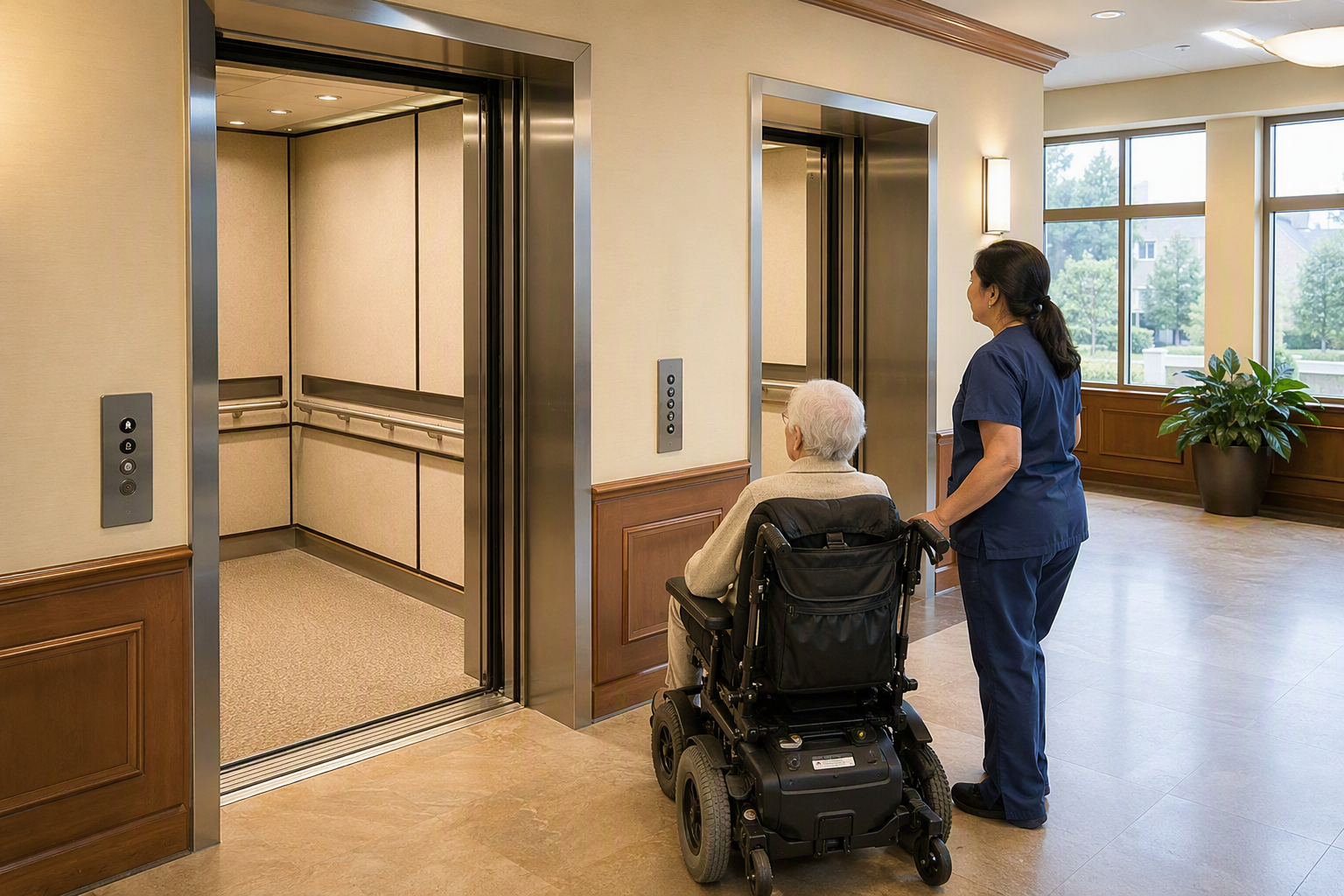
For operators of senior living and assisted living facilities in Houston, Dallas, Austin, San Antonio, Los Angeles, and San Diego, elevator compliance is not optional — it is a baseline condition of safe, lawful operation. Residents in these communities often rely on mobility aids, have reduced reaction times, or require caregiver-assisted transport. Every element of elevator design and maintenance carries direct consequences for resident safety and regulatory standing. The sections below address the full compliance landscape, from federal standards to inspector expectations, so facility managers can approach every audit with confidence.
—
What Federal Standards Govern Elevators in Senior and Assisted Living Facilities?
Two primary federal frameworks apply. The ASME A17.1 Safety Code for Elevators and Escalators establishes the engineering, installation, inspection, and maintenance requirements for virtually all elevator equipment in commercial and residential occupancies. The Americans with Disabilities Act establishes accessibility requirements that ensure elevators can be used independently by individuals with mobility, visual, or hearing impairments.
Together, these standards set the technical floor for elevator design and performance. State and local authorities — including Texas Department of Insurance (TDI) and California’s Division of Occupational Safety and Health (Cal/OSHA) — adopt and may supplement these standards with jurisdiction-specific rules. Facilities operating in multiple markets, such as those with communities in both Texas and California, must account for each state’s adopted code edition and amendment cycle.
—
What ADA Requirements Apply Specifically to Senior Living Elevators?
The ADA Standards for Accessible Design require that elevators serving facilities open to the public or operated for the benefit of residents meet specific dimensional and operational criteria. Key requirements include:
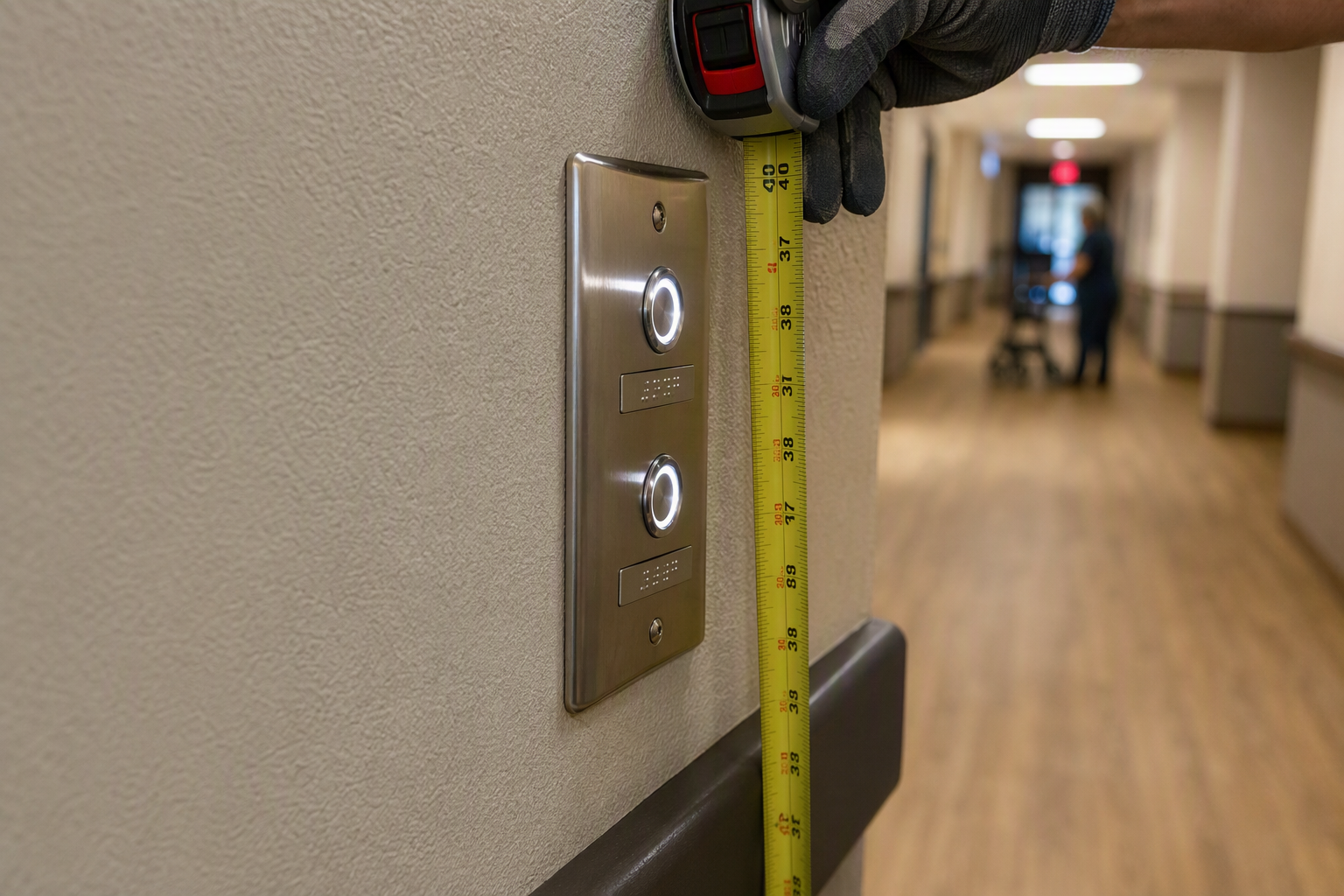
- Call button height: Elevator call buttons must be located between 15 inches and 48 inches above the finished floor, within reach ranges accessible to wheelchair users.
- Door clear width: A minimum clear opening width is required to allow passage of wheelchairs and mobility devices.
- Door timing: Doors must remain open long enough for a resident using a walker or wheelchair to enter or exit safely; reopening devices must respond to obstructions without contact where required.
- Floor leveling: The cab must level to within a defined tolerance of the landing to prevent tripping hazards — a critical concern for residents with balance or gait challenges.
- Interior dimensions: Cab interiors must provide sufficient turning radius and maneuvering clearance for wheelchair users.
- Braille and tactile signage: Floor designations and control buttons must include raised characters and Braille to serve visually impaired residents.
- Audible signals: Audible announcements of floor arrivals assist residents with visual impairments.
- Two-way communication: Emergency communication systems within the cab must be accessible to individuals who are deaf or hard of hearing, typically through visual signaling.
Assisted living facilities serving as places of public accommodation under ADA Title III, or receiving federal funding, are subject to the full scope of these requirements. Newer construction and alterations trigger the most comprehensive compliance obligations.
—
How Do ASME A17.1 Inspection and Maintenance Requirements Apply?
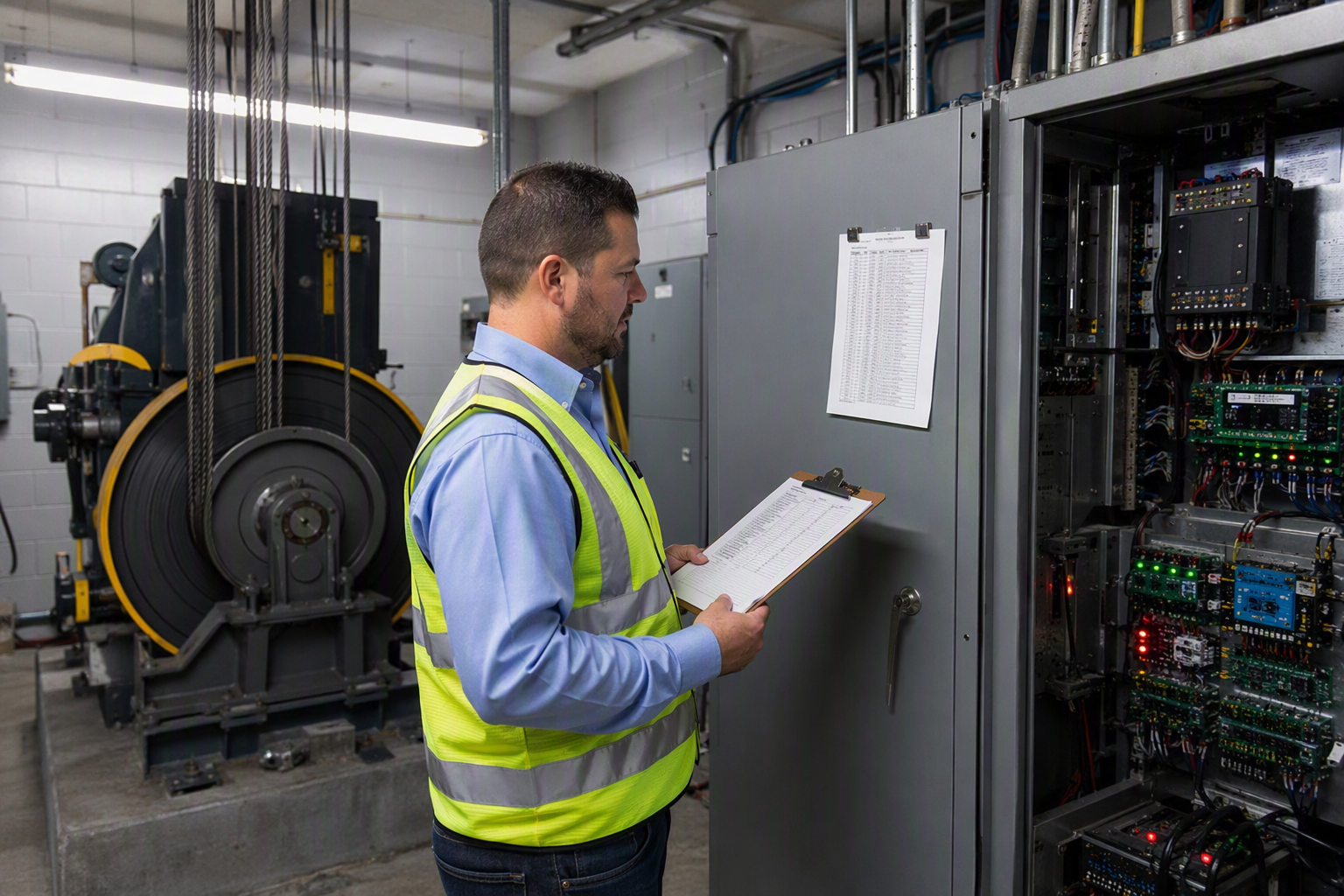
The ASME A17.1 Safety Code for Elevators and Escalators mandates periodic inspections and tests conducted by qualified inspectors. For most jurisdictions, this means annual inspections and periodic safety tests at intervals specified by the code edition adopted by the state. Maintenance must be performed by qualified personnel and documented in a maintenance control program (MCP) as required by ASME A17.1.
For senior living facilities, lapsed inspections or deferred maintenance are particularly consequential. An elevator placed out of service due to a failed inspection disrupts resident mobility, triggers regulatory scrutiny, and may create liability exposure. AmeriTex Elevator supports facility maintenance teams in developing and maintaining compliant MCPs, managing inspection schedules, and ensuring that corrective work is completed before reinspection deadlines.
—
Are There Industry-Specific Codes Beyond ADA and ASME for Healthcare and Senior Living?
Yes. Senior living and assisted living facilities are typically classified under occupancy categories that trigger additional requirements:
- International Building Code (IBC): Governs the number of accessible elevators required based on building height and occupancy type. Assisted living facilities with multiple floors generally must provide accessible vertical transportation.
- National Fire Protection Association (NFPA) 101 — Life Safety Code: Addresses elevator recall and fire service operation requirements, including Phase I and Phase II firefighters’ service, which is critical in residential care settings.
- State health facility licensing codes: Texas Health and Human Services and California Department of Social Services each impose licensing conditions on assisted living facilities that may reference elevator safety and accessibility as conditions of licensure.
- CMS Conditions of Participation: Facilities receiving Medicare or Medicaid reimbursement must meet Centers for Medicare & Medicaid Services conditions, which incorporate Life Safety Code compliance including elevator-related provisions.
The intersection of these standards means that a single elevator may be simultaneously subject to ASME mechanical requirements, ADA accessibility mandates, IBC occupancy provisions, NFPA fire service rules, and state licensing conditions. AmeriTex Elevator’s compliance assessments are structured to address this multi-standard environment rather than treating each framework in isolation.
—
What Are the Door Timing Requirements for Assisted Living Elevators?
Door dwell time — the duration doors remain open after a call is answered — is a frequent compliance gap in older assisted living elevators. ADA standards require that doors remain open long enough for a person using a mobility aid to enter or exit. Many legacy installations have factory-default timings calibrated for ambulatory occupants moving at a standard pace, which is insufficient for residents using walkers, wheelchairs, or who have slower gait.
Adjusting door timing is typically a straightforward controller modification, but it must be tested and documented. Additionally, door reopening devices must function reliably. Devices that fail to detect obstructions — or that reclose too forcefully — present significant injury risks in a population that may lack the reflexes to avoid contact. Regular testing of reopening devices is a required element of a compliant maintenance program under ASME A17.1.
—
What Elevator Modernization Triggers Apply When Facilities Are Renovated?
Renovation activity in senior living facilities frequently triggers mandatory elevator upgrades. Under most adopted building codes, when alterations affect a path of travel that includes an elevator, or when the elevator itself is altered, the installation must be brought into compliance with current ADA standards and applicable editions of ASME A17.1. This is known as the “alteration trigger.”
Common renovation scenarios that may trigger modernization requirements include:
- Expanding the facility footprint to add resident rooms on upper floors.
- Reconfiguring lobby or common areas that alter accessible routes.
- Replacing cab interiors, controls, or door operators — even as cosmetic upgrades.
- Installing new safety components that require controller upgrades.
- Changing the elevator’s rated capacity or speed.
Facility operators planning capital improvements should consult with a qualified elevator service provider before finalizing renovation scopes to understand which changes will trigger compliance requirements and budget accordingly.
—
How Does Leveling Accuracy Affect Resident Safety and Compliance?
Floor leveling — the precision with which the elevator cab stops flush with the landing — is among the most safety-critical performance parameters for senior living facilities. A gap or step between the cab floor and the landing floor is a trip and fall hazard for residents with limited mobility, balance impairments, or vision loss. ADA standards specify maximum leveling tolerances, and ASME A17.1 establishes performance requirements for leveling under load.
Older hydraulic and traction elevators may develop leveling drift as components wear, and this degradation often goes unnoticed until a resident incident occurs. A well-structured maintenance program includes leveling checks at each service visit, with corrective adjustment performed before the variation reaches a hazardous threshold. AmeriTex Elevator includes leveling verification as a standard component of preventive maintenance visits at senior living facilities.
—
What Emergency Communication Requirements Apply in Senior Living Elevators?
ASME A17.1 requires a two-way means of communication in elevator cabs, allowing passengers to summon assistance in the event of entrapment. For assisted living facilities, ADA accessibility requirements add a further dimension: the emergency communication system must be usable by individuals who are deaf or hard of hearing. This typically means the system must provide a visual confirmation that a call has been connected and that help is being dispatched.
Traditional telephone handset systems may not meet this standard without supplemental visual indicators. Facilities that have not audited their emergency communication systems against current ADA and ASME requirements should treat this as a priority compliance item, particularly where residents with hearing impairments are known to use the elevator.
—
What Should Facilities Do If an Elevator Fails Inspection?
When an elevator fails inspection at a senior living or assisted living facility, the following steps apply:
- Place the elevator out of service immediately and post required notices at each landing as directed by the jurisdiction’s authority having jurisdiction (AHJ).
- Notify facility administration, risk management, and relevant licensing authorities as required by state regulations.
- Contact a qualified elevator service provider to obtain a written scope of corrective work based on the inspection report.
- Prioritize repairs and schedule reinspection with the AHJ as soon as corrective work is complete.
- Document all corrective actions in the elevator’s maintenance log and maintenance control program records.
- Review the root cause of the failure to determine whether a maintenance program adjustment is warranted to prevent recurrence.
AmeriTex Elevator works with facility operators across Houston, Dallas, Austin, San Antonio, Los Angeles, and San Diego to develop rapid-response repair plans that minimize out-of-service time while ensuring all corrective work meets reinspection standards.
—
Questions Your Inspector Will Ask
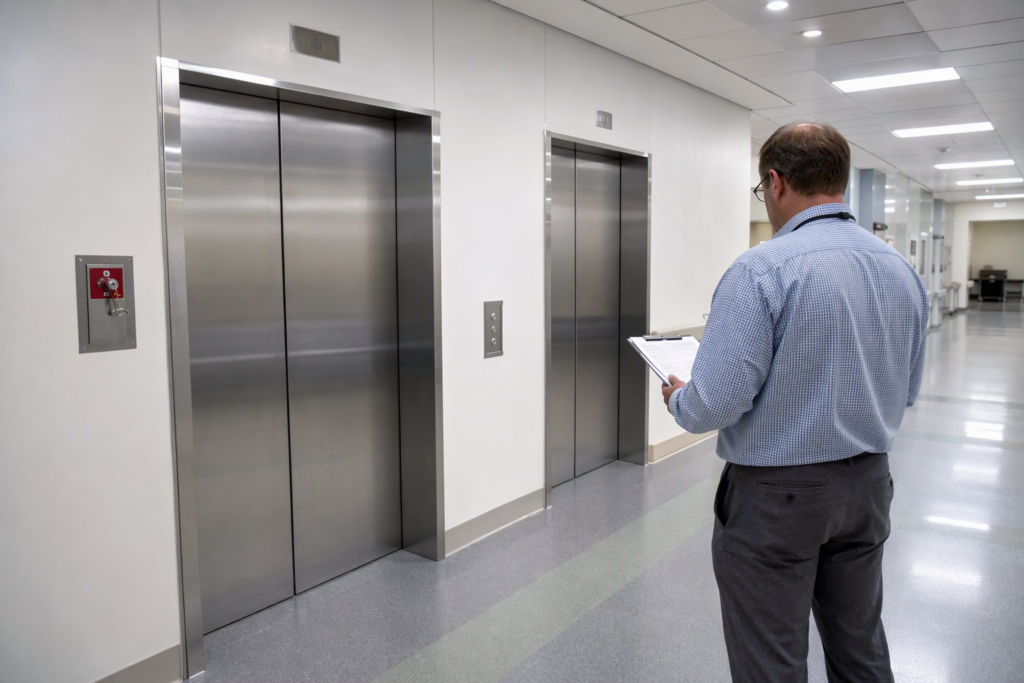
When a state or local elevator inspector conducts a periodic inspection at a senior living or assisted living facility, facility managers and maintenance teams should be prepared to address the following:
- Where is your maintenance control program documentation? Inspectors will want to review the written MCP and associated maintenance logs to confirm that required tasks have been performed at required intervals under ASME A17.1.
- When was the last full load safety test conducted? Periodic load and safety tests are required at intervals specified by the adopted code edition; documentation of completion is required.
- Have all category tests been performed on schedule? Different test categories (e.g., Category 1, Category 5 for hydraulic elevators) have distinct intervals and documentation requirements.
- Is the emergency communication system functional and ADA-accessible? The inspector will test the two-way communication system and may ask whether it provides visual confirmation for hearing-impaired users.
- What is the door reopening device test history? Inspectors verify that reopening devices are tested and documented per the MCP.
- Is the machine room or control space accessible only to authorized personnel? ASME A17.1 requires restricted access to machine rooms.
- Has the elevator been altered since the last inspection? Any alteration may require permit filing and re-inspection; undisclosed alterations can result in code violations.
- Are all required permits and certificates posted? Current certificates of inspection must typically be posted in the cab or at a designated location required by the AHJ.
—
How Can Facilities in Texas and California Stay Ahead of Compliance Deadlines?
Texas and California each administer elevator inspection programs through separate state agencies — the Texas Department of Insurance for most elevator installations in Texas, and Cal/OSHA for California. Both states require periodic inspections, though the specific intervals, permit structures, and reinspection protocols differ. Facilities operating in both states must track two separate compliance calendars.
Proactive compliance management — rather than reactive response to inspection notices — is the most reliable approach for multi-site senior living operators. A qualified elevator service partner can maintain inspection calendars, coordinate with the relevant AHJ ahead of inspection dates, identify developing deficiencies before they become inspection failures, and ensure that documentation is complete and accessible when inspectors arrive. AmeriTex Elevator serves senior living communities throughout Houston, Dallas, Austin, San Antonio, Los Angeles, and San Diego, providing consistent compliance management across both state regulatory environments.
—
What Should Facilities Look for When Selecting an Elevator Service Provider?
Not all elevator service providers are equally equipped to serve the unique compliance environment of senior living and assisted living facilities. When evaluating providers, facility operators should consider:
- Demonstrated familiarity with ADA accessibility requirements as they apply to healthcare and senior living occupancies.
- Experience developing and maintaining ASME A17.1-compliant maintenance control programs.
- Knowledge of state-specific inspection and permit requirements in the facility’s operating markets.
- Capacity to serve multiple locations consistently, which is relevant for regional or national senior living operators.
- Clear documentation practices that support inspector review and licensing audits.
- Ability to identify alteration triggers before renovation projects begin, preventing costly mid-project compliance discoveries.
AmeriTex Elevator is a certified elevator service company supporting senior living operators with compliance-focused maintenance, modernization planning, and inspection preparation across its Texas and California service markets.
—
Schedule Your Free Elevator Compliance Assessment
Senior living and assisted living facilities face layered compliance obligations that affect resident safety, regulatory standing, and licensing continuity. A proactive assessment identifies gaps before inspectors do.
Contact AmeriTex Elevator for a free elevator assessment: 866-679-4313
AmeriTex Elevator serves senior living communities throughout Houston, Dallas, Austin, San Antonio, Los Angeles, and San Diego. Reach out today to schedule a compliance review tailored to your facility’s equipment, occupancy, and regulatory environment.
Need elevator service you can rely on? AmeriTex Elevator is ready to help.