Elevator Inspection Requirements in Texas: A Complete Comparison and Decision Guide
Texas building owners, property managers, and facility directors face a layered set of compliance obligations when it comes to elevator inspection. Understanding who is authorized to inspect, how often inspections must occur, what they cover, and how to choose the right service partner can mean the difference between seamless compliance and costly violations. This guide breaks down every dimension of the decision so you can act with confidence in 2026.
—
What Are the Core Elevator Inspection Requirements in Texas?
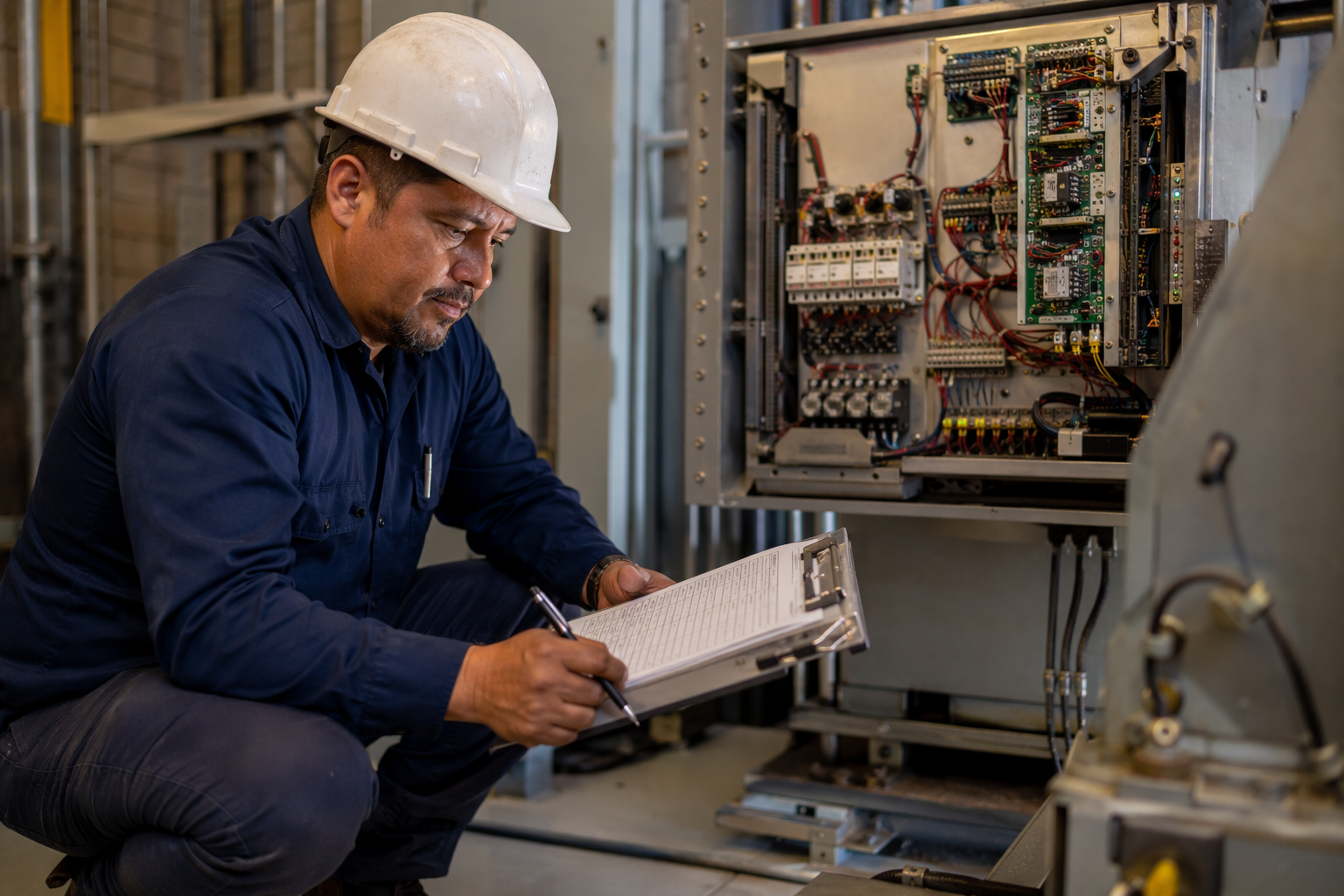
Texas regulates elevators, escalators, and related conveyances under the Texas Elevator Safety Law, administered by the Texas Department of Insurance (TDI). The TDI requires that all conveyances covered under the law hold a current Certificate of Inspection, which is issued only after a successful inspection performed by a TDI-licensed elevator inspector.
The technical standard that governs what inspectors must evaluate is the ASME A17.1 Safety Code for Elevators and Escalators. This code establishes minimum safety requirements for design, construction, operation, inspection, testing, maintenance, alteration, and repair of elevators and related equipment.
Key compliance facts every Texas building owner should know:
- A valid Certificate of Inspection must be posted in the elevator car and kept current at all times.
- Inspections must be performed by a licensed inspector — either an insurance carrier inspector or a licensed third-party independent inspector.
- Failure to maintain a valid certificate can result in the elevator being ordered out of service by TDI.
- Newly installed or altered elevators require a periodic inspection and acceptance test before being placed into service.
- The Americans with Disabilities Act (ADA) adds a parallel layer of accessibility compliance that inspections do not automatically verify — owners bear separate responsibility for ADA conformance.
—
Who Can Legally Inspect an Elevator in Texas?

Texas law permits two categories of licensed inspectors to perform elevator inspections and issue certificates:
- Insurance Carrier Inspectors: Inspectors employed by or contracted through an authorized insurance company that provides boiler and pressure vessel or elevator insurance coverage.
- Third-Party Independent Inspectors: Licensed inspectors who operate independently of insurance companies. These inspectors are often contracted directly by the building owner or through an elevator service company.
It is important to note that the elevator maintenance company servicing a building is not automatically authorized to issue a Certificate of Inspection — the inspector must hold the appropriate TDI license. However, a qualified elevator service company like AmeriTex Elevator coordinates directly with licensed independent inspectors, manages the scheduling process, and ensures the elevator is in full compliance before the inspection date, dramatically reducing the risk of a failed inspection.
—
Comparison Table: Insurance Carrier Inspector vs. Third-Party Independent Inspector
| Factor | Insurance Carrier Inspector | Third-Party Independent Inspector |
|---|---|---|
| Authorization Source | Tied to your insurance policy | Licensed directly by TDI |
| Scheduling Flexibility | Dependent on insurer’s availability | Often more flexible; owner-directed |
| Objectivity | Represents insurer’s interests | Works directly for building owner |
| Coordination with Maintenance Company | Variable; may not coordinate proactively | Can coordinate closely with your service company |
| Certificate Issuance | Yes, upon passing inspection | Yes, upon passing inspection |
| Best For | Buildings whose insurer bundles inspection services | Buildings seeking maximum control and preparation |
| Pre-Inspection Preparation Support | Typically not provided | Can be paired with a service company for full readiness |
—
What Does a Texas Elevator Inspection Cover?
Inspectors in Texas evaluate elevators against the requirements of the ASME A17.1 Safety Code for Elevators and Escalators. A standard periodic inspection typically encompasses the following areas:
- Machine Room: Condition of machinery, lighting, temperature control, fire protection, and access.
- Car and Hoistway: Door operation, safety devices, guide rails, buffers, and pit conditions.
- Electrical Systems: Wiring, controllers, safeties, emergency lighting, and communication devices.
- Safety Devices: Governor, safety gear, buffers, car and counterweight safeties.
- Emergency Features: Emergency lowering, firefighter service, and phone or intercom functionality.
- Accessibility Features: Button height, door timing, and leveling accuracy (note: full ADA compliance per ADA standards is a separate owner responsibility).
Periodic load tests and safety tests — including full-load, no-load, and governor/safety tests — are required on defined cycles under ASME A17.1 and must be witnessed by a licensed inspector.
—
Comparison Table: Periodic Inspection vs. Acceptance Inspection vs. Maintenance Visit
| Inspection Type | Trigger | Who Performs | Result | ASME A17.1 Reference |
|---|---|---|---|---|
| Acceptance Inspection | New installation or major alteration | TDI-licensed inspector | Approval to place in service | ASME A17.1 |
| Periodic Inspection | Recurring compliance cycle | TDI-licensed inspector | Certificate of Inspection (valid period) | ASME A17.1 |
| Maintenance Visit | Scheduled by service contract | Elevator service technician (not a licensed inspector) | Equipment upkeep; does NOT issue certificate | ASME A17.1 (maintenance requirements) |
| Witnessing of Tests | Per ASME A17.1 cycle (e.g., 5-year full-load test) | TDI-licensed inspector witnesses; technician performs | Documented test record; part of certification | ASME A17.1 |
—
What Is the Timeline for Elevator Inspection Compliance in Texas?
The compliance timeline depends on the type of installation and the inspection cycle established under the ASME A17.1 Safety Code for Elevators and Escalators as adopted and enforced by TDI.
| Milestone | Typical Timeline | Action Required |
|---|---|---|
| New Installation Acceptance | Before placing in service | Schedule acceptance inspection with TDI-licensed inspector |
| Periodic Inspection | Annually (typical for most elevators) | Coordinate with licensed inspector; ensure maintenance is current |
| 5-Year Safety Test | Every 5 years (per ASME A17.1 cycle) | Licensed inspector witnesses full-load and safety device tests |
| Certificate Expiration | Date shown on posted certificate | Re-inspect before expiration to avoid violation |
| Post-Repair/Alteration | Before returning to service | Altered conveyances require a new acceptance inspection |
Note: Exact inspection intervals are set by TDI in accordance with the adopted edition of ASME A17.1. Building owners should confirm current intervals directly with TDI or a qualified elevator service company like AmeriTex Elevator.
—
What Happens If an Elevator Fails Inspection in Texas?
- Receive the inspection report: The inspector documents all deficiencies and provides a written report identifying items that must be corrected.
- Take the elevator out of service if ordered: TDI can order the immediate shutdown of an elevator that poses a safety hazard. Comply immediately to avoid penalty escalation.
- Notify your elevator service company: Contact your maintenance provider — such as AmeriTex Elevator — to review the deficiency list and schedule corrective repairs.
- Complete all required repairs: All cited deficiencies must be corrected in accordance with ASME A17.1 and any TDI directives before reinspection.
- Schedule a reinspection: Once repairs are completed, schedule a follow-up inspection with the licensed inspector to verify corrections and pursue certificate issuance.
- Post the new Certificate of Inspection: Upon passing, ensure the updated certificate is properly posted in the elevator car as required by Texas law.
—
How Does OSHA Relate to Elevator Inspection in Texas?
The Occupational Safety and Health Administration (OSHA) has jurisdiction over elevator safety in workplace environments, particularly regarding construction elevators (personnel hoists) and material hoists on job sites. OSHA standards apply in addition to, not instead of, TDI requirements. Building owners and general contractors should be aware that:
- OSHA enforces separate standards for construction hoists under 29 CFR 1926 Subpart R.
- Permanent commercial elevators in workplaces must comply with both OSHA general industry standards and TDI elevator law.
- Workplace incidents involving elevators may trigger OSHA inspections independent of TDI compliance status.
—
How Does ADA Compliance Interact With Elevator Inspections in Texas?
A passing Certificate of Inspection from TDI does not confirm ADA compliance. The ADA sets requirements for elevator accessibility — including control panel height, door timing, leveling accuracy, and audible/visual signals — that are separate from the safety code requirements evaluated during a TDI inspection.
- Building owners bear independent responsibility for ensuring elevators meet ADA accessibility standards.
- ADA compliance is enforced through the U.S. Department of Justice and through civil litigation — not through TDI.
- A qualified elevator service company can identify accessibility gaps and coordinate modifications to bring equipment into ADA conformance alongside safety compliance.
—
What Are the Pros and Cons of Different Elevator Service Arrangements in Texas?
| Service Arrangement | Pros | Cons |
|---|---|---|
| OEM (Original Equipment Manufacturer) Service | Proprietary parts access; brand familiarity | Often higher cost; long-term contract lock-in; less flexibility |
| Large National Independent Company | Wide coverage; standardized processes | Less personalized service; response times may vary by region |
| Local Independent Service Company (e.g., AmeriTex Elevator) | Personalized attention; local code knowledge; inspection coordination support; owner-focused relationship | May have narrower geographic footprint than national firms |
| In-House Maintenance | Direct control | Requires licensed personnel; complex code compliance burden; rarely practical for most buildings |
AmeriTex Elevator operates as a certified, independent elevator service company in Texas. Because AmeriTex works independently of any single manufacturer, the company can service a broad range of elevator makes and models, coordinate with licensed inspectors on behalf of building owners, and provide unbiased guidance on repairs and modernization — without the upsell pressure that can accompany OEM or large-national-chain service relationships.
—
What Should a Building Owner Do Before a Scheduled Elevator Inspection?
- Review the previous inspection report: Identify any items noted as marginal or requiring monitoring and confirm they have been addressed.
- Confirm your maintenance log is current: Inspectors may review service records. Ensure all scheduled maintenance visits have been completed and documented.
- Check machine room conditions: Verify the machine room is clean, properly lit, free of stored materials, and that the temperature is within acceptable range.
- Test emergency features: Confirm the emergency phone, emergency lighting, and firefighter service are operational.
- Verify door operation: Check that all car and hoistway doors open and close fully, level accurately at each floor, and reverse properly on obstruction.
- Ensure the pit is compliant: The pit must be clean, dry, properly lit, and equipped with required safety switches.
- Confirm required signage is posted: Verify load capacity, certificate of inspection (if still valid), and emergency instructions are displayed in the car.
- Coordinate with your service company: Contact AmeriTex Elevator for a pre-inspection readiness assessment to identify and correct deficiencies before the inspector arrives.
—
How Do Inspection Requirements Differ for Different Types of Elevators in Texas?
Texas law and the ASME A17.1 Safety Code for Elevators and Escalators apply to a broad range of conveyances, each with specific inspection requirements:
| Equipment Type | Governed By | Key Inspection Considerations |
|---|---|---|
| Traction Elevators (commercial) | ASME A17.1 / TDI | Annual periodic inspection; 5-year full-load/safety test cycle |
| Hydraulic Elevators | ASME A17.1 / TDI | Includes hydraulic system integrity; oil leakage and pressure testing |
| Escalators and Moving Walks | ASME A17.1 / TDI | Separate inspection checklist; step/pallet condition; handrail speed |
| Residential Elevators (private) | ASME A17.1 (Part XXVI) / TDI | May have different exemptions; verify with TDI for current rules |
| Accessibility Lifts / Platform Lifts | ASME A18.1 / TDI | Separate standard; ADA interface considerations apply |
| Construction Hoists | OSHA / TDI | Job-site specific; OSHA 29 CFR 1926 Subpart R governs |
—
Why Choose AmeriTex Elevator as Your Texas Elevator Service Partner?
Navigating Texas elevator inspection requirements demands a service partner with deep familiarity with TDI processes, ASME A17.1 standards, ADA obligations, and OSHA overlaps. AmeriTex Elevator is a certified, independent elevator service company serving Texas building owners across all equipment types and building classes.
As an independent company, AmeriTex Elevator is not tied to any single manufacturer’s parts or protocols. This independence means building owners receive objective recommendations focused on compliance, equipment longevity, and budget efficiency — not upselling proprietary components.
AmeriTex Elevator supports clients through every stage of the inspection cycle:
- Pre-inspection readiness assessments to identify deficiencies before the licensed inspector arrives
- Coordination with licensed third-party inspectors for scheduling and test witnessing
- Corrective repairs and parts replacement when deficiencies are identified
- Ongoing maintenance programs designed to keep equipment in continuous compliance
- Guidance on ADA accessibility modifications and modernization planning
—
Frequently Asked Questions About Texas Elevator Inspection Requirements
Does Texas require annual elevator inspections?
Most commercial elevators in Texas are subject to periodic inspections on a recurring basis under TDI requirements, with the frequency established in accordance with the ASME A17.1 Safety Code for Elevators and Escalators. Annual inspections are the typical standard for most conveyances, though building owners should confirm the exact cycle applicable to their equipment with TDI or a qualified service company.
Who enforces elevator inspection requirements in Texas?
The Texas Department of Insurance (TDI) is the primary state authority responsible for enforcing elevator safety law in Texas, including the requirement to maintain a current Certificate of Inspection.
Can an elevator maintenance technician perform a state inspection?
No. In Texas, a Certificate of Inspection can only be issued by a licensed elevator inspector holding the appropriate TDI authorization. Maintenance technicians perform upkeep and repairs but do not issue certificates. A company like AmeriTex Elevator coordinates with licensed inspectors on behalf of building owners to manage this process.
What is the 5-year elevator test in Texas?
Under the ASME A17.1 Safety Code for Elevators and Escalators, traction elevators are subject to full-load and safety device tests on a defined cycle — commonly referenced as the “5-year test.” This test must be witnessed by a licensed inspector and involves testing the elevator under load conditions to verify safety device performance, including the governor and car safeties.
Is a posted Certificate of Inspection legally required in Texas?
Yes. Texas law requires that a valid Certificate of Inspection be posted in the elevator car. Operating an elevator without a current certificate is a violation of Texas elevator safety law and can result in the elevator being ordered out of service.
Does passing a TDI inspection mean an elevator is ADA compliant?
No. TDI inspections evaluate safety code compliance under ASME A17.1. ADA compliance is a separate legal obligation governed by the Americans with Disabilities Act and enforced independently. Building owners must ensure ADA conformance in addition to maintaining their Certificate of Inspection.
What happens if I let my elevator’s Certificate of Inspection expire?
Operating an elevator with an expired Certificate of Inspection in Texas is a violation of state law. TDI can order the elevator taken out of service, and continued operation may expose the building owner to significant liability. Building owners should track certificate expiration dates proactively and schedule reinspections before expiration.
How do I prepare my elevator for a Texas state inspection?
Key preparation steps include reviewing the previous inspection report, confirming maintenance records are current, verifying machine room and pit conditions, testing emergency features, and ensuring all required signage is posted. A pre-inspection assessment from AmeriTex Elevator can identify and resolve deficiencies before the licensed inspector arrives, significantly improving the likelihood of a clean inspection result.
—
Ready to Ensure Full Compliance? Contact AmeriTex Elevator Today.
Texas elevator inspection requirements are detailed, time-sensitive, and consequential. Whether your Certificate of Inspection is approaching renewal, your elevator has failed a recent inspection, or you want a proactive assessment of your equipment’s compliance status, AmeriTex Elevator is ready to help.
Contact AmeriTex Elevator for a free elevator assessment: 866-679-4313
Need elevator service you can rely on? AmeriTex Elevator is ready to help.