Elevator Maintenance Cost: Complete FAQ Guide for Building Owners
What does elevator maintenance cost on average?
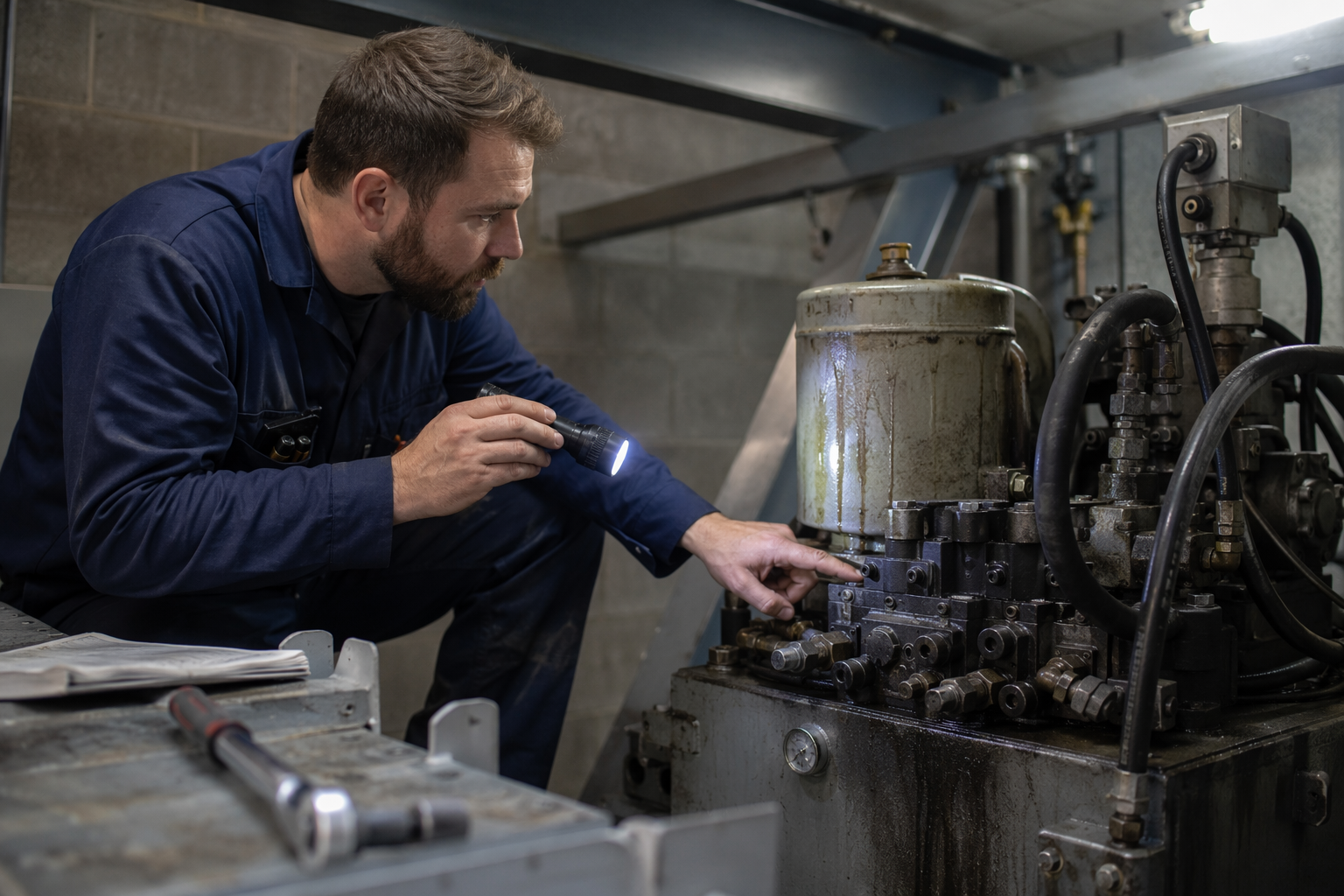
Elevator maintenance costs depend heavily on contract type, elevator age, usage volume, and geographic market — no single flat figure applies universally.
Because elevators range from basic hydraulic units in two-story commercial buildings to high-speed traction systems in mid-rise towers, pricing reflects that complexity. A basic maintenance agreement for a low-use hydraulic elevator in a smaller building will carry a significantly different price point than a full-service contract covering a high-traffic traction elevator in a large commercial tower. Building owners in major metro areas such as Houston, Dallas, Austin, San Antonio, Los Angeles, and San Diego should request itemized proposals that clearly distinguish labor, parts, lubrication, and inspection line items before comparing bids.
What factors drive elevator maintenance costs the most?
The single biggest drivers of elevator maintenance cost are contract type, elevator age and condition, usage intensity, and regulatory inspection requirements in the jurisdiction where the elevator operates.
Older elevator systems — particularly those manufactured before microprocessor-based controls became standard — require more labor-intensive servicing and are more likely to need proprietary or hard-to-source parts, both of which push maintenance costs higher. High-traffic elevators in hospitals, hotels, and apartment complexes accumulate wear faster than low-use office elevators, which directly affects lubrication intervals, brake adjustments, and door operator servicing frequency. State and local inspection mandates, which differ between Texas and California markets, also influence total annual compliance costs.
What are the different types of elevator maintenance contracts?
Elevator maintenance contracts generally fall into three categories: oil-and-grease (lubrication-only), examination, and full-service (comprehensive) agreements — each offering a different balance of upfront cost and financial risk protection.
| Contract Type | What Is Covered | Best Suited For | Financial Risk to Owner |
|---|---|---|---|
| Oil & Grease (Lubrication Only) | Lubrication, minor adjustments, visual checks | Low-budget buildings, newer elevators under warranty | High — all parts and major labor billed separately |
| Examination (Inspection) Contract | Lubrication + scheduled inspections, minor adjustments, some labor | Buildings with moderate budgets and newer equipment | Medium — parts still billed separately |
| Full-Service (Comprehensive) | All of the above plus parts, callbacks, emergency service, repairs up to defined thresholds | High-use buildings, older equipment, risk-averse owners | Low — predictable annual spend |
| Parts & Labor (Semi-Comprehensive) | Labor and most parts covered; major components sometimes excluded | Mid-range buildings seeking partial protection | Medium-Low — read exclusion lists carefully |
Building owners should read exclusion clauses with particular attention in full-service agreements. Major components such as controllers, motors, sheaves, and hydraulic cylinders are commonly carved out of standard full-service language and may require separate modernization or capital repair budgets.
How does elevator type affect maintenance cost?
Hydraulic elevators and traction elevators have meaningfully different maintenance cost profiles because their mechanical systems, inspection requirements, and common failure points differ substantially.
Hydraulic elevators rely on fluid pressure and a submersible pump unit. Their maintenance focus includes fluid analysis, cylinder integrity checks, power unit servicing, and environmental compliance related to fluid containment. Traction elevators — both geared and gearless — require attention to the hoist machine, wire ropes, sheaves, brake assemblies, and safety devices. Gearless traction systems used in mid- to high-rise applications tend to have lower routine lubrication demands but higher repair costs when major components reach end of life. Machine-room-less (MRL) traction elevators have their own access and servicing constraints that affect labor time and therefore cost.
How do inspection and compliance requirements affect total maintenance costs?
State-mandated periodic inspections are a non-negotiable cost element for every elevator owner, and inspection intervals, fees, and follow-up correction requirements vary by jurisdiction — impacting total annual spend.
In Texas, elevator safety is regulated under state authority, and building owners are required to maintain current certificates of operation. In California, elevators fall under the jurisdiction of the California Department of Industrial Relations (DIR) Elevator Unit, and annual inspections are mandatory for most elevator types. Both frameworks reference ASME A17.1 Safety Code for Elevators and Escalators as the foundational safety standard. Failing to meet inspection requirements can result in shutdown orders, fines, and liability exposure — costs that dwarf routine maintenance expenditures. Building owners working with AmeriTex Elevator benefit from support navigating inspection coordination and ensuring equipment is code-ready before the inspection date.
What does ASME A17.1 require for elevator maintenance?
The ASME A17.1 Safety Code for Elevators and Escalators establishes minimum maintenance, testing, and inspection requirements that directly define the baseline scope of any compliant maintenance program.
ASME A17.1 requires that elevators be maintained in a condition that ensures safe operation for all users, and it mandates specific periodic tests — including the five-year Category 5 full-load safety test for hydraulic elevators and the five-year Category 5 test for traction elevators with safeties and governors. These mandatory tests require specialized equipment and qualified personnel and represent a distinct line item in a building’s five-year elevator budget. The 2019 and subsequent editions of ASME A17.1 also include requirements for maintenance control programs (MCPs), which require elevator owners to keep documented maintenance records — an administrative obligation that some service providers bundle into their contracts and others charge for separately.
Are there ADA compliance costs associated with elevator maintenance?
Yes — ADA compliance obligations can generate maintenance-adjacent costs when inspections reveal that elevator features related to accessibility are out of adjustment or non-functional.
Under the Americans with Disabilities Act (ADA), public accommodations and commercial facilities must maintain accessible features in operable condition. For elevators, this includes door timing, audible floor signals, tactile and Braille controls, and cab leveling accuracy. A door that closes too quickly, a floor indicator that has lost its audible tone, or a cab that mis-levels by more than a code-allowed tolerance are all ADA concerns that must be corrected. These corrections are typically part of a well-structured maintenance contract, but in older buildings they sometimes surface as separate repair orders when systems are found significantly out of specification.
How does elevator age and condition affect maintenance pricing?
Older elevators are consistently more expensive to maintain because aging components require more frequent adjustment, proprietary parts become scarce, and the labor time to service relay-logic or older microprocessor systems is greater than servicing current-generation controllers.
Service companies often tier their pricing based on equipment age and condition at the start of a contract. An elevator that has been poorly maintained, is operating with deferred repairs, or carries outdated components may be accepted only under a limited contract that excludes those problem components — or it may require a condition assessment and some catch-up repairs before a full-service agreement is offered. Building owners acquiring properties with existing elevators should prioritize a pre-purchase or pre-contract inspection to understand the true maintenance baseline before signing a multi-year agreement.
What is typically excluded from elevator maintenance contracts?
Most elevator maintenance contracts — even full-service agreements — exclude major capital components, vandalism damage, misuse-related repairs, and upgrades required by code changes that post-date the contract execution.
Common exclusions found in contract fine print include: hydraulic cylinders and jack replacements, controller replacement or major modernization, hoist machine overhauls, structural or pit remediation work, cab interior finish repairs, and work required because of fire, flood, or building system damage. Building owners should request a clear written list of exclusions and model their five-year capital budget accordingly. A knowledgeable service partner will walk through exclusion lists transparently rather than leaving building owners surprised by a large invoice after a major component failure.
How does elevator usage volume affect maintenance frequency and cost?
Elevators in high-traffic buildings accumulate mechanical wear significantly faster than those in low-use environments, which requires more frequent adjustments, lubrication, and door operator servicing — all of which increase the cost of maintaining safe operation.
A residential elevator in a low-rise building that makes a limited number of trips per day has very different maintenance demands than a hospital elevator making hundreds of trips daily under heavy load. Service contracts for high-use environments may specify more frequent visit schedules, and the probability of callback visits between scheduled maintenance rounds is substantially higher. Building owners in healthcare, hospitality, and multi-family residential sectors should ensure their contracts explicitly address callback frequency and after-hours emergency response scope.
What is included in a routine elevator maintenance visit?
A properly conducted routine elevator maintenance visit covers mechanical lubrication, safety device checks, door operator adjustment, leveling verification, controller and relay inspection, pit and machine room inspection, and documentation — not merely a visual walkthrough.
Routine maintenance procedures aligned with ASME A17.1 maintenance control program requirements include:
- Inspect the pit for water intrusion, oil accumulation, and proper lighting and stop switch function.
- Lubricate guide rails, guide shoes or roller guides, and all specified moving components per the manufacturer’s lubrication schedule.
- Test door operation — including open and close force limits, timing, and safety edge or light curtain function.
- Check leveling accuracy at each floor and adjust if the cab is stopping outside of tolerance.
- Inspect brake adjustment and verify proper holding and release.
- Examine hoist ropes or hydraulic fluid level and condition.
- Test safety circuits and emergency lighting and phone operation.
- Review and update the maintenance log per MCP documentation requirements.
How do maintenance costs compare between Texas and California markets?
California elevator maintenance tends to carry higher labor costs than Texas markets, reflecting differences in prevailing wage rates, California DIR regulatory requirements, and the overall cost of doing business in the state — making direct price comparisons between the two regions unreliable.
Building owners in Houston, Dallas, Austin, and San Antonio operate under Texas regulatory requirements and a labor market that differs materially from Los Angeles and San Diego. In California, elevator mechanics are among the most highly compensated skilled tradespeople in the construction and service sector, and those labor costs flow through to maintenance contract pricing. Both state markets, however, share the same federal ADA obligations and use ASME A17.1 as the foundational safety code — so the technical scope of compliant maintenance is consistent even where pricing differs.
Is it cheaper to use the elevator manufacturer’s service arm or an independent service company?
Independent elevator service companies often offer more competitive pricing and comparable — or superior — service quality compared to OEM service divisions, particularly for equipment that is no longer under manufacturer warranty or that has reached the age where proprietary parts constraints are less of a factor.
OEM service divisions may argue that their proprietary knowledge of specific equipment justifies a pricing premium. However, qualified independent service providers with trained technicians and access to parts sourcing networks can service most major elevator brands competently. The more important question than OEM versus independent is whether the service company is properly licensed for the jurisdiction, maintains adequate insurance, and can demonstrate a track record of compliance in the specific market. AmeriTex Elevator operates as a certified elevator service company across its Texas and California service markets, providing building owners an independent alternative with market-specific regulatory expertise.
What are the risks of deferring elevator maintenance to reduce costs?
Deferring elevator maintenance consistently results in higher total costs over time, increased safety and liability exposure, accelerated component wear, and a greater likelihood of regulatory shutdown orders that disrupt building operations and tenant satisfaction.
From a liability standpoint, building owners have a duty of care to ensure elevators are maintained in safe operating condition under both state elevator safety statutes and general premises liability principles. An elevator that injures a passenger due to a deferred maintenance issue — such as an unaddressed door safety device failure or excessive mis-leveling — can expose building ownership to significant legal and financial consequences. Workers who are injured in elevator incidents may have recourse under OSHA standards as well. The cost of even a single personal injury claim or regulatory enforcement action typically exceeds years of properly funded maintenance expenditure.
How should building owners evaluate competing elevator maintenance bids?
Comparing elevator maintenance proposals requires looking beyond the annual contract price to evaluate the specific scope of coverage, exclusion lists, callback response provisions, contract term and termination conditions, and the vendor’s licensing and insurance credentials in the relevant jurisdiction.
A checklist approach to bid evaluation should examine:
- Confirm the service provider holds appropriate state licensing or registration for the jurisdiction where the elevator operates.
- Verify general liability and workers’ compensation insurance coverage are current and adequate.
- Compare the visit frequency in each proposal — monthly, quarterly, or semi-annual schedules represent very different levels of service.
- Read the parts and labor exclusion lists in full rather than relying on the marketing description of the contract tier.
- Ask specifically how callback visits are handled — whether they are included, how response is dispatched, and what after-hours provisions apply.
- Examine contract term length and exit provisions — multi-year lock-in terms with heavy cancellation penalties reduce a building owner’s leverage.
- Request references from comparable buildings in the same market.
What modernization costs should be budgeted alongside routine maintenance?
Building owners should plan separate capital reserves for elevator modernization, recognizing that routine maintenance extends equipment life but does not eliminate the eventual need to replace controllers, door operators, cab interiors, or drive systems as they reach end of useful life.
Elevator modernization is distinct from maintenance and typically encompasses upgrades to the control system, motor drive, door operator hardware, safety devices to meet current ASME A17.1 edition requirements, and sometimes cab interior and accessibility improvements aligned with current ADA standards. Modernization projects are significant capital expenditures that are generally not included in any maintenance contract. Building owners of elevators that are 20 or more years old should proactively discuss modernization timelines with their service provider to plan capital budgets and avoid emergency-driven replacement under crisis conditions.
How can building owners reduce elevator maintenance costs without sacrificing safety?
The most effective ways to manage elevator maintenance costs are to invest in preventive maintenance consistency, address small issues before they become major failures, and negotiate multi-unit or multi-building agreements where volume justifies better pricing — never by reducing inspection frequency below code-required minimums.
Buildings with multiple elevator units often have leverage to negotiate better per-unit pricing under consolidated service agreements. Keeping machine rooms clean, dry, and at appropriate temperature reduces strain on electronic components and extends controller life. Training building staff to report unusual sounds, door behavior, or leveling issues promptly enables service providers to address minor problems before they escalate. Maintaining a documented maintenance history also protects building owners during regulatory inspections and property transactions. AmeriTex Elevator works with property managers across its Texas and California service markets to develop maintenance programs scaled to the specific needs and budget parameters of each building.
What questions should building owners ask a new elevator service provider?
Before signing an elevator maintenance contract, building owners should ask the prospective provider specific questions about licensing, technician qualifications, parts sourcing, contract exclusions, and how compliance documentation is handled.
Key questions to raise include:
- Is your company licensed or registered to perform elevator work in this state and jurisdiction?
- How are technicians trained and qualified — and are they certified under industry standards?
- What is the process for sourcing parts for equipment of this age and manufacturer?
- Specifically what is excluded from this contract, in writing?
- How are callback visits initiated, tracked, and documented?
- How do you handle mandatory inspection coordination with the state authority having jurisdiction (AHJ)?
- What documentation will we receive for our maintenance control program records?
How do multi-unit and multi-building contracts affect elevator maintenance pricing?
Consolidating multiple elevators or multiple properties under a single service provider typically creates pricing efficiency because the provider can route technicians more effectively and reduce per-unit administrative overhead — benefits that are often passed through to building owners as improved contract terms.
Property management companies and commercial real estate portfolios managing buildings across multiple Texas or California markets are well-positioned to leverage consolidated agreements. AmeriTex Elevator services properties in Houston, Dallas, Austin, San Antonio, Los Angeles, and San Diego, making it a practical option for portfolio owners seeking consistent service standards and consolidated contract management across both states. Multi-building relationships also benefit from service history continuity — technicians who develop familiarity with specific equipment over time tend to identify developing problems earlier and service more efficiently.
What should building owners do if an elevator fails a state inspection?
If an elevator fails a state inspection, building owners must act immediately to remove the elevator from service if required by the inspector, engage a qualified service provider to address the cited deficiencies, and schedule a re-inspection through the appropriate state authority — delaying any of these steps compounds liability and regulatory risk.
- Obtain the written inspection report and identify all cited violations clearly.
- Post any required out-of-service notices and restrict elevator access as directed by the inspector or AHJ.
- Contact a licensed elevator service provider — such as AmeriTex Elevator — to review the violation list and provide a scope of corrective work.
- Authorize the corrective repair work in writing and establish a clear completion timeline.
- Request documentation of all repairs performed for your maintenance control program records.
- Schedule the re-inspection with the state authority having jurisdiction (AHJ) and ensure the elevator is ready before the inspection date.
- Do not restore the elevator to service until a passing inspection result or written authorization from the AHJ is received.
Inspection failures are stressful but manageable when addressed with a qualified service partner who understands the specific code requirements of the jurisdiction. Attempting to return an elevator to service before deficiencies are corrected and authorized by the AHJ can result in fines, permit revocation, and substantially greater legal exposure.
Need elevator service you can rely on? AmeriTex Elevator is ready to help.