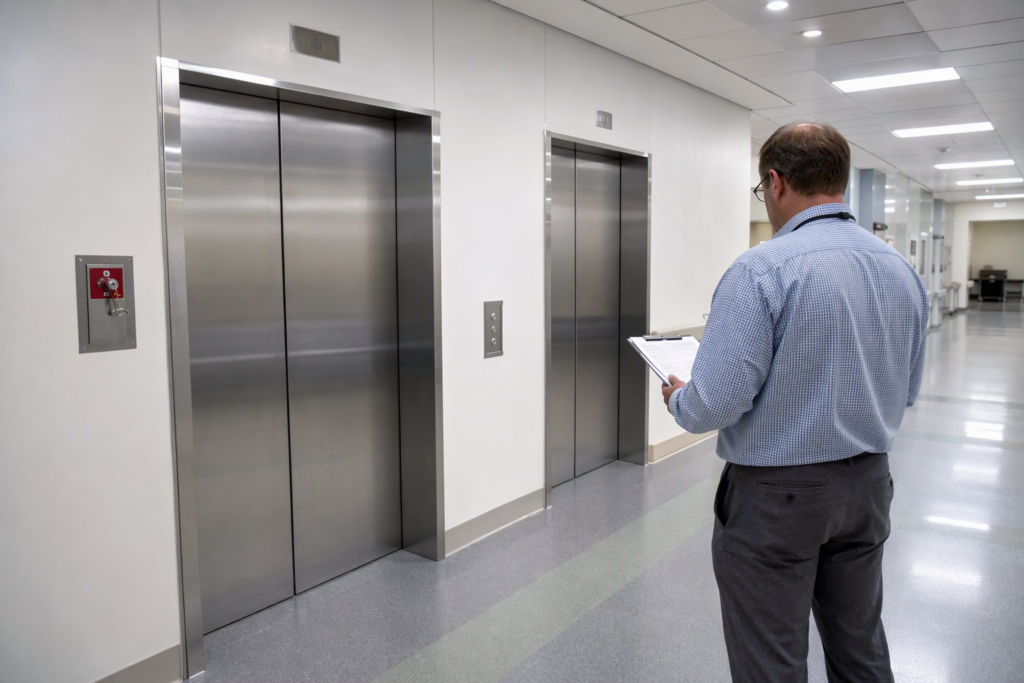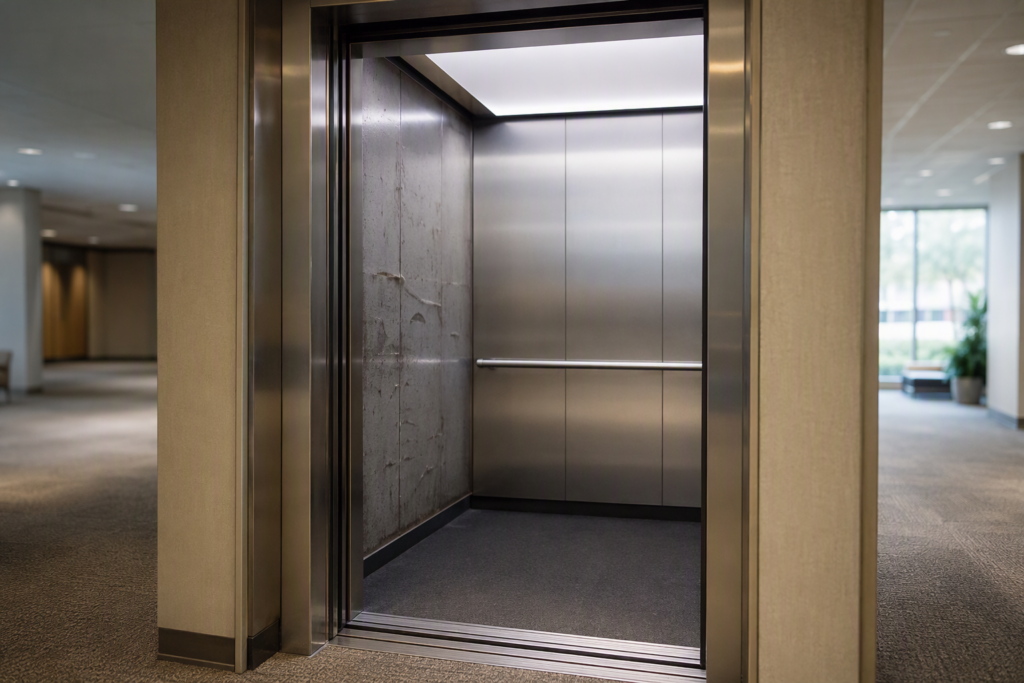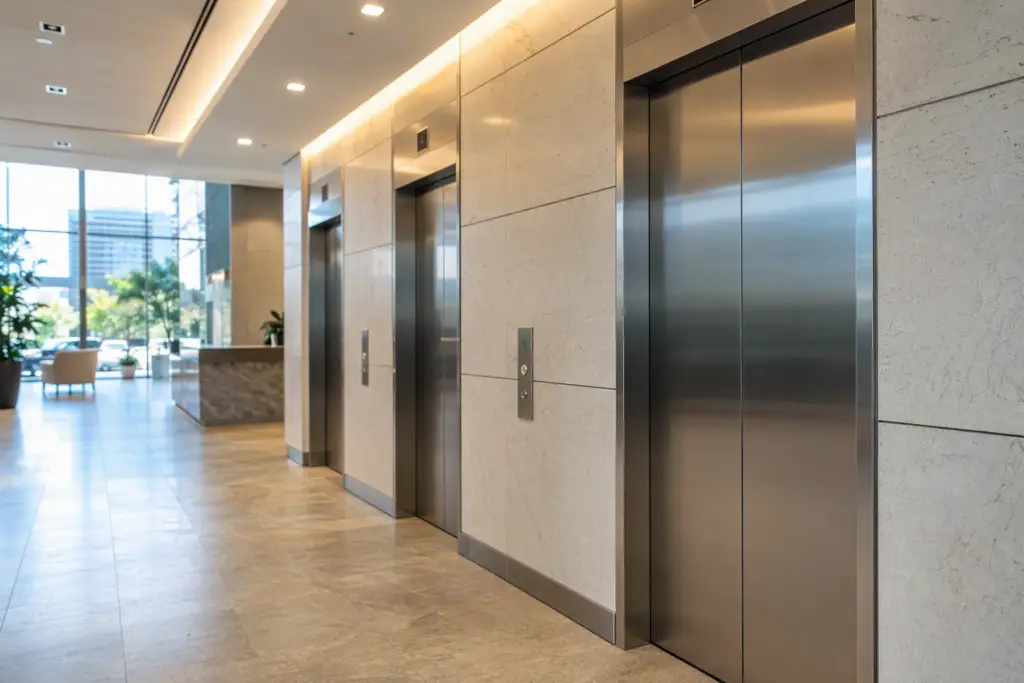
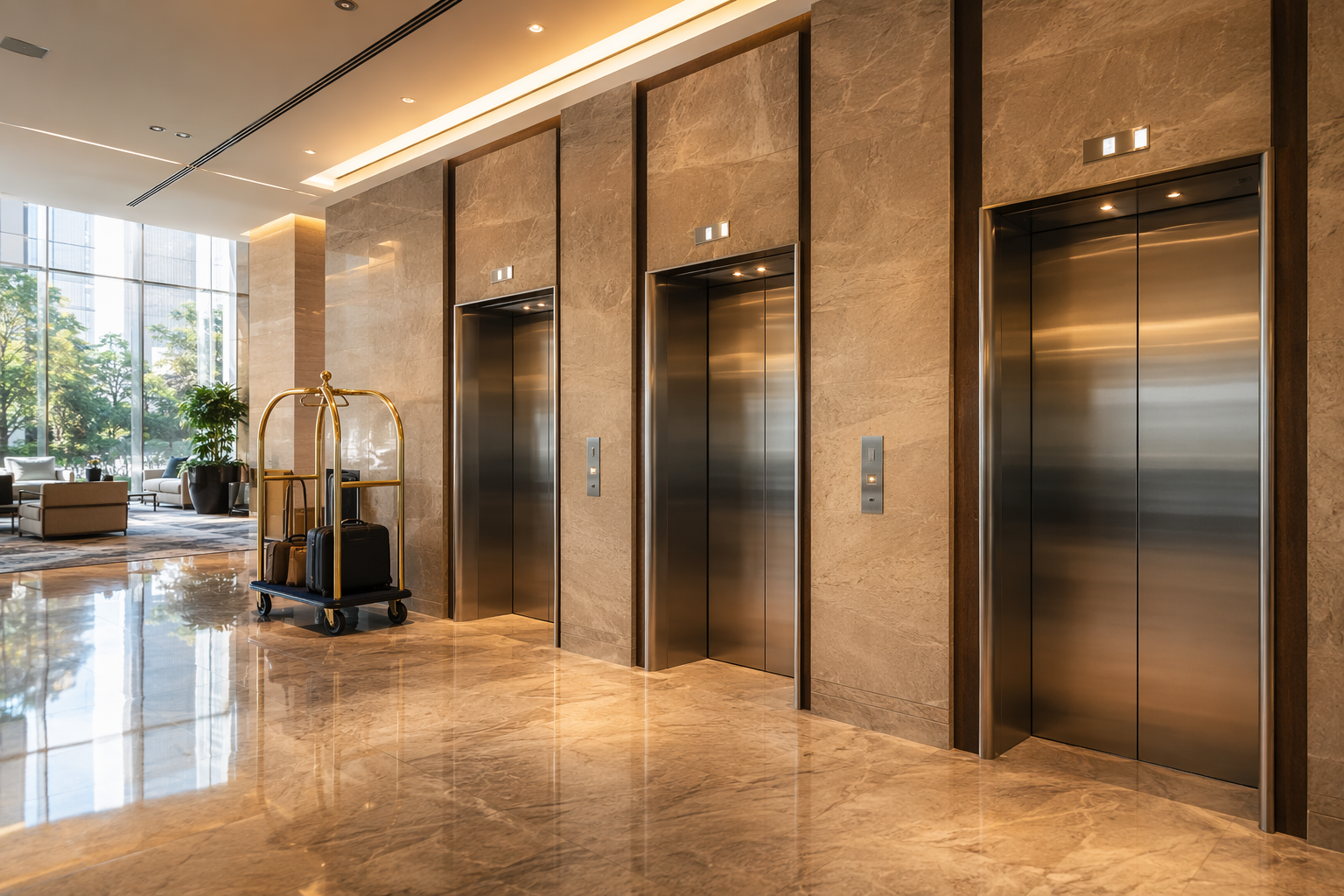
Hotels operate elevators around the clock, seven days a week. Unlike low-traffic buildings, a hotel elevator may carry hundreds of guests, housekeeping carts, luggage, and service personnel every single day. That continuous demand makes proactive, structured maintenance not just a best practice — it is a baseline requirement for guest safety, regulatory compliance, and property reputation. The guidance below outlines the full scope of what hotel operators across Houston, Dallas, Austin, San Antonio, Los Angeles, and San Diego need to know in 2026.
What Does ASME A17.1 Require for Hotel Elevators?

The ASME A17.1 Safety Code for Elevators and Escalators is the foundational standard governing elevator design, installation, and maintenance across the United States. For hotels, this code establishes mandatory maintenance intervals, inspection procedures, and documentation requirements that every property must meet regardless of brand flag or star rating.
Key obligations under ASME A17.1 include:
- Periodic inspections: Elevators must be inspected and tested at intervals specified by the authority having jurisdiction (AHJ) — typically the state or local elevator safety office. Most Texas and California jurisdictions align closely with ASME A17.1 intervals.
- Maintenance control program (MCP): The code requires that a written maintenance control program be in place, documenting tasks, intervals, and the identity of the qualified person performing each task.
- Safety device testing: Governors, safeties, buffers, and oil buffers must be tested according to prescribed schedules.
- Documentation retention: Service records must be retained on-site or made available to inspectors on demand.
Non-compliance can result in failed inspections, elevator shutdowns, and — in the most serious cases — legal liability following an incident. AmeriTex Elevator structures all hotel maintenance agreements around current ASME A17.1 requirements so that clients have a documented, defensible compliance record.
How Does ADA Compliance Apply to Hotel Elevators?
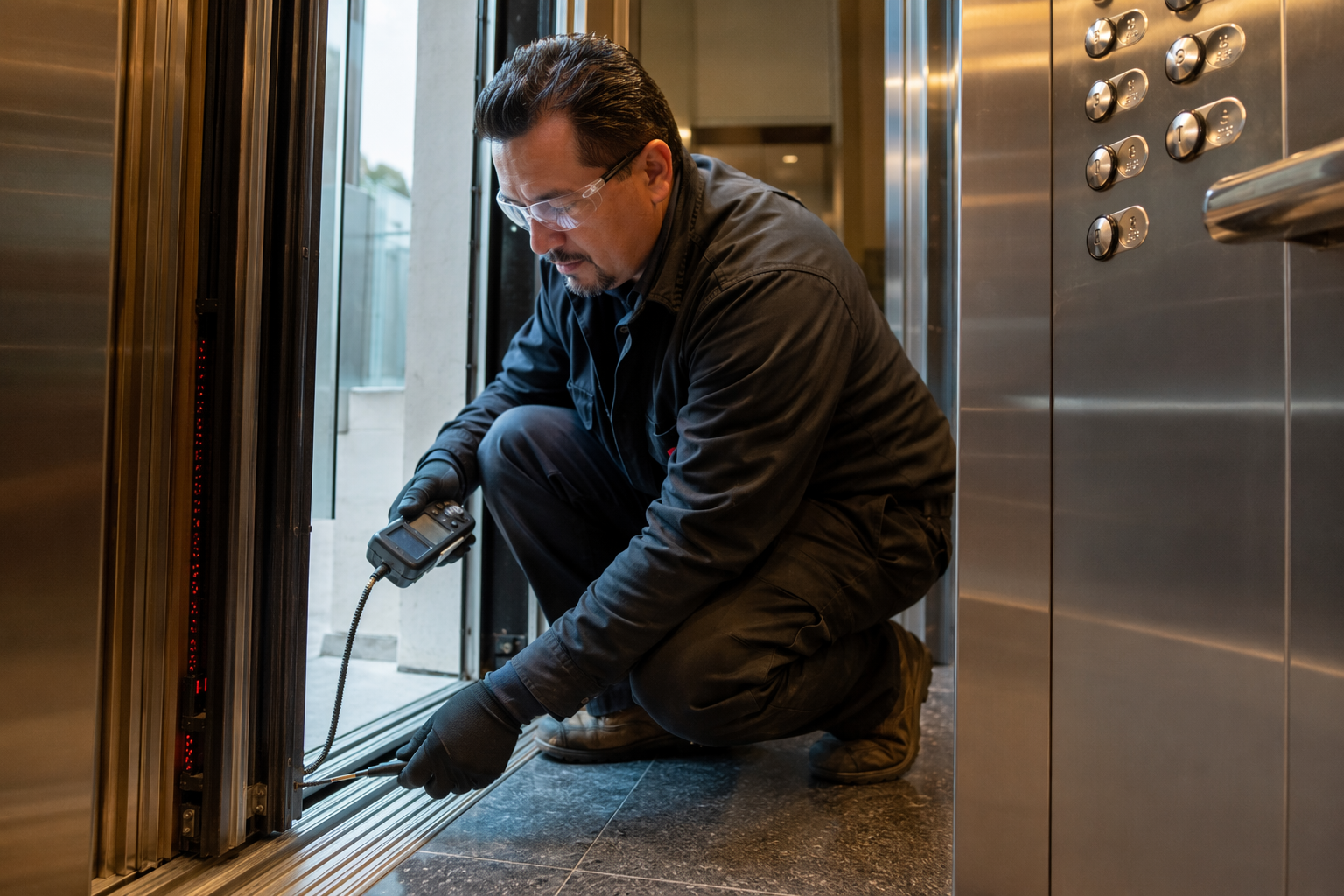
The Americans with Disabilities Act (ADA) mandates that elevators serving public accommodations — including hotels — meet accessibility standards for door timing, control placement, audible signals, and floor designation. Maintenance plays a direct role in ADA compliance because a malfunctioning door sensor, a worn-out audible chime, or a broken Braille button is not just a maintenance issue — it is a potential civil rights violation.
Hotel maintenance programs should include routine verification of:
- Door reopening devices and sensor responsiveness
- Door dwell times adequate for guests using mobility aids
- Floor-designating and position indicators (visual and audible)
- Emergency two-way communication systems in each car
- Car leveling accuracy so guests in wheelchairs can enter and exit safely
What Are the Core Components of a Hotel Elevator Maintenance Program?
A comprehensive hotel elevator maintenance program addresses mechanical, electrical, and safety systems on a tiered schedule — daily visual checks by hotel staff, monthly or quarterly technician visits, and annual full inspections. The following components should be covered:
- Traction and hydraulic machinery: Motor, drive sheave, pump unit, and fluid levels (hydraulic systems)
- Ropes and chains: Inspection for wear, elongation, and lubrication
- Brakes: Adjustment and wear verification
- Door systems: Operator, hangers, tracks, sills, and contact systems
- Safety devices: Governor, safeties, and buffers per ASME A17.1 test schedules
- Control systems: Logic controllers, wiring, and software updates where applicable
- Car interior and sill: Leveling accuracy and cab condition
- Emergency systems: Lighting, communication, and battery backup
How Often Should Hotel Elevators Be Serviced?
Service frequency depends on elevator type, usage volume, and applicable jurisdiction requirements. High-traffic hotel elevators typically require more frequent attention than the minimum code intervals. A tiered approach is widely recommended:
- Daily: Visual checks by trained hotel staff — unusual sounds, door behavior, leveling issues
- Monthly: Technician inspection of lubrication points, door operation, and safety devices
- Quarterly: More thorough mechanical and electrical review
- Annually: Full code inspection and safety test by a qualified inspector as required by the AHJ
- Every five years (where required by AHJ): Full-load safety test and governor/buffer tests per ASME A17.1 cycles
AmeriTex Elevator helps hotel operators across Texas and California build a service calendar that satisfies both code minimums and the practical demands of a busy property.
What Maintenance Tasks Can Hotel Staff Perform?
While licensed technicians must perform all mechanical and electrical maintenance, trained hotel staff play a critical supporting role:
- Conduct daily walkthroughs and note any unusual noises, odors, or door hesitation.
- Verify the certificate of inspection is current and posted in each elevator cab as required by state law.
- Ensure emergency phone or intercom is functional by conducting a brief test at the start of each shift.
- Log and immediately report any guest complaints related to elevator performance.
- Keep elevator lobbies and sills free of debris that could interfere with door sensors.
- Do not attempt to manually reset an elevator that has stopped between floors — contact the elevator service provider.
What Are the Most Common Causes of Hotel Elevator Breakdowns?
Understanding failure patterns helps hotels prioritize preventive attention. Common contributors to unplanned outages include:
- Door system failures: The most frequent cause of elevator stoppages — often traced to worn door rollers, misaligned sills, or dirty door tracks.
- Deferred lubrication: Dry guide rails, sheaves, and governor ropes accelerate wear and can trigger safety shutdowns.
- Rope or chain wear: High-traffic traction elevators see rope wear accumulate faster than in low-use applications.
- Control system faults: Outdated or poorly maintained controllers generate nuisance faults that take elevators out of service unexpectedly.
- Overloaded cars: Hotels frequently transport luggage carts, banquet equipment, and large groups — consistent overloading accelerates mechanical wear.
How Should Hotels Handle an Emergency Elevator Entrapment?
- Establish two-way voice contact with the trapped passenger via the in-car emergency phone.
- Assure the passenger that help is on the way and advise them not to attempt to exit the car on their own.
- Contact your elevator service provider immediately to dispatch a qualified technician.
- If there is a medical emergency inside the car, contact emergency services at the same time.
- Keep a staff member stationed at the elevator landing to communicate with the passenger until the technician arrives.
- Do not allow untrained personnel to attempt manual retrieval.
- Document the event, including time of entrapment, time of resolution, and technician findings, for your maintenance control program records.
Proper emergency communication equipment — maintained and tested per ASME A17.1 and ADA requirements — is essential to a safe and rapid resolution.
What Should Hotels Look for When Choosing an Elevator Maintenance Vendor?
Vendor selection has long-term consequences for elevator reliability, code compliance, and total cost of ownership. Key evaluation criteria include:
- State licensing: Texas and California both require elevator contractors and mechanics to hold active state licenses. Verify credentials before signing any agreement.
- Maintenance control program documentation: A qualified vendor should provide a written MCP aligned with ASME A17.1 requirements — not just a generic service schedule.
- Parts availability and OEM compatibility: Vendors who stock common parts locally reduce downtime significantly.
- Transparent service records: You should receive detailed reports after every visit, not just a signature on a work order.
- Multi-state or multi-market capability: Hotel groups operating across Texas and California benefit from a vendor with consistent coverage. AmeriTex Elevator serves Houston, Dallas, Austin, San Antonio, Los Angeles, and San Diego, providing uniform standards across a portfolio.
What Are the Elevator Compliance Requirements Specific to Texas and California Hotels?
Both Texas and California adopt ASME A17.1 as their base standard but layer on state-specific administrative requirements:
- Texas: The Texas Department of Insurance (TDI) oversees elevator safety. Hotels must obtain a current Certificate of Compliance for each elevator, posted visibly inside the cab. Annual inspections are required, conducted by a licensed inspector.
- California: The California Department of Industrial Relations, Elevator Unit, administers elevator permits and inspections. Permit certificates must be displayed in the car. California also has specific seismic design and retrofit considerations that can affect older hotel elevator installations in Los Angeles and San Diego.
AmeriTex Elevator maintains current knowledge of the administrative requirements in each market it serves, helping hotel operators stay ahead of permit renewals and inspection cycles.
How Does Preventive Maintenance Affect Hotel Elevator Lifespan?
Elevators that receive consistent, documented preventive maintenance operate reliably for significantly longer periods than those managed reactively. Proactive attention to lubrication, door systems, and control components delays the onset of major component failures. For hotels, avoiding even a single extended outage during peak occupancy has tangible value in guest satisfaction and reputational standing. A well-maintained elevator also commands stronger resale or refinancing valuation for the property as a whole.
Questions Your Inspector Will Ask
When a state-licensed elevator inspector arrives at your hotel, they are evaluating not just the equipment — they are assessing your maintenance program’s rigor. Be prepared to answer:
- Is a current Certificate of Compliance or Permit displayed in each elevator cab? Inspectors verify this as a first step.
- Can you produce your Maintenance Control Program documentation? ASME A17.1 requires a written MCP to be available on-site or on demand.
- When was the last full safety test performed, and where is the record? Governor, safety, and buffer tests must be documented with dates and technician identification.
- Has the emergency two-way communication system been tested and logged? ADA and ASME both require functional in-car emergency communication.
- Are lubrication and adjustment tasks being performed at the intervals specified in your MCP? Gaps in lubrication records are a common deficiency finding.
- Has any equipment modification been performed since the last inspection, and was a permit obtained? Unpermitted modifications are a serious compliance issue.
- Are all safety devices — including door reopening devices and overspeed governors — confirmed functional? Inspectors will test these directly; pre-testing them in your maintenance cycle prevents surprises.
AmeriTex Elevator provides clients with organized inspection-ready documentation packages as part of its service process, so hotel operators are never caught unprepared.
What Is the Cost of Deferred Hotel Elevator Maintenance?
Deferred maintenance compounds cost in several ways. Minor issues — a worn door roller, a low hydraulic fluid level, a fraying rope — become major failures when left unaddressed. Beyond repair costs, hotels face:
- Lost revenue during extended elevator outages in high-occupancy periods
- Potential citations, fines, or mandatory elevator shutdowns by the AHJ following failed inspections
- Increased liability exposure in the event of a guest injury where maintenance records are incomplete
- Accelerated replacement timelines for major components that could otherwise have been extended through proactive care
A structured maintenance program is an investment that consistently outperforms a reactive repair strategy over the life of the equipment.
How Should Hotels Manage Elevator Maintenance Across Multiple Properties?
Hotel groups and management companies operating multiple properties benefit from a centralized maintenance strategy:
- Standardize a maintenance control program template that meets both ASME A17.1 and state-specific requirements across all markets.
- Use a single service provider with multi-market coverage to ensure consistent documentation standards and technician training levels.
- Consolidate inspection calendars so renewals and safety test cycles are tracked at the portfolio level, not property by property.
- Establish a centralized log for guest complaints and entrapment events to identify equipment trends across the portfolio.
AmeriTex Elevator serves hotel operators across Houston, Dallas, Austin, San Antonio, Los Angeles, and San Diego, making portfolio-wide standardization practical without requiring multiple vendor relationships.
Ready to Strengthen Your Hotel Elevator Maintenance Program?
Keeping hotel elevators safe, code-compliant, and guest-ready requires a structured program, documented records, and a service partner who knows the requirements in your market. Contact AmeriTex Elevator for a free elevator assessment and learn how a professionally managed maintenance program can protect your guests, your staff, and your property.
Contact AmeriTex Elevator for a free elevator assessment: 866-679-4313
Need elevator service you can rely on? AmeriTex Elevator is ready to help.