Elevator Service in Houston, TX | AmeriTex Elevator
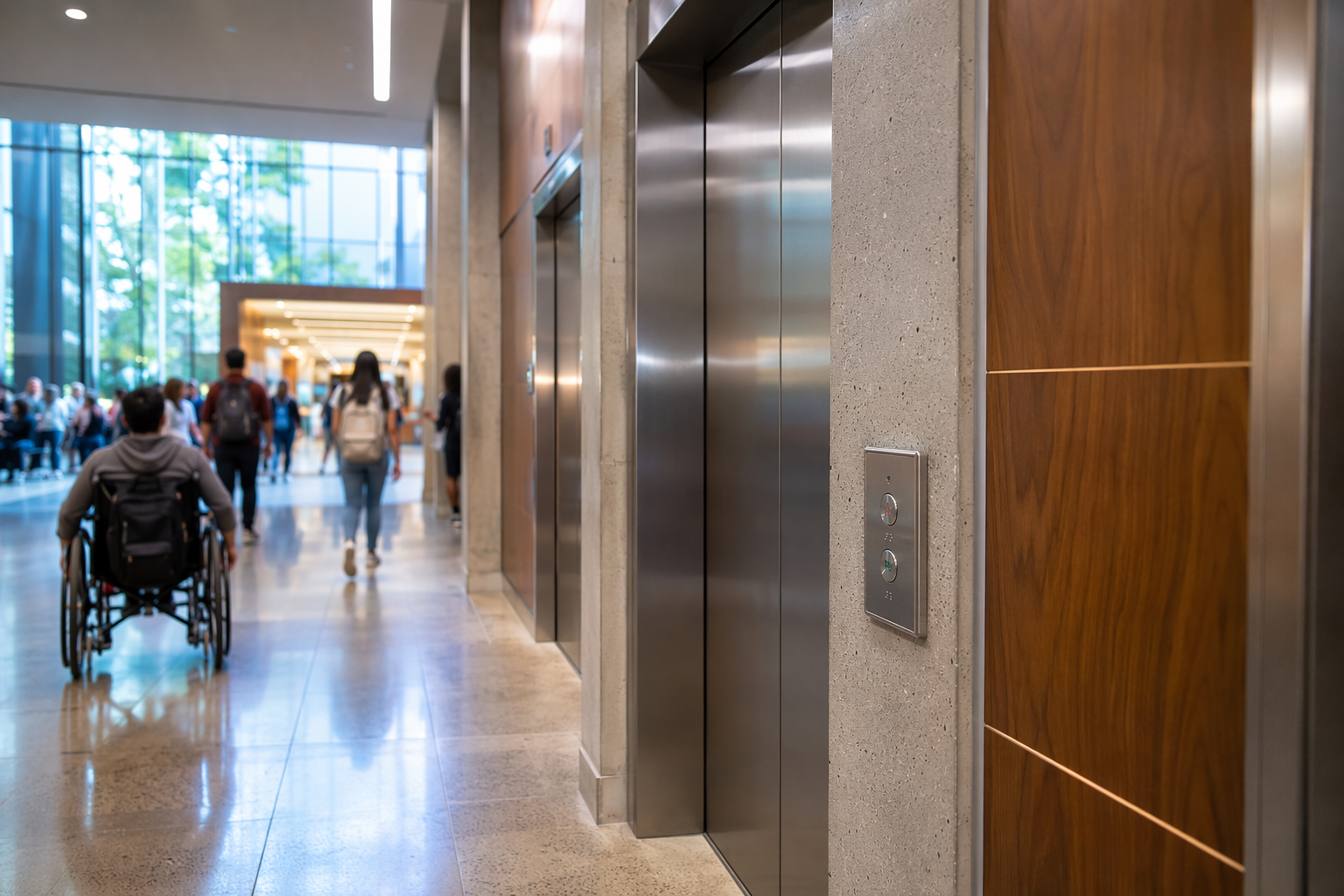
University elevator ADA compliance in Houston, TX requires ongoing attention to federal accessibility standards, Texas state elevator regulations, and the operational demands of high-traffic academic environments. AmeriTex Elevator serves colleges, universities, and higher education campuses across the Houston metro area, providing inspections, modernization, maintenance, and compliance consulting tailored to the unique needs of institutional facilities.
For university facilities managers, ADA elevator compliance is not a one-time checkbox — it is a continuous obligation. Elevators on campus must serve everyone equally, including individuals who use wheelchairs, have visual impairments, or have mobility limitations. Non-compliance exposes institutions to federal complaints, civil litigation, and reputational harm.
—
What Does ADA Compliance Mean for University Elevators?
The Americans with Disabilities Act (ADA) establishes federal accessibility requirements that apply to virtually all university buildings, whether public or private, that serve the general public or enrolled students. For elevators, ADA compliance covers a broad range of design and operational standards, including:
- Cab dimensions: Elevator cars must provide sufficient floor space to accommodate wheelchair users, including room to maneuver.
- Door operation: Doors must remain open long enough for individuals with mobility impairments to enter and exit safely, with reopening devices that respond to obstructions.
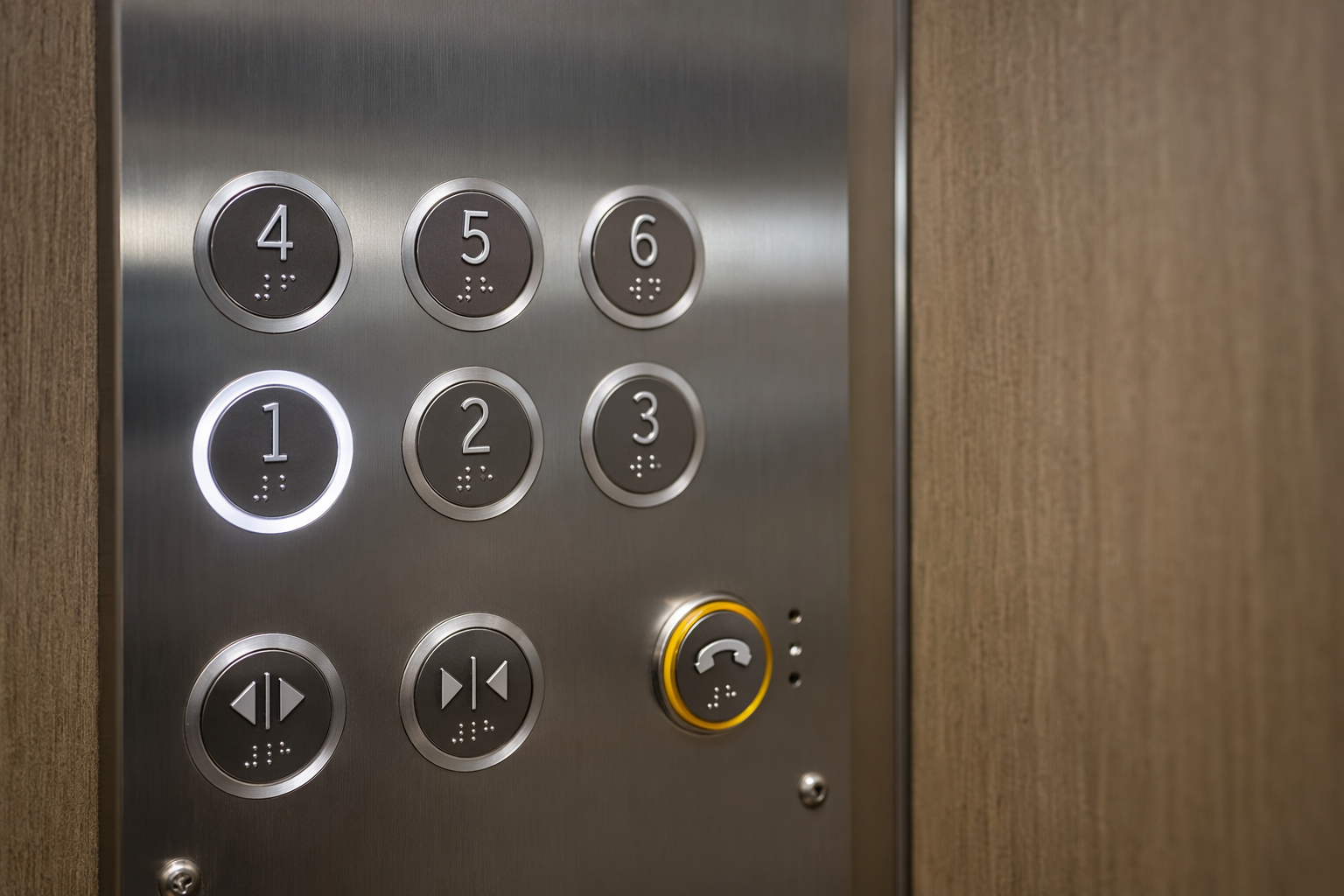
- Control panels: Buttons must be within reach range standards, include raised characters and Braille, and be positioned at accessible heights.
- Audible and visual signals: Hall lanterns and audible tones must indicate car arrival direction and floor, and floor designations must be announced verbally inside the cab.
- Leveling accuracy: Cars must level within a specified tolerance so there is no gap or step between the cab floor and the landing.
- Emergency communication: Two-way communication systems must be accessible to individuals who are deaf or hard of hearing, often requiring visual indicators.
These requirements apply under the ADA Standards for Accessible Design, which are incorporated by reference into the Department of Justice’s regulations. Universities undergoing new construction or significant alterations after the effective date of the ADA must ensure full compliance. Existing facilities are subject to the “readily achievable” barrier removal standard.
—
Which Texas Elevator Codes Apply to University Facilities?

Texas elevator safety is governed at the state level through the Texas Department of Insurance (TDI), which administers the Elevator Safety Act. Texas has adopted the ASME A17.1 Safety Code for Elevators and Escalators as the foundational technical standard for elevator installation, alteration, and maintenance in the state.
Key regulatory considerations for Houston university elevators include:
- State permits and certificates of operation: All elevators in Texas must hold a valid certificate of operation issued by TDI or a TDI-authorized third-party inspector. Universities are responsible for ensuring these certificates remain current.
- Periodic inspections: Texas requires periodic inspections of elevators by licensed elevator inspectors. The inspection frequency depends on elevator type and use classification — high-traffic university elevators may have specific scheduling obligations.
- Alteration permits: Any modification to an existing elevator — including ADA upgrade work — requires a permit prior to the commencement of work under Texas law.
- Qualified contractors: Elevator work in Texas must be performed by licensed elevator contractors and mechanics as defined under the Elevator Safety Act.
- ASME A17.3: The ASME A17.3 Safety Code for Existing Elevators and Escalators provides the standard applied during inspections of older equipment, which is relevant for universities with aging elevator infrastructure.
In 2026, facilities managers should confirm which edition of ASME A17.1 their jurisdiction has adopted, as Texas periodically updates its code adoption schedule through TDI rulemaking.
—
What Are the Most Common ADA Violations Found in University Elevators?
University elevators — particularly those installed before the ADA’s enactment or before subsequent updates to the ADA Standards — frequently present compliance gaps. Common deficiencies identified during assessments include:
- Control buttons positioned outside the required reach range for seated users
- Missing or worn Braille designations on floor buttons and door jamb signage
- Door timing that does not accommodate individuals with mobility impairments
- Inadequate cab lighting that limits visibility for individuals with low vision
- Emergency phones without visual or text-based communication capability
- Leveling drift that creates tripping hazards at landings
- Hall lanterns that are non-functional or missing entirely
A professional ADA elevator compliance audit performed by a qualified elevator contractor provides universities with a documented gap analysis and a prioritized remediation roadmap.
—
How Should a University Prioritize ADA Elevator Upgrades?
When a gap assessment reveals multiple deficiencies, universities benefit from a structured approach to remediation. The following steps describe a compliant and practical upgrade process:
- Conduct a full accessibility audit of all vertical transportation equipment across campus, documenting every deficiency against the current ADA Standards for Accessible Design.
- Classify deficiencies by severity — items that create complete barriers to access (e.g., a non-operational cab) take priority over items that reduce convenience (e.g., worn Braille).
- Assess whether alterations trigger full path-of-travel compliance — under ADA rules, a significant alteration to a building area can trigger an obligation to make the path of travel to that area accessible, which includes elevators.
- Obtain required Texas alteration permits from TDI before any physical modification begins.
- Schedule upgrades to minimize campus disruption, coordinating with facilities management to use breaks, evenings, or phased shutdowns.
- Document all completed work with inspection records, permits, and certificates of operation for institutional compliance files.
- Establish a preventive maintenance schedule to preserve compliance and catch drift or component wear before the next inspection cycle.
—
Does ADA Compliance Require Full Elevator Replacement?
Not necessarily. Many ADA compliance deficiencies in university elevators can be addressed through targeted modernization rather than full replacement. Upgrades such as new control panels with compliant button placement and Braille, updated door operators with extended open times and reopening devices, new leveling controls, and two-way communication system replacements can bring an existing cab into compliance at a fraction of the cost of full replacement.
Whether modernization or replacement is more appropriate depends on the age of the equipment, the condition of the structural components, the scope of required changes, and the institution’s long-term capital plan. AmeriTex Elevator evaluates each elevator on its individual merits and provides universities with clear, practical options.
—
What Role Does Preventive Maintenance Play in Sustained ADA Compliance?
ADA compliance is not maintained by a single upgrade — it requires ongoing attention. Components that affect accessibility, such as door operators, leveling systems, and emergency communication devices, are subject to wear and drift over time. A structured preventive maintenance program ensures that:
- Door timing and force remain within accessible parameters
- Cab leveling is monitored and adjusted before gaps develop at landings
- Emergency communication systems are tested and remain functional
- Lighting levels are maintained in cabs and at landings
- Braille and tactile signage is intact and legible
Universities that combine regular maintenance contracts with their compliance programs reduce the risk of complaints, avoid emergency repair costs, and demonstrate institutional commitment to accessibility under the ADA.
—
What Should a University Do Immediately If an Elevator Fails an Inspection?
- Remove the elevator from service immediately if the inspector has issued an out-of-service order or if the deficiency poses a safety or accessibility barrier that cannot be mitigated.
- Post clear signage at all affected landings directing users to the nearest accessible alternative route, in compliance with ADA path-of-travel obligations.
- Notify your elevator service contractor to assess the deficiency and provide a written scope of corrective work.
- File for any required permits with TDI before corrective work begins, as unpermitted alterations can compound compliance violations.
- Document the failure, corrective actions taken, and timeline for your institutional compliance records and any required reporting to TDI.
- Schedule a re-inspection once corrective work is complete and a new certificate of operation can be issued.
—
Why Do Houston Universities Choose AmeriTex Elevator?
AmeriTex Elevator is a certified elevator service company serving Houston, TX and the surrounding region. Universities, community colleges, medical campuses, and other higher education institutions across the Houston metro area rely on AmeriTex for ADA compliance assessments, modernization projects, preventive maintenance programs, and emergency service coordination.
AmeriTex’s service area includes Houston’s urban core, the Texas Medical Center district, and surrounding communities throughout Harris County and the greater Houston region. The team works within the Texas regulatory framework — including TDI permitting, ASME code compliance, and ADA Standards — to ensure university clients maintain lawful and fully accessible vertical transportation.
For institutions managing aging elevator infrastructure, navigating a capital improvement cycle, or responding to an ADA complaint, AmeriTex provides the technical expertise and local regulatory knowledge that Houston-area campuses require.
—
Schedule your university elevator ADA compliance consultation with AmeriTex Elevator today.
Need elevator service you can rely on? AmeriTex Elevator is ready to help.