Apartment Building Elevator Maintenance Requirements: Complete FAQ Guide
Apartment building elevators in Texas and California must meet annual inspection requirements, follow a structured preventive maintenance schedule aligned with ASME A17.1 Safety Code for Elevators and Escalators, and carry a valid certificate of inspection posted visibly in the cab. Building owners are legally responsible for ensuring compliance with both state and local codes, and failure to maintain elevators can result in fines, shutdowns, and significant liability exposure.
What are the basic legal requirements for apartment building elevator maintenance?
Apartment building owners are legally required to maintain elevators in safe operating condition, obtain periodic inspections from licensed inspectors, and comply with the applicable edition of ASME A17.1 as adopted by their state.
In Texas, elevator safety is governed by the Texas Department of Insurance (TDI) under the Texas Elevator Safety Act. All elevators in public or semi-public buildings — including apartment complexes — must be inspected by a licensed elevator inspector at intervals defined by state regulation. California operates under the Division of Occupational Safety and Health (Cal/OSHA), which enforces the California Elevator Safety Construction Code for multi-unit residential buildings.
At the federal level, the Americans with Disabilities Act (ADA) imposes additional requirements for accessibility features, including cab dimensions, control panel height, and audible/visual floor indicators in buildings subject to ADA jurisdiction. While the ADA does not govern routine maintenance directly, it does require that accessible elevators remain operational and that outages are remedied promptly.
How often must apartment building elevators be inspected?
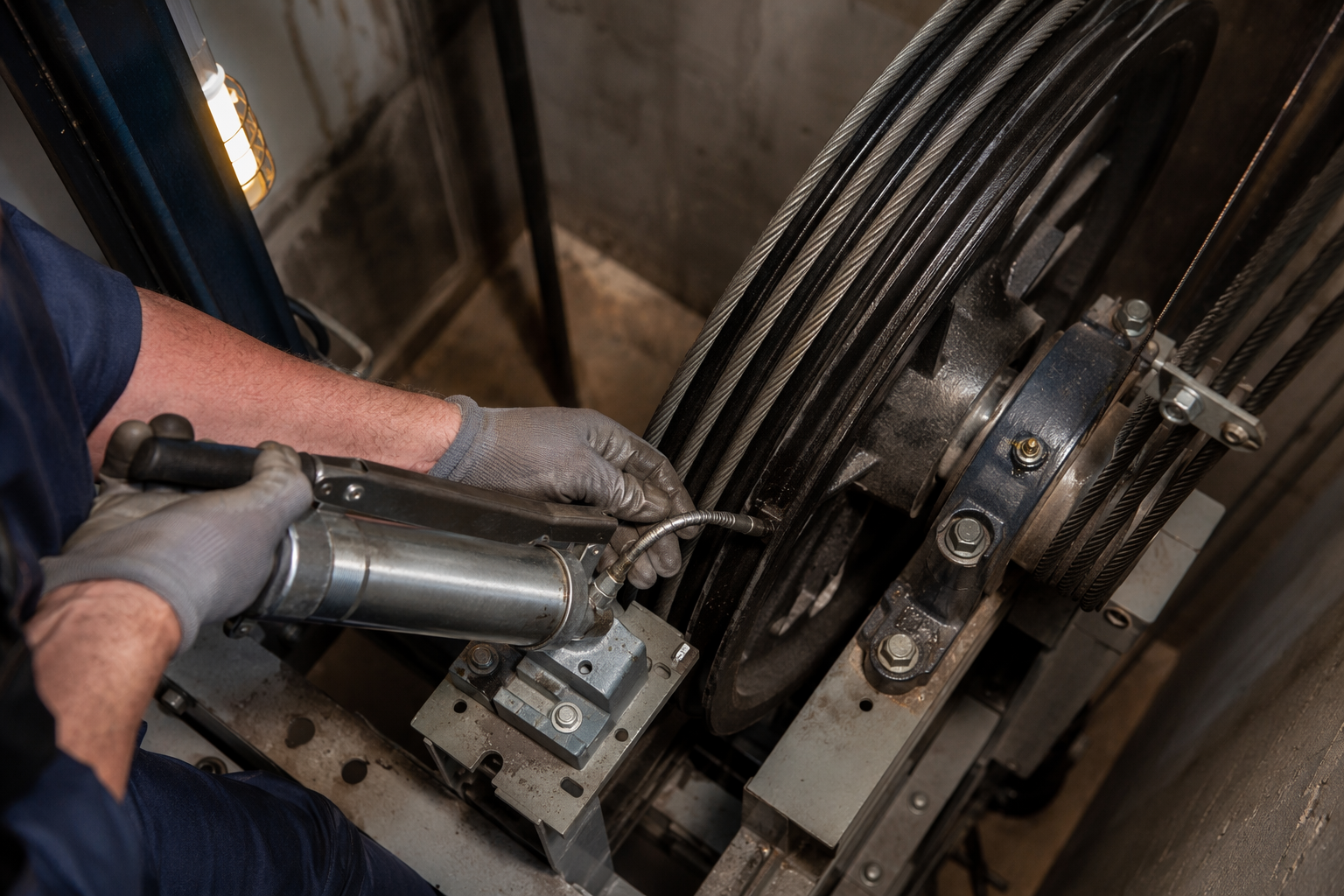
Most jurisdictions, including Texas and California, require a full elevator inspection at least once every 12 months, with periodic maintenance occurring throughout the year.
The ASME A17.1 Safety Code for Elevators and Escalators establishes the baseline inspection and testing intervals adopted by most U.S. states. Annual inspections typically involve a comprehensive examination of all mechanical, electrical, and safety systems. In addition to annual inspections, five-year periodic tests — including full-load safety tests and governor rope tests — are required under ASME A17.1 for most traction elevator systems.
Texas and California may impose additional frequency requirements or shorter intervals for older equipment. Building owners should consult their current state authority to confirm the precise schedule applicable to their equipment type and age.
What does a standard elevator maintenance contract cover for apartment buildings?
A standard elevator maintenance contract for apartment buildings typically covers lubrication, adjustment, cleaning, parts inspection, emergency callback service, and documentation — though contract scope varies significantly between providers.
Maintenance contracts generally fall into several tiers. A basic oil-and-grease (OAG) contract covers lubrication and minor adjustments but excludes parts and labor for repairs. A full-maintenance contract covers parts and labor within defined scope. A comprehensive contract covers virtually all components, including controller boards and drive systems.
Building owners should scrutinize contract exclusions carefully. Items such as hydraulic fluid replacement, cab interior components, and major modernization work are often carved out even in full-maintenance contracts. AmeriTex Elevator provides transparent contract documentation for apartment communities across Houston, Dallas, Austin, San Antonio, Los Angeles, and San Diego so that property managers understand exactly what is and is not included before signing.
What is ASME A17.1 and why does it matter for apartment elevators?
ASME A17.1 is the primary national safety code governing elevator design, installation, maintenance, and inspection in the United States, and it forms the legal basis for most state elevator regulations.
The ASME A17.1 Safety Code for Elevators and Escalators is published by the American Society of Mechanical Engineers and is updated on a regular cycle. Individual states adopt specific editions of this code — Texas and California have each adopted versions of A17.1 and incorporated state-specific amendments. The code covers safety requirements for car enclosures, hoistway construction, safeties, buffers, governors, control systems, and the maintenance and testing regimes required to keep those systems performing within safe parameters.
For apartment building owners, the practical significance of A17.1 is that compliance is not optional — it is the legal standard against which inspectors evaluate equipment. Non-compliant elevators can be placed out of service by the state authority having jurisdiction (AHJ), forcing costly emergency repairs and leaving residents without elevator access.
What are the ADA requirements for apartment building elevators?
Under the Americans with Disabilities Act, passenger elevators serving multi-story apartment buildings must meet specific dimensional, operational, and signage requirements to ensure access for people with disabilities.
ADA Standards for Accessible Design require that elevator cabs provide a minimum clear floor area, that call buttons be mounted within reachable height ranges, that floor designations be posted in raised characters and Braille, and that audible and visible signals indicate car arrival and direction. Existing buildings undergoing renovation may trigger ADA compliance upgrades depending on the scope of work.
From a maintenance perspective, ADA compliance means that accessibility features — including door sensors, audible indicators, and Braille signage — must be kept in functional condition. A door that fails to reopen when a person in a wheelchair is detected, for example, creates both an ADA violation and a serious safety risk.
What preventive maintenance tasks should be performed on apartment elevators monthly?
Monthly preventive maintenance for apartment building elevators should include lubrication checks, cab interior inspection, door operation testing, safety device checks, and a review of the machine room environment.
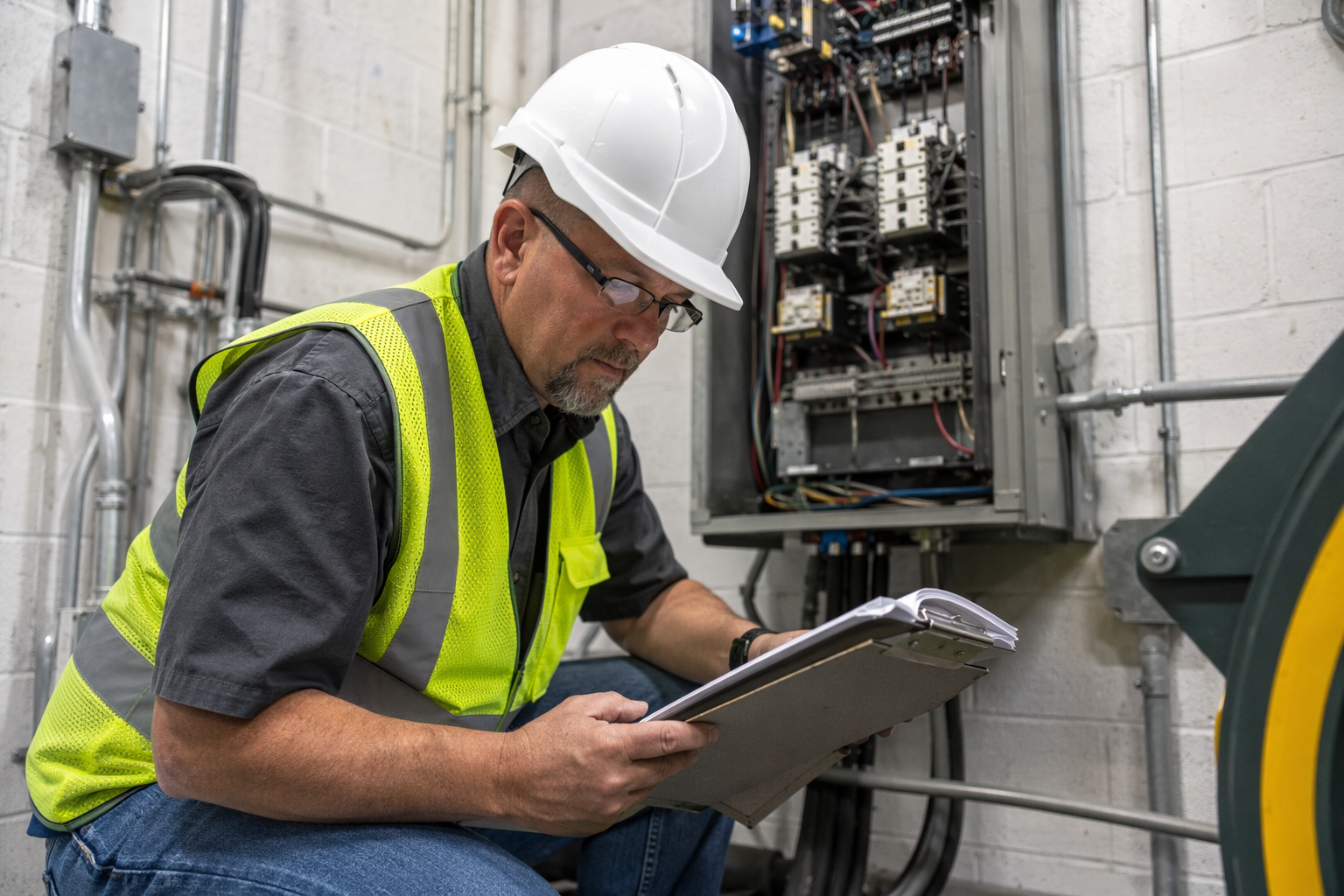
While annual inspections satisfy legal requirements, monthly maintenance visits are considered industry best practice and are typically included in full-service contracts. Regular attention to door operators, rollers, and sill clearances prevents the majority of service calls that apartment buildings experience. Machine room cleanliness, temperature control, and moisture management are also critical — deteriorating environmental conditions in the machine room accelerate wear on electronic controllers and drive components.
Hydraulic elevators require additional attention to fluid levels and hydraulic unit condition. Traction elevators require ongoing monitoring of sheave groove wear and rope condition. The specific checklist varies by equipment type, and a qualified elevator company should develop a maintenance plan tailored to each building’s installed equipment.
What is the five-year elevator test and is it required for apartment buildings?
The five-year periodic test — sometimes called the Category 5 test — is required under ASME A17.1 for most electric traction elevators and involves full-load safety tests and governor and rope tests that go beyond the annual inspection scope.
This test must be conducted by a licensed elevator mechanic and witnessed by a licensed inspector. It verifies that the car safety device, governor, and related components can actually stop and hold a fully loaded car under controlled conditions. For apartment buildings with traction elevators, this test is a mandatory code requirement, not an elective service. Failure to complete and document the five-year test on schedule is a compliance violation that can result in the elevator being taken out of service.
Hydraulic elevators have their own periodic test requirements, including pressure vessel testing of the cylinder, which also follows a defined regulatory schedule. AmeriTex Elevator coordinates the scheduling, documentation, and inspector witness arrangements for five-year tests at apartment communities throughout Texas and California.
What are the most common elevator maintenance violations found in apartment buildings?
The most common violations found during apartment building elevator inspections include expired inspection certificates, missing or malfunctioning emergency lighting, defective door operators, inadequate machine room conditions, and overdue lubrication or rope inspection.
Door-related issues are consistently among the leading causes of service calls and inspection citations. Door closing force, reopening sensitivity, and sill clearance must all fall within code tolerances. Emergency lighting and communication systems are also frequent violation areas — phone systems in elevator cabs must connect to a monitored line capable of reaching help, as required by both ASME A17.1 and local fire codes.
Machine room violations often involve unauthorized storage, inadequate lighting, or temperatures outside acceptable operating ranges for electronic equipment. Building management teams should conduct their own informal walkthroughs of machine rooms periodically and ensure no materials are stored in that space.
How do Texas elevator maintenance requirements differ from California requirements?
| Requirement | Texas | California |
|---|---|---|
| Governing Authority | Texas Department of Insurance (TDI) | Cal/OSHA Elevator Unit |
| Base Code | ASME A17.1 (state-adopted edition) | ASME A17.1 (state-adopted edition) + California amendments |
| Annual Inspection | Required; licensed inspector | Required; certified QEI inspector or Cal/OSHA inspector |
| Certificate Posting | Required in elevator cab | Required in elevator cab |
| Seismic Requirements | Not broadly applicable | Extensive seismic safety requirements apply |
| Five-Year Periodic Test | Required per ASME A17.1 | Required; Cal/OSHA enforces additional documentation |
| Contractor Licensing | Licensed elevator contractor required | Licensed elevator contractor (C-11 license) required |
| Cities Served by AmeriTex | Houston, Dallas, Austin, San Antonio | Los Angeles, San Diego |
California’s requirements are notably more complex due to seismic safety regulations. Elevators in California must comply with seismic provisions that address counterweight retainer plates, guide rail reinforcement, and other earthquake-preparedness measures. These requirements are particularly relevant for apartment buildings in Los Angeles and San Diego, where seismic risk is elevated. AmeriTex Elevator maintains operational knowledge of both Texas and California regulatory environments to serve apartment communities across all six markets.
What should apartment building owners do immediately after an elevator malfunction?
When an elevator malfunctions in an apartment building, the building owner or manager should follow a defined response protocol to protect resident safety and preserve legal compliance.
- Take the elevator out of service immediately if there is any indication of a safety-critical failure — post signage and lock out the unit if possible.
- Ensure all passengers are safely evacuated before any maintenance work begins; contact emergency services if passengers are trapped.
- Document the malfunction — note the time, nature of the problem, any error codes displayed, and witness accounts from residents or staff.
- Contact a licensed elevator service company to conduct a diagnostic assessment of the equipment.
- Notify the relevant state authority if the malfunction involved a serious incident, injury, or equipment failure that may require an incident report under state law.
- Do not return the elevator to service until a licensed elevator mechanic has cleared the unit and all required documentation is completed.
- Review and update maintenance records to reflect the incident and any corrective actions taken.
How long does elevator maintenance typically take in an apartment building?
Routine preventive maintenance visits for an apartment building elevator typically take between two and four hours per unit, depending on equipment type, age, and the scope of the maintenance contract.
Annual inspections, which are separate from maintenance visits, add additional time — typically one to three hours per elevator unit for the inspection itself, plus time for any corrective work identified during the inspection. Five-year periodic tests require more time and must be scheduled when the building can accommodate an extended outage.
Building managers should plan maintenance windows during off-peak hours when elevator demand is lowest — typically mid-morning on weekdays — to minimize disruption to residents. Advance notice to residents through posted signage or building communications is considered best practice and reduces resident complaints significantly.
What happens if an apartment building fails an elevator inspection?
If an apartment building elevator fails its inspection, the authority having jurisdiction can issue a notice of violation, require corrective repairs within a specified timeframe, and order the elevator out of service until compliance is achieved.
The severity of the response depends on the nature of the violation. Minor deficiencies — such as a missing emergency phone test log — may result in a correction notice with a short compliance window. Serious safety violations involving structural, mechanical, or electrical failures can result in immediate shutdown orders. Once shut down by a state authority, the elevator cannot be returned to service until a re-inspection confirms that all cited violations have been corrected.
For apartment buildings, an extended elevator outage creates significant hardship for residents, particularly those with mobility limitations. Building owners face potential liability under the Americans with Disabilities Act and state landlord-tenant law if accessible elevator service is not maintained or restored in a reasonable timeframe. Proactive maintenance is invariably less costly than emergency repairs combined with regulatory penalties.
What records must apartment building owners keep for elevator maintenance?
Apartment building owners must maintain a logbook or equivalent records documenting all inspection reports, maintenance visits, test results, repair work, and certificates of inspection — typically for a minimum period defined by the state authority.
Under ASME A17.1, maintenance records must be kept at the premises or made readily available to inspectors upon request. These records should include the date and nature of each maintenance visit, the name of the mechanic or company performing the work, any deficiencies identified, and the corrective actions taken. Inspection certificates must be posted in the elevator cab and reflect the current valid inspection period.
In Texas and California, inspectors may request maintenance logs during the annual inspection. Gaps in documentation are treated as a compliance concern regardless of whether the underlying work was actually performed. Maintaining complete, organized records protects building owners in the event of an incident investigation or legal dispute.
How much does elevator maintenance cost for an apartment building?
Elevator maintenance costs for apartment buildings vary based on equipment type, number of units, contract scope, building location, and equipment age — and should be evaluated based on total cost of ownership, not contract price alone.
A basic oil-and-grease contract costs less upfront but leaves building owners exposed to parts and labor costs for any repairs. A full-maintenance or comprehensive contract spreads risk more evenly but carries a higher monthly cost. Equipment age is a major cost driver — older elevators with obsolete control systems require more frequent attention and may have limited parts availability, increasing repair costs when components fail.
Building owners evaluating maintenance contracts should request itemized proposals that clearly identify what is included, what is excluded, what the callback response process is, and how major repairs outside contract scope are priced. Comparing proposals based solely on monthly rate without reviewing exclusions is a common and costly mistake.
When should an apartment building consider elevator modernization instead of continued maintenance?
Elevator modernization should be considered when an elevator experiences frequent breakdowns, has obsolete or discontinued components, no longer meets current safety codes, or when maintenance costs approach or exceed the cost of a systematic upgrade.
Equipment that has reached the end of its useful service life presents increasing maintenance challenges. Controllers for older relay-logic or first-generation microprocessor systems may have limited or no parts availability. Drive systems, door operators, and hydraulic units all have finite service lives. When a single critical component fails and cannot be sourced, the cost and downtime of an emergency fix can be substantial.
Modernization also creates an opportunity to bring equipment into compliance with current editions of ASME A17.1 and address ADA accessibility improvements at the same time. A qualified elevator company can conduct a condition assessment of existing equipment and provide a recommendation on whether continued maintenance or modernization represents the better long-term value for a given building.
Are building owners or tenants responsible for elevator maintenance in apartment buildings?
Building owners — not tenants — bear full legal responsibility for elevator maintenance, inspection compliance, and safe operation in apartment buildings.
This responsibility flows from state elevator safety statutes, building codes, and landlord-tenant law. The building owner or property management company is the named party on inspection certificates and maintenance contracts, and is the entity cited for violations and subject to penalties. In multi-owner situations such as condominiums, the homeowners association or governing body typically holds maintenance responsibility for common area elevators.
Insurance implications also fall on the building owner. Most commercial property and general liability policies require that elevators be maintained in compliance with applicable codes as a condition of coverage. A lapse in maintenance that contributes to a passenger injury could create coverage complications in addition to direct liability exposure.
What qualifications should an elevator maintenance company have for apartment buildings?
An elevator maintenance company serving apartment buildings should hold the appropriate state contractor license, employ licensed elevator mechanics, carry adequate insurance, and demonstrate familiarity with both the equipment types installed and the applicable state regulatory requirements.
In Texas, elevator contractors must be licensed by the Texas Department of Insurance. In California, elevator contractors must hold a C-11 Elevator Contractor license issued by the California Contractors State License Board. Mechanics performing maintenance and repair work must hold the appropriate state mechanic license in both states.
Beyond licensing, building owners should evaluate a contractor’s familiarity with the specific equipment installed — whether that is hydraulic, traction, machine-room-less (MRL), or a specific manufacturer’s proprietary system. Proprietary systems sometimes require manufacturer-trained technicians or licensed independent contractors with access to proprietary diagnostic tools. AmeriTex Elevator serves apartment communities across Houston, Dallas, Austin, San Antonio, Los Angeles, and San Diego with technicians licensed under the applicable state requirements for each market.
What OSHA requirements apply to elevator maintenance workers in apartment buildings?
Elevator maintenance workers are covered by OSHA regulations governing general industry safety, including lockout/tagout procedures, electrical safety, and confined space entry when working in elevator pits.
The elevator pit is classified as a permit-required confined space under OSHA standards, and mechanics must follow established confined space entry procedures including atmospheric testing, ventilation, and attendant protocols. Lockout/tagout (LOTO) procedures under OSHA standards are required before maintenance work begins on any energized elevator system.
These requirements are the responsibility of the elevator maintenance company, not the building owner — but building owners should confirm that any contractor they engage follows OSHA-compliant safety practices. A contractor that does not adhere to LOTO and confined space entry standards creates worker safety risk and potential co-employer liability for the building owner in the event of an incident.
How do elevator maintenance requirements differ for hydraulic versus traction elevators in apartment buildings?
Hydraulic and traction elevators have distinct maintenance requirements — hydraulic systems require attention to fluid levels, seals, and cylinder integrity, while traction systems require ongoing monitoring of ropes, sheaves, safeties, and governor systems.
Hydraulic elevators — common in low-rise apartment buildings — require periodic testing of the hydraulic cylinder for leaks and corrosion, particularly in older single-bottom cylinder installations. Hydraulic fluid management is a key maintenance task, and environmental regulations in California impose specific requirements on fluid containment and handling. Modern hydraulic systems often incorporate submersible power units and biodegradable hydraulic fluids that address both performance and environmental concerns.
Traction elevators — more common in mid- and high-rise apartment buildings — require ongoing assessment of wire rope condition, sheave groove profiles, and the car and counterweight guide rail lubrication. Machine-room-less (MRL) traction elevators, increasingly common in newer apartment construction, use integrated machine systems with different maintenance access requirements that technicians must be specifically trained to service.
How can apartment building managers stay ahead of elevator compliance requirements?
Apartment building managers can maintain proactive elevator compliance by implementing a documented maintenance calendar, tracking inspection certificate expiration dates, reviewing maintenance logs quarterly, and working with a licensed elevator company that provides compliance reporting.
A compliance calendar should include the annual inspection due date, the five-year periodic test schedule, monthly maintenance visit dates, and any known component replacement intervals based on equipment condition assessments. Tracking these dates proactively prevents the common scenario where an inspection certificate expires without the building manager’s awareness — a violation that is entirely avoidable with basic administrative attention.
Working with a service provider that delivers written maintenance reports after every visit gives building managers the documentation needed to demonstrate compliance during inspections and in the event of a legal dispute. AmeriTex Elevator provides documented service reports for all maintenance visits at apartment communities across its Texas and California service areas, supporting building owners in maintaining audit-ready compliance records year-round.
Need elevator service you can rely on? AmeriTex Elevator is ready to help.