Who Should I Contact for an Elevator Out of Service & What To Do
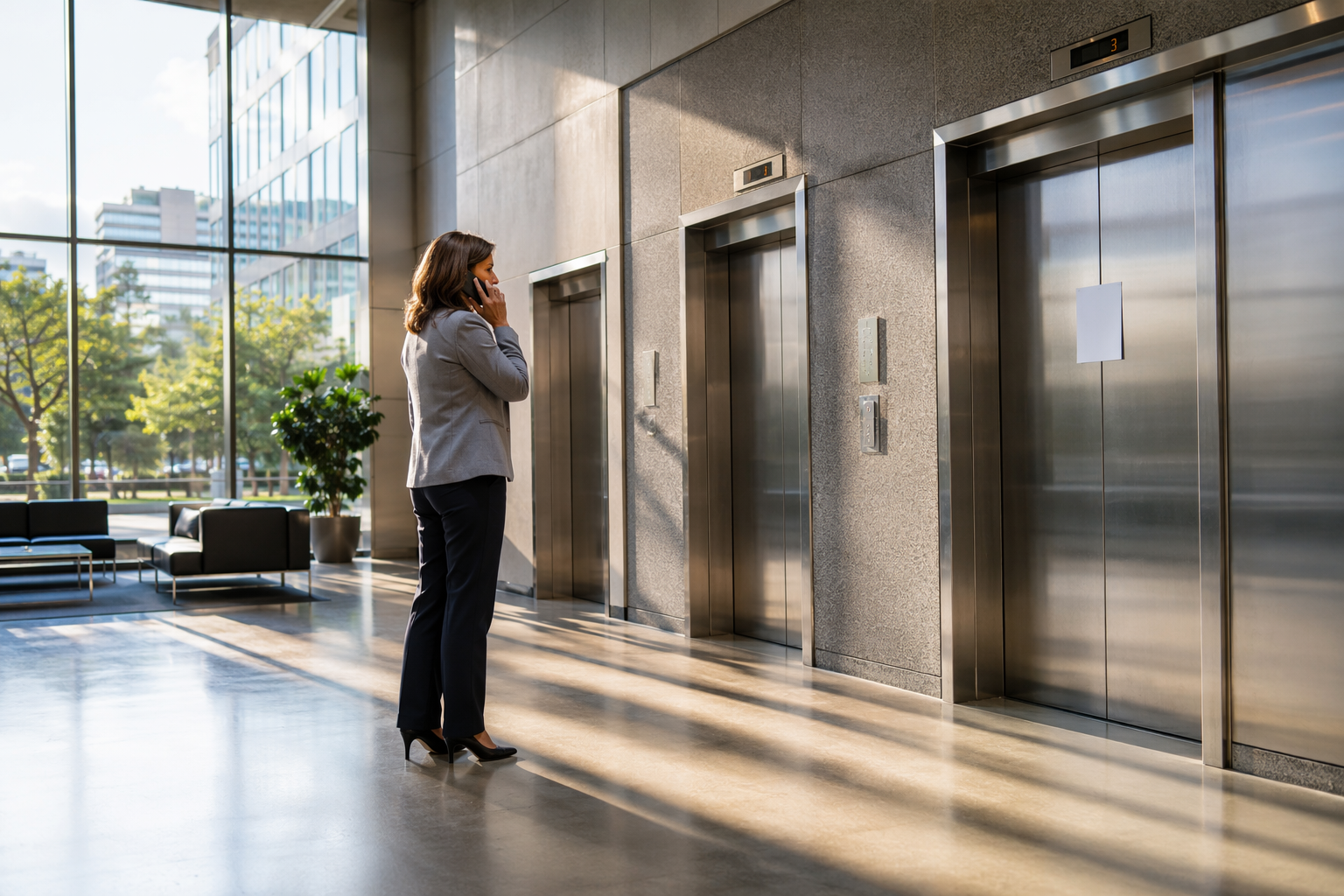
After 15+ years in the elevator industry — working on traction elevators, hydraulic systems, and everything in between across Texas and California — I’ve responded to hundreds of out-of-service calls. The difference between a minor inconvenience and a serious liability almost always comes down to what the building manager did in the first five minutes. This guide walks you through every step, every contact, and every compliance obligation you need to know.
Who Should I Contact First When an Elevator Goes Out of Service?
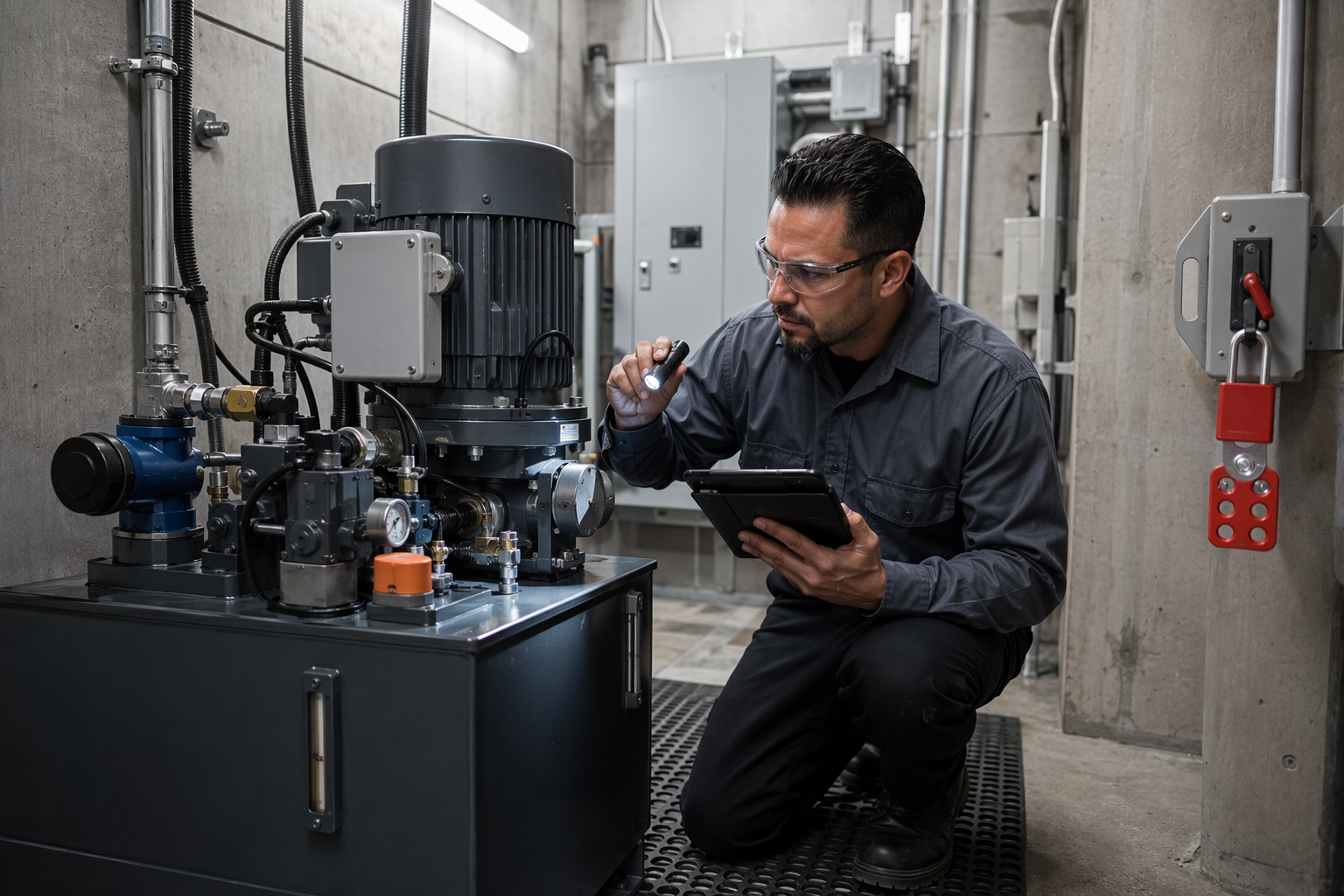
Your first call should be to your certified elevator service contractor — not the fire department, not a general maintenance company, and not a random repair service.
Your elevator service contractor has the maintenance records, unit-specific knowledge, and licensed technicians required to legally work on the equipment. In Texas, elevator mechanics must hold a license issued by the Texas Department of Insurance (TDI). In California, the Division of Occupational Safety and Health (Cal/OSHA) governs elevator mechanic certifications under Title 8, CCR. Calling an uncertified technician isn’t just ineffective — it can void your maintenance contract and create serious liability exposure.
If you are in Houston, Dallas, Austin, San Antonio, Los Angeles, or San Diego, AmeriTex Elevator provides 24/7 emergency dispatch for out-of-service calls. Keep your service contractor’s emergency number posted in your elevator machine room and at the building manager’s desk at all times.
What Are the Immediate Steps When an Elevator Goes Out of Service?
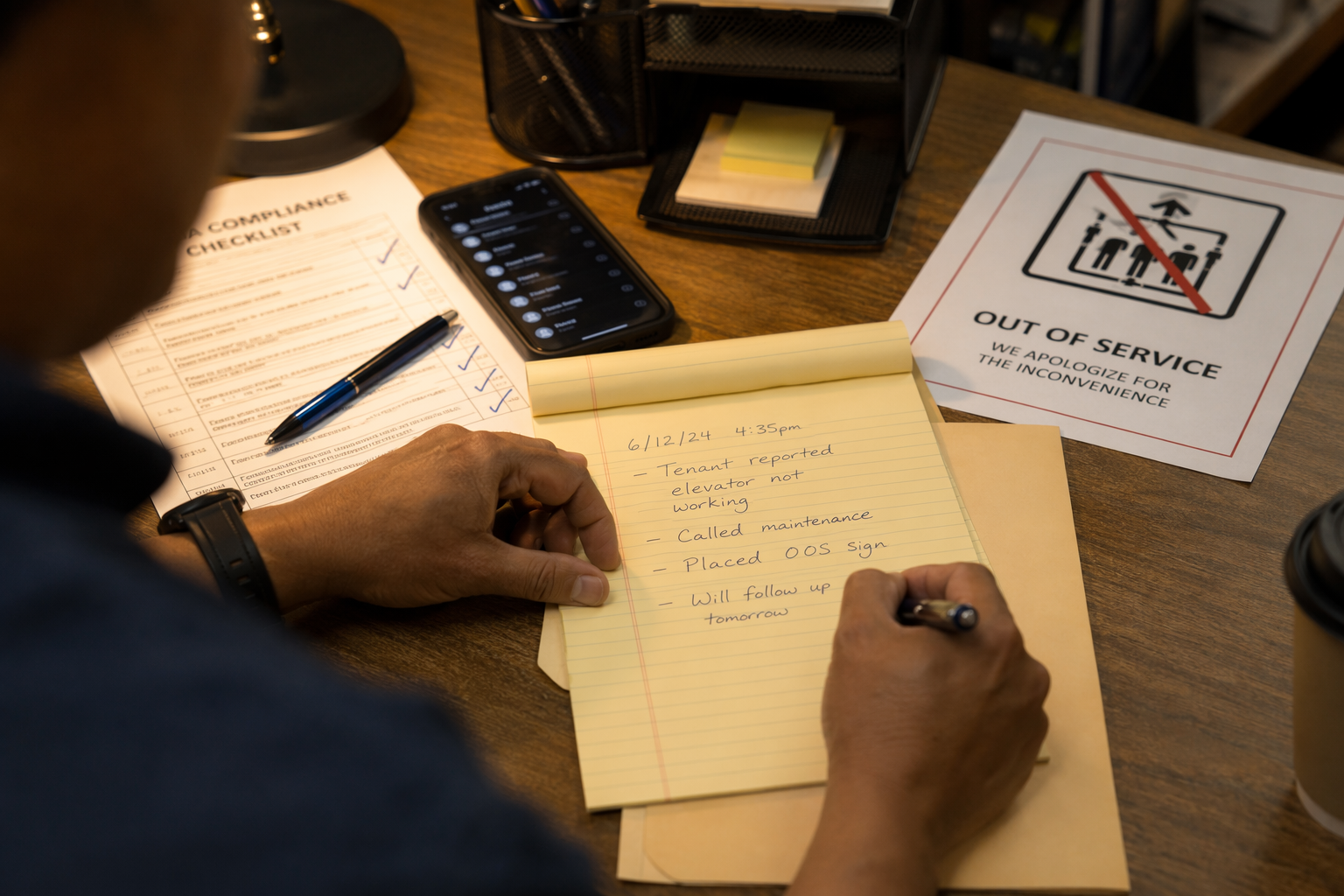
The moment an elevator goes out of service, follow this exact sequence to protect passengers, meet legal obligations, and limit liability.
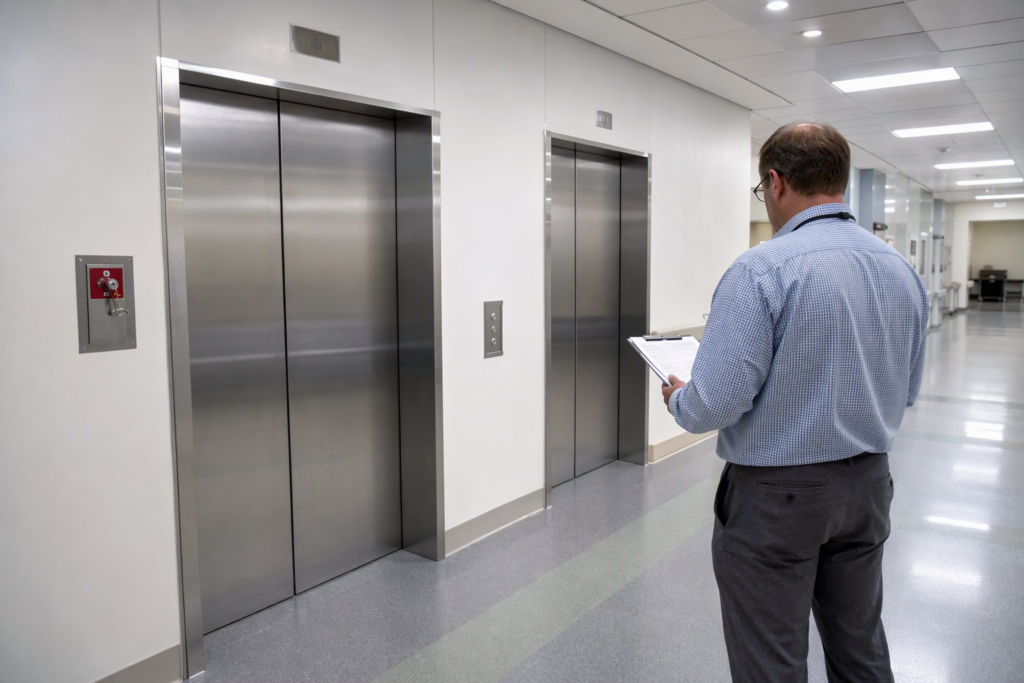
- Confirm whether any passengers are trapped. Check the intercom or call the cab directly. If anyone is inside, call 911 immediately — do not attempt a self-rescue by forcing doors open.
- Secure the elevator. Use your building’s emergency key to lock out the elevator at the main floor or machine room disconnect, preventing further use.
- Post out-of-service signage. Place visible signage on all floor landings indicating the elevator is temporarily out of service. This is both a safety and an ADA notification requirement.
- Call your certified elevator service contractor. Provide the unit number, building address, nature of the problem (if known), and whether any passengers were involved.
- Notify building management and ownership. Document the time, date, and nature of the outage in writing — email is acceptable — for your maintenance log.
- Notify your state elevator inspection authority. In Texas, extended outages may need to be reported to the Texas Department of Insurance. In California, notify the Cal/OSHA Elevator Unit.
- Activate your ADA contingency plan. If the building is a public accommodation under ADA Title III, provide alternative accessible routes or services immediately.
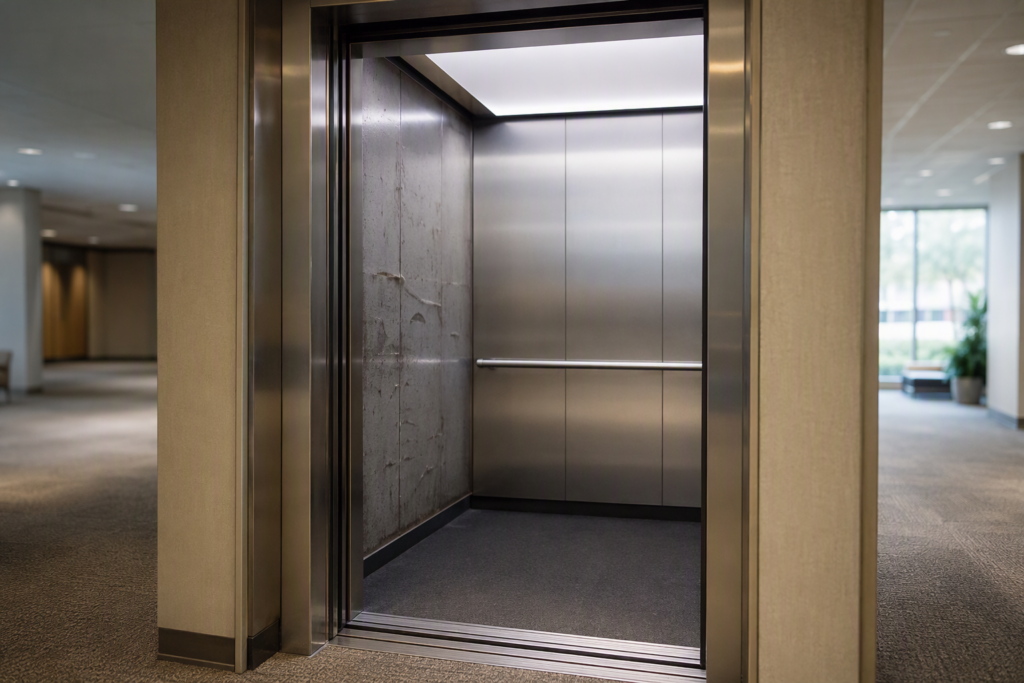
- Document the incident. Photograph any visible damage, record error codes displayed on the controller, and retain these records for the service technician and inspection authority.
When Should I Call 911 for an Elevator Emergency?
Call 911 immediately and exclusively when passengers are trapped inside the elevator cab — this is the only scenario where emergency services should be your first call, not your elevator contractor.
Fire departments are trained for passenger extraction and have the tools to safely open elevator doors without causing further mechanical damage. Do not instruct trapped passengers to attempt to exit on their own — a misleveled cab sitting inches or feet above a floor landing creates a serious fall and crush hazard. Reassure trapped passengers via the intercom that help is on the way, that the cab is ventilated, and that they should remain calm and stay inside.
Once passengers are safely extracted, your elevator contractor takes over. Emergency services are not equipped to diagnose or repair elevator systems — that requires a licensed mechanic with knowledge of your specific unit and the applicable ASME A17.1 Safety Code for Elevators and Escalators.
What Information Should I Have Ready When Calling My Elevator Service Company?
Having the right information ready before you call dramatically speeds up your technician’s response time and diagnosis.
Provide the following when you call:
- Building name and full address (including suite or floor if applicable)
- Elevator unit number or ID (found on the certificate of inspection inside the cab or in your maintenance agreement)
- Description of the symptom: doors not closing, cab not moving, unusual sounds, error code displayed on the panel
- Whether any passengers are or were involved
- Date and approximate time the unit went out of service
- Your maintenance contract number, if available
- Machine room access status and key holder contact
What Are the Legal Obligations for Building Owners When an Elevator Is Out of Service?
Building owners have legally mandated obligations under federal ADA law, ASME codes, and state regulations that activate the moment an elevator goes out of service.
Under ADA Title II and Title III, public entities and public accommodations must ensure that individuals with disabilities can access the same programs and services available to others. A non-operational elevator in a multi-story building that serves as the only accessible route is an ADA compliance violation if not remedied or alternatively accommodated promptly. The ADA does not define a specific grace period, but courts and the Department of Justice have held that “prompt” action is required — typically interpreted as same-day or next-business-day service initiation.
Under ASME A17.1-2022, Rule 1.3, the owner is responsible for the safe operation of the elevator and must take it out of service if it presents a hazard. Texas Administrative Code Title 28, Part 2, Chapter 74 mirrors this requirement for TDI-regulated elevators. California Code of Regulations Title 8, Section 3001 et seq. governs California installations similarly.
How Long Can an Elevator Legally Remain Out of Service?
There is no universal legal maximum downtime, but regulatory timelines, ADA obligations, and insurance requirements collectively create pressure to restore service within 24–72 hours for most commercial buildings.
From a practical standpoint, most elevator service contracts include response time guarantees. Standard commercial maintenance agreements typically promise a technician on-site within 4–8 hours for a full outage during business hours, and within 2–4 hours for emergency after-hours response. If parts must be ordered, extended outages require proactive communication with your state elevator authority and, in ADA-covered facilities, documented alternative accommodations.
California’s Cal/OSHA Elevator Unit may issue a “Tag Out of Service” order if an elevator presents an imminent hazard, legally prohibiting use until repairs are certified. Texas TDI holds similar authority under the Texas Elevator Safety Act.
What Is the Difference Between an Elevator Shutdown and a Full Outage?
A planned elevator shutdown is a scheduled maintenance or repair stoppage coordinated in advance with your service contractor, while a full outage is an unplanned failure requiring immediate emergency response.
Planned shutdowns allow building management to notify tenants and occupants in advance, arrange alternative access, and coordinate inspection scheduling. Full outages trigger the emergency response protocol described above. Understanding the distinction matters because planned shutdowns typically have no regulatory reporting requirement, whereas outages involving entrapments or safety-related failures may trigger mandatory incident reporting to TDI (Texas) or Cal/OSHA (California) within 24 hours.
What Are the Most Common Reasons an Elevator Goes Out of Service?
The most common causes of elevator outages are door system malfunctions, hydraulic fluid issues, controller faults, and overheating of the machine room — all of which are preventable with proper maintenance intervals.
Based on industry data and my own field experience, door-related failures account for roughly 50–60% of all service calls. The elevator’s door system — including the door operator, clutch, gibs, and safety edges — is the highest-wear component in the entire system. A misaligned door can trigger the safety circuit, taking the unit out of service even though the cab, motor, and controls are fully functional. Hydraulic leaks, controller board failures, and worn rope or belt assemblies round out the top causes of full outages in both traction and hydraulic elevator systems.
How Much Does Emergency Elevator Service Cost in 2026?
Emergency elevator repair costs in 2026 typically range from $300–$800 for a service call plus diagnostic, with parts and repairs ranging from $150 for a simple door adjustment to $15,000+ for a controller board replacement or hydraulic cylinder repair.
| Service Type | Estimated Cost Range | Typical Resolution Time | Parts Typically Required |
|---|---|---|---|
| Emergency service call (diagnostic only) | $300–$600 | 1–3 hours on-site | No |
| Door operator adjustment or realignment | $150–$450 | 1–2 hours | Rarely |
| Door safety edge or clutch replacement | $400–$1,200 | 2–4 hours | Yes |
| Hydraulic fluid leak repair | $800–$3,500 | 4–8 hours | Yes |
| Controller board replacement | $5,000–$15,000+ | 1–5 days (parts lead time) | Yes — may require ordering |
| Wire rope or belt replacement | $3,000–$10,000 | 1–3 days | Yes |
| Entrapment rescue (via fire dept.) + subsequent repair | $0 (fire dept.) + $300–$2,000 repair | 30–90 min rescue + repair time | Varies |
| Full modernization (if repair not cost-effective) | $50,000–$200,000+ | 2–8 weeks | Yes — complete system |
Costs vary by market, building type, and elevator age. Buildings with maintenance contracts — like those serviced by AmeriTex Elevator — typically receive priority emergency response and discounted labor rates, significantly reducing the total cost of an outage event.
Does My Building Need a Backup Elevator or Contingency Plan for ADA Compliance?
Yes — if your building is a public accommodation or government facility under the ADA and the elevator is the sole accessible route to an upper floor, you must have and activate an ADA contingency plan whenever the elevator is out of service.
The ADA Title III Technical Assistance Manual makes clear that “readily achievable” barrier removal obligations do not pause during equipment failures. In practice, this means offering services on an accessible floor, providing staff assistance, or using a temporary lift — whichever is appropriate for your facility type. Document your contingency plan in writing, train staff on its activation, and review it annually. Failure to have or activate this plan during an outage can result in ADA complaints filed with the U.S. Department of Justice or private litigation.
How Do I Know If My Elevator Needs Repair Versus Modernization?
If your elevator is experiencing frequent outages — more than 3–4 per year — or if repair costs exceed 50% of modernization cost over a rolling 3-year period, modernization is almost always the more cost-effective and safer choice.
ASME A17.1-2022 establishes the safety baseline that all elevators must meet regardless of age. Older equipment — typically anything installed before 2000 — may not meet current code requirements for things like door reversal systems, emergency lighting, firefighter’s service (Phase I and Phase II), or two-way communication. A modernization project brings the unit into full ASME A17.1 and ADA compliance, reduces recurring maintenance costs, and typically extends elevator service life by 20–25 years. During your next service call or annual inspection, ask your technician to assess whether repair or modernization is the better long-term investment.
What Is the Role of the State Elevator Inspector in an Out-of-Service Situation?
State elevator inspectors have the legal authority to tag an elevator out of service, approve its return to service after major repairs, and issue citations or fines for non-compliance — they are not called for routine outages, but are essential for post-repair certification.
In Texas, the TDI Elevator Safety program employs state-licensed inspectors who must certify major repairs before an elevator returns to service. In California, Cal/OSHA’s Elevator, Ride, and Tramway Unit holds the same authority. After any repair that affects safety components — including controller replacements, rope replacements, hydraulic cylinder work, or structural modifications — a post-repair inspection and approval is required before the elevator can legally be placed back in service. Your elevator contractor coordinates this inspection; you should not attempt to return the unit to service until written approval is received.
How Often Should Elevators Be Inspected to Prevent Outages?
Under ASME A17.1 and state law, most commercial elevators require a full periodic inspection annually, plus monthly maintenance visits — consistent with this schedule dramatically reduces unplanned outages.
Texas law (28 TAC Chapter 74) mandates annual inspections for most elevator types, with certificates posted inside the cab. California (8 CCR 3046) similarly requires annual inspections. However, annual inspections alone are insufficient to prevent outages. Industry best practice — and the AmeriTex Elevator standard — is monthly preventive maintenance visits covering lubrication, door adjustment, safety device testing, and controller diagnostics. Buildings on monthly PM programs experience 60–70% fewer emergency calls than those on inspection-only schedules, based on 2024–2026 industry maintenance data.
What Should Tenants and Building Occupants Do When an Elevator Is Out of Service?
Tenants and occupants should never attempt to use a tagged out-of-service elevator, never try to manually open elevator doors, and should report any override attempts to building management immediately.
If you are a tenant in a multi-story building and the elevator is out of service, use the stairwell where physically possible and report any access barriers for individuals with disabilities to building management right away. If you observe someone attempting to force the elevator doors open or bypass signage, treat it as a safety emergency and notify management immediately — forced door openings in a non-leveled elevator create serious fall hazards. Never assume an elevator tagged out of service is safe to use “just this once.”
What Happens If a Passenger Is Trapped in an Elevator?
If a passenger is trapped in an elevator, call 911 immediately, then call your elevator service contractor — do not attempt to open the doors yourself, and keep the trapped person calm via intercom until professional help arrives.
Modern elevators designed to ASME A17.1 standards include emergency lighting that lasts a minimum of 4 hours, a two-way communication system capable of connecting to a monitoring service or emergency responders, and ventilation to maintain a safe atmosphere. Remind the trapped passenger of these features. The average entrapment rescue in a metropolitan area takes 15–45 minutes from the time 911 is called. After the passenger is safely out, the elevator must be taken out of service and inspected by a licensed technician before being returned to use.
How Do I Choose the Right Elevator Service Company for Emergency and Ongoing Maintenance?
Choose an elevator service company that holds state-required licenses, employs IUEC-certified mechanics, offers 24/7 emergency dispatch, carries appropriate liability insurance, and has documented experience with your specific elevator make and model.
In Texas, verify your contractor’s license through the Texas Department of Insurance elevator contractor database. In California, check the Cal/OSHA Elevator Contractor Registration database. Beyond licensing, evaluate the following:
- Average emergency response time (industry benchmark: under 4 hours)
- Parts inventory — do they stock common components for your elevator brand?
- Maintenance contract terms and what is included vs. billed separately
- References from buildings similar to yours in size and use type
- Digital reporting — do they provide maintenance logs and inspection records you can access?
AmeriTex Elevator serves commercial, residential, and institutional buildings across Houston, Dallas, Austin, San Antonio, Los Angeles, and San Diego, with licensed mechanics available 24/7 for emergency dispatch.
What Documentation Should I Keep After an Elevator Outage?
After every elevator outage, retain the service technician’s written report, any error codes or fault logs, photos of the malfunction, inspection authority communications, and proof of return-to-service authorization — for a minimum of 5 years.
Documentation serves four critical purposes: regulatory compliance, insurance claims, ADA defense, and maintenance trend analysis. Texas TDI and California Cal/OSHA both require elevator owners to maintain inspection certificates and maintenance records and to make them available upon request. Insurance carriers may deny claims related to elevator incidents if maintenance records are incomplete or missing. From a practical standpoint, a well-documented maintenance history also helps your technician identify recurring problems before they cause the next outage.
Can I Put the Elevator Back in Service Myself After It Trips a Safety Switch?
No — you should never attempt to reset a tripped elevator safety switch yourself, as this bypasses the ASME A17.1 requirement that a licensed mechanic investigate and clear the root cause before restoring service.
Safety switches — including governor switches, buffer switches, pit stop switches, and door bypass switches — trip for a reason. Resetting them without identifying and correcting the underlying fault does not fix the problem; it simply masks a potentially dangerous condition. Under ASME A17.1 Rule 2.26.2, any safety device that has been activated must be investigated and cleared by a competent elevator mechanic. In Texas and California, returning an elevator to service after a safety device trip without licensed technician involvement is a code violation that can result in fines and increased liability exposure.
What Are the Differences in Elevator Regulations Between Texas and California?
Texas regulates elevators through the Texas Department of Insurance under the Texas Elevator Safety Act (Texas Occupations Code Chapter 754), while California regulates under Cal/OSHA Title 8 CCR — both adopt ASME A17.1 as the base safety code but differ in inspection frequency requirements, contractor licensing rules, and enforcement mechanisms.
| Regulatory Area | Texas (TDI) | California (Cal/OSHA) |
|---|---|---|
| Governing authority | Texas Dept. of Insurance | Cal/OSHA Elevator Unit |
| Base safety code | ASME A17.1-2019 (adopted) | ASME A17.1-2019 (adopted) |
| Inspection frequency (commercial) | Annual | Annual |
| Mechanic licensing | TDI Elevator Inspector License | Cal/OSHA Certified Elevator Mechanic |
| Contractor registration | Required — TDI registration | Required — Cal/OSHA registration |
| Entrapment reporting | Report to TDI within 24 hrs (injury involved) | Report to Cal/OSHA within 8 hrs (serious injury) |
| Certificate posted in cab | Required | Required |
| Return-to-service after major repair | Requires TDI-approved inspector sign-off | Requires Cal/OSHA sign-off |
| Penalty for operating unregistered elevator | Up to $10,000 per violation | Up to $25,000 per violation |
How Can I Reduce the Frequency of Elevator Outages Long-Term?
The single most effective strategy for reducing elevator outages is enrolling in a comprehensive, monthly preventive maintenance program with a licensed elevator service contractor — not an annual-inspection-only agreement.
Preventive maintenance should cover the following on a monthly basis as a minimum standard:
- Door system adjustment, lubrication of gibs and tracks, and clutch inspection
- Safety device testing including governor, buffers, and pit switch
- Machine room inspection: temperature, oil levels, brake adjustment
- Controller diagnostic review and fault code clearing
- Pit inspection for water intrusion, cleanliness, and oil accumulation
- Rope or belt condition assessment (visual and tactile)
- Emergency lighting and two-way communication test
Buildings that partner with AmeriTex Elevator under a full-service monthly maintenance contract receive detailed digital maintenance reports after every visit, direct technician contact numbers for faster emergency response, and priority scheduling for repairs — all of which translate to fewer outages and lower total cost of ownership over time.
Get Your Elevator Back in Service Fast — or Keep It From Going Down in the First Place
Whether you’re dealing with an elevator that just went out of service, trying to understand your compliance obligations, or looking for a reliable long-term maintenance partner, AmeriTex Elevator is ready to help. We serve commercial and residential properties across Houston, Dallas, Austin, San Antonio, Los Angeles, and San Diego with IUEC-certified technicians available 24 hours a day, 7 days a week.
Contact AmeriTex Elevator for a free elevator assessment today.
Call us now: 866-679-4313
Need elevator service you can rely on? AmeriTex Elevator is ready to help.