What Questions Should I Ask Before Signing an Elevator Maintenance Contract?
Before signing an elevator maintenance contract, building owners and facility managers should ask at least a dozen specific questions covering compliance standards, scope of service, parts and labor coverage, emergency protocols, and contract flexibility. Skipping this due diligence can result in unexpected costs, code violations, liability exposure, and elevator downtime that disrupts tenants and building operations across Texas and California markets.
This comprehensive FAQ guide walks through the 20 most critical questions to ask any elevator service provider before committing to a maintenance agreement. Whether a property is located in Houston, Dallas, Austin, San Antonio, Los Angeles, or San Diego, these questions apply universally — with important local regulatory nuances addressed throughout.
1. What specific maintenance tasks are included in the contract scope?
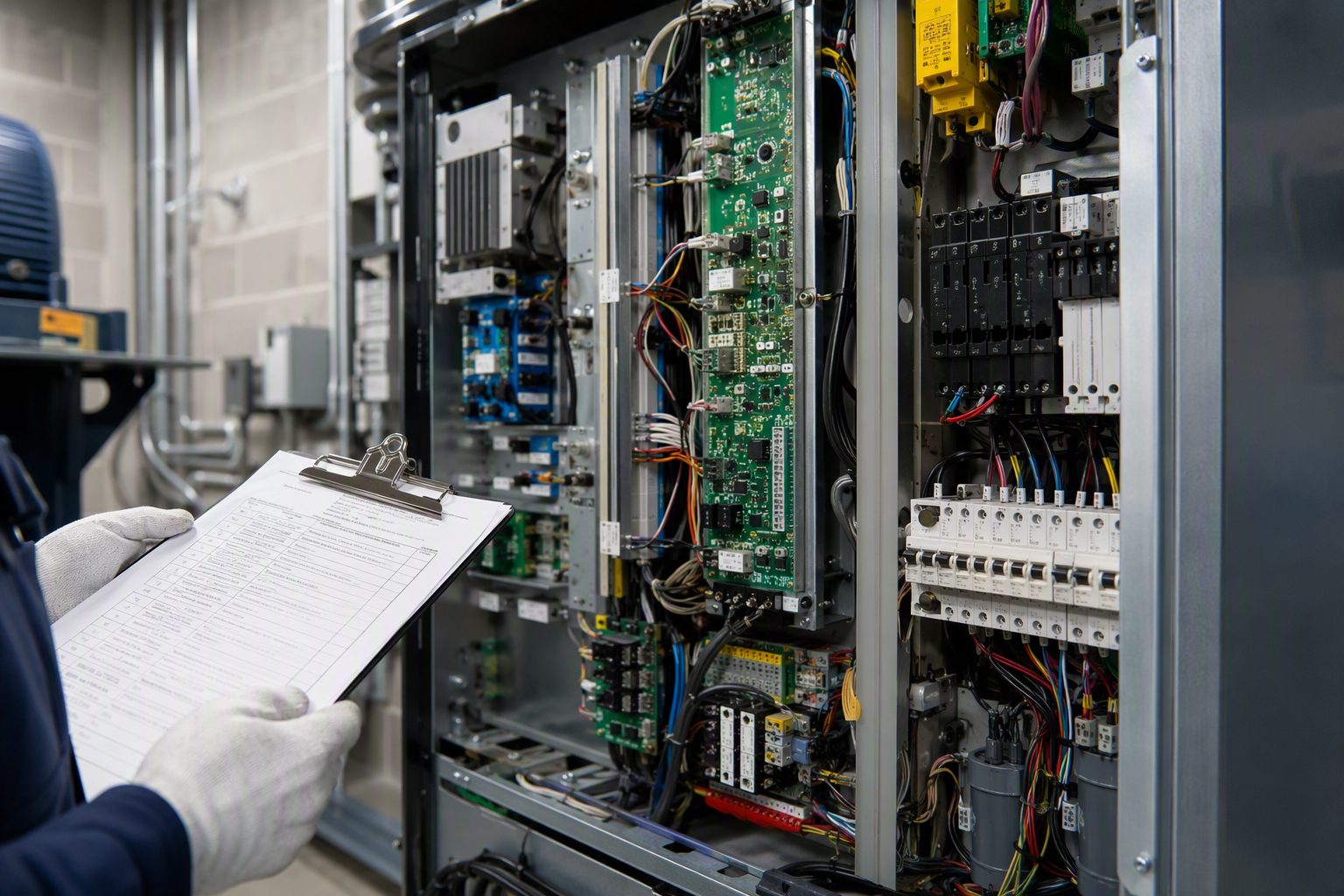
A maintenance contract should clearly enumerate every task covered, including lubrication, adjustment, cleaning, and safety device testing — vague language like “routine maintenance” is a red flag that can leave costly repairs uncovered.
Contract scope is the single most important clause in any elevator maintenance agreement. Reputable providers list specific components covered: door operators, safety governors, buffers, guide rails, machine room equipment, controllers, and cab interiors. Ask for a written maintenance checklist and confirm whether it aligns with the manufacturer’s recommended maintenance schedule for your specific elevator model and drive type (hydraulic, traction, or MRL). If the contract uses broad language without itemizing tasks, request an addendum or choose a provider that offers transparency.
2. How does the contract ensure compliance with ASME A17.1?
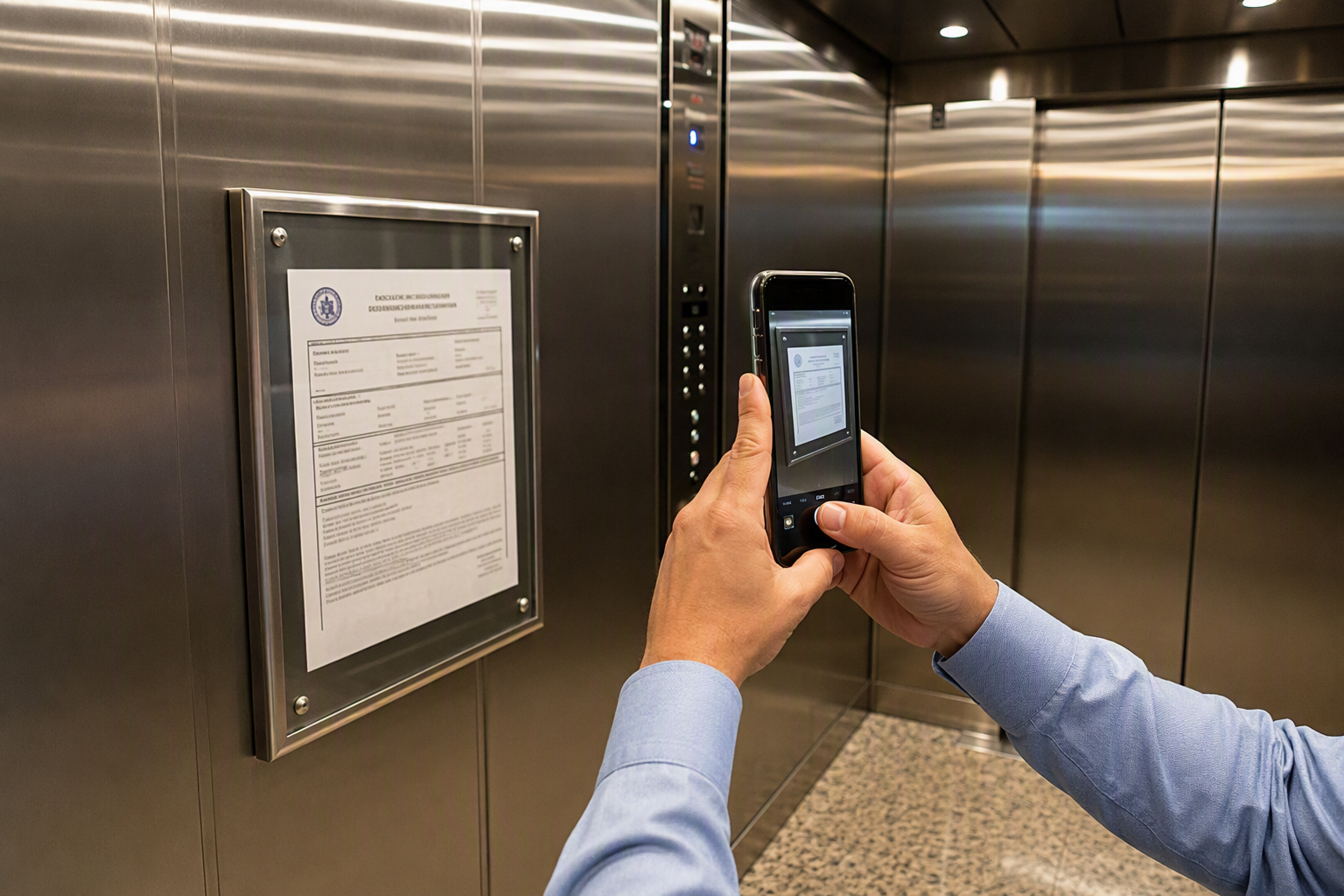
Any legitimate elevator maintenance contract should explicitly reference adherence to the ASME A17.1 Safety Code for Elevators and Escalators, which governs inspection, testing, and maintenance requirements across most U.S. jurisdictions.
ASME A17.1 is the foundational safety standard that defines inspection intervals, testing procedures, and maintenance requirements for vertical transportation equipment. Contracts should specify which edition of the code is being followed — in 2026, most jurisdictions have adopted recent editions, though adoption timelines vary by state. Ask the provider to confirm which code edition their procedures are written to and how they stay current as code editions update. Texas and California each have state elevator safety bureaus that enforce their own adopted editions of ASME A17.1, so local compliance must be confirmed separately.
3. What are the required inspection intervals under state law?
State inspection intervals vary: Texas and California both require periodic third-party inspections, and a maintenance contract should align service visits with those mandated timelines rather than substituting for them.
In Texas, the Texas Department of Insurance (TDI) oversees elevator safety and mandates annual inspections for most elevator types. In California, the Division of Occupational Safety and Health (Cal/OSHA) enforces elevator safety under California Labor Code, with inspection requirements administered through the Elevator Unit. Ask any potential provider to explain exactly how their maintenance schedule coordinates with mandatory state inspection cycles. A strong provider will proactively schedule maintenance visits leading up to state inspections to maximize the likelihood of a passing result. Companies serving multiple markets — such as AmeriTex Elevator, which operates across Texas and California — should be able to speak fluently to the regulatory requirements in each jurisdiction.
4. Does the contract cover labor and parts, or just labor?
Labor-only contracts are common and can expose building owners to significant unexpected parts costs, so it is essential to understand exactly what materials, components, and consumables are included before signing.
There are three common contract structures: labor-only, parts-and-labor (also called “full-service”), and tiered coverage that includes labor plus certain categories of parts. Full-service contracts typically cost more upfront but protect against unpredictable repair bills. Labor-only contracts may be appropriate for newer equipment still under manufacturer warranty, but for aging elevator systems they carry significant financial risk. Request a list of any excluded components — proprietary parts, cab interiors, and major modernization components are frequently carved out even in full-service agreements.
5. How does the contract define emergency service and callback response?
The contract should define what constitutes an emergency call, the process for requesting one, and the escalation procedure if initial contact fails — without relying solely on verbal assurances from the sales representative.
Emergency callbacks cover situations such as passenger entrapment, door malfunction, or sudden equipment failure outside of scheduled maintenance hours. Ask the provider to walk through the step-by-step process a building manager would follow during an entrapment event. Confirm that the escalation path is documented in the contract, not just described verbally. Ask whether emergency service is included in the contract fee or billed separately at a premium rate. Building managers in dense urban markets — including Houston and Los Angeles — should also confirm how the provider handles simultaneous emergency calls across multiple properties.
6. What are the technician qualification requirements?
Technicians servicing elevators should hold appropriate certifications and licenses required by the state, and the contract should reflect the provider’s commitment to using qualified personnel on every service visit.
Texas requires elevator inspectors to be licensed through TDI, and technicians performing maintenance work are subject to applicable regulatory requirements. California has specific licensing requirements enforced through the Department of Industrial Relations. Ask the provider to explain their hiring and qualification standards, what ongoing training they require, and how they verify that technicians working on your equipment meet state standards. While specific certifications should not be assumed without verification, providers should be willing to describe their qualification framework in general terms and confirm compliance with applicable OSHA standards for general industry and construction.
7. What happens if a violation is found during the state inspection?
The contract should specify who is responsible for correcting violations discovered during mandatory state inspections, what the timeline for correction is, and whether correction costs are included in the contract fee.
This is one of the most frequently overlooked questions in elevator contract negotiations. Some providers include violation correction in full-service agreements; others treat any repair identified during a state inspection as a billable item outside the contract. Ask for a clear written explanation of the process: who accompanies the state inspector, how violations are documented, who obtains the correction permit, and whether there is a guaranteed correction timeline. Building owners can face fines and mandatory elevator shutdown for uncorrected violations, so this clause directly affects both liability and building operations.
8. Does the contract address ADA compliance responsibilities?
Elevator maintenance contracts should acknowledge the provider’s role in keeping equipment functional in a way that supports ADA accessibility requirements, even though full ADA compliance is ultimately the building owner’s legal responsibility.
Under ADA, elevators in public accommodations and commercial facilities must maintain operational accessibility features including braille buttons, audible signals, door timing, and cab dimensions. While ADA compliance is a building owner obligation, a maintenance provider’s failure to keep these features functional can directly create ADA exposure. Ask whether the maintenance checklist includes verification of accessibility features at each visit, and whether the provider will document any deficiencies that require owner attention. This is particularly relevant in California, where state accessibility standards sometimes exceed federal ADA requirements.
9. What is the contract term, and what are the termination provisions?
Contract terms for elevator maintenance commonly range from one to five years, and the termination clause — including any early exit penalties — should be reviewed carefully before signing.
Multi-year contracts can lock building owners into service relationships that become problematic if service quality declines. Ask specifically: What is the notice period required to terminate? Are there financial penalties for early termination? Under what conditions can the building owner exit the contract without penalty (e.g., repeated missed maintenance visits, failure to pass state inspection)? Some contracts include automatic renewal clauses with short opt-out windows — confirm whether this applies and calendar the renewal date immediately. Shorter initial terms with renewal options are generally more favorable to building owners.
10. How are price escalations handled over the contract term?
Multi-year contracts should clearly define any annual price adjustment mechanisms, including the index or formula used, the cap on increases, and the notice period required before a rate change takes effect.
It is standard practice for elevator maintenance contracts to include annual price escalation clauses tied to the Consumer Price Index (CPI) or a fixed percentage. Without a defined cap, costs can escalate significantly over a multi-year term. Ask the provider to walk through the price adjustment history on similar contracts and confirm the specific index referenced, the cap percentage, and the advance notice required. Flat-rate multi-year contracts exist but are less common; weigh the premium against the budget predictability they provide.
11. What maintenance records and documentation will be provided?
A professional maintenance provider should supply written records of every service visit, including tasks performed, parts replaced, and any deficiencies noted — documentation that is essential for state inspections and liability protection.
State elevator authorities in both Texas and California may request maintenance logs during inspections. Ask whether the provider uses a digital record-keeping system, how logs are shared with the building owner (portal access, emailed reports, paper copies), and how long records are retained. Confirm that the maintenance log format is compatible with what state inspectors expect to review. AmeriTex Elevator, which serves properties across Houston, Dallas, Austin, San Antonio, Los Angeles, and San Diego, provides documented service records as a standard component of its maintenance agreements to support regulatory compliance.
12. How does the provider handle equipment that requires modernization?
Maintenance contracts are not a substitute for modernization, and a reputable provider should have a transparent process for identifying when aging equipment has reached the point where maintenance alone cannot sustain safe, code-compliant operation.
Ask whether the contract includes periodic condition assessments that evaluate equipment age, parts availability, and code compliance trajectory. Some older elevator systems — particularly those running obsolete controllers or using discontinued parts — reach a threshold where ongoing maintenance costs and reliability risks outweigh the cost of modernization. A trustworthy provider will document these findings in writing and present options, not simply continue billing maintenance fees on equipment that needs capital investment. Ask what the provider’s protocol is when proprietary or obsolete parts are required and whether they disclose parts sourcing limitations upfront.
13. What is the provider’s process for handling entrapment situations?
Building managers should understand the provider’s entrapment response protocol before an emergency occurs, including how technicians are dispatched, how they communicate with passengers, and how they coordinate with emergency services.
Passenger entrapment is the most time-sensitive emergency in elevator operations. Ask the provider to describe the entrapment response process in a step-by-step format and confirm that building staff will receive written instructions for their role in the process:
- Building staff contacts the provider’s emergency line immediately upon confirmed entrapment.
- The provider dispatches the nearest qualified technician to the location.
- Building staff uses the in-cab emergency communication system to maintain contact with the passenger.
- If the technician cannot arrive within a timeline defined in the contract, fire department or emergency services are called per local protocol.
- After rescue, the technician completes a written incident report documenting cause and corrective action.
- Building management receives a copy of the incident report within a defined timeframe.
Confirm each step is addressed in the written contract, not left to verbal agreement.
14. Does the contract cover multiple elevator types and drive systems?
Properties with mixed elevator fleets — including hydraulic, geared traction, gearless traction, and machine-room-less (MRL) units — should confirm that the maintenance contract explicitly covers every unit type and that technicians are qualified on each drive system.
Hydraulic and traction elevators have fundamentally different maintenance requirements, and MRL technology adds its own complexity. Ask whether the quoted contract price covers all units in the building and whether the same technician team services all drive types. Properties with older hydraulic units should ask specifically about oil containment requirements and any environmental compliance considerations tied to hydraulic fluid management, as California has specific environmental regulations that affect hydraulic elevator maintenance practices.
15. How does the contract address manufacturer warranty coordination?
For newer installations still under manufacturer warranty, the maintenance contract must be structured to avoid voiding warranty coverage, which typically requires maintenance to follow manufacturer-specified procedures and use approved parts or fluids.
Ask the provider to confirm that their maintenance procedures for newer equipment are aligned with the manufacturer’s requirements and will not create warranty conflicts. Obtain this confirmation in writing. Additionally, ask who is responsible for coordinating with the manufacturer if a warranty claim is needed — the building owner or the maintenance provider. For properties that have recently installed new equipment, this question is critical in the first three to five years of operation.
16. What geographic coverage does the provider offer, and how does that affect service continuity?
A provider’s geographic footprint matters because it determines how quickly technicians can be deployed to a specific property, whether multiple locations under a single building portfolio can be served under one agreement, and whether local regulatory expertise is available for each jurisdiction.
For building owners and property managers with portfolios spanning multiple markets, consolidating elevator maintenance under a single regional provider can simplify administration, standardize documentation, and leverage volume pricing. AmeriTex Elevator serves properties across Houston, Dallas, Austin, San Antonio, Los Angeles, and San Diego, allowing multi-market portfolios to work with a single point of contact while still receiving local regulatory expertise in each market. Ask any provider how they handle service across multiple cities and whether local technicians — rather than out-of-area dispatch — are the standard model.
17. What exclusions are written into the contract?
Every elevator maintenance contract contains exclusions, and understanding them upfront prevents disputes when a repair bill arrives for work the building owner assumed was covered.
Common exclusions include: damage caused by vandalism, flooding, or misuse; cab interior cosmetic components; proprietary or specialty parts from the original manufacturer; structural building components such as hoistway walls or machine room floors; and repairs required due to code violations that predate the contract start date. Ask the provider to read through all exclusions and explain each one in plain language. Request that any verbally agreed additions to coverage be added to the written contract before signing. Some exclusions are standard and reasonable; others may represent significant risk exposure depending on the age and condition of the equipment.
18. How does the provider approach preventive versus reactive maintenance?
A quality maintenance contract should be structured around a proactive, scheduled preventive maintenance program — not a reactive model that only sends technicians when something breaks.
Preventive maintenance (PM) is the industry standard for extending equipment life, reducing emergency callbacks, and maintaining consistent code compliance. Ask the provider to describe the ratio of PM visits to emergency callbacks on their existing portfolio — a high ratio of reactive calls relative to scheduled visits may indicate that PM work is being deferred. Ask whether PM visits have a minimum duration requirement and whether technicians are incentivized to complete full PM checklists or permitted to abbreviate visits. The frequency of PM visits should be appropriate for the equipment age, usage intensity, and manufacturer recommendations.
19. What are the key differences between full-service and oil-and-grease contracts?
Understanding the spectrum of elevator maintenance contract types allows building owners to match coverage level to budget and equipment risk profile rather than defaulting to the lowest-cost option without understanding the tradeoff.
| Contract Type | What Is Typically Covered | What Is Typically Excluded | Best For |
|---|---|---|---|
| Oil & Grease (Basic) | Lubrication, minor adjustments, routine cleaning | All parts, most labor beyond basic PM | New equipment under manufacturer warranty |
| Labor-Only | All labor for maintenance and repairs | All parts and materials | Low-traffic buildings with newer, reliable equipment |
| Parts & Labor (Mid-Tier) | Labor plus defined parts categories (e.g., electrical components) | Major mechanical components, cab interiors, proprietary parts | Mid-age equipment in moderate-traffic buildings |
| Full-Service (Comprehensive) | All labor, most parts, callbacks, and violation corrections | Modernization, vandalism damage, structural repairs | High-traffic buildings with aging or high-value equipment |
Ask any provider where their standard offering falls on this spectrum and which contract type they recommend for the specific equipment in the building — and why. A provider that recommends the same contract type to every building without a condition assessment may not be evaluating the building’s actual needs.
20. How should I evaluate multiple bids before choosing an elevator maintenance provider?
Comparing elevator maintenance bids requires more than reviewing the annual price — scope differences, exclusions, emergency service terms, and regulatory expertise can vary dramatically between providers at similar price points.
When evaluating competing bids, use the following process:
- Create a standardized scope checklist based on the questions in this guide and request that each provider respond to every item in writing.
- Compare included PM visit frequency across bids — more frequent visits are not always better if they are abbreviated; confirm minimum visit duration for each PM call.
- Review exclusion lists side by side and calculate the potential cost of excluded repairs based on equipment age and condition.
- Ask each provider for references from properties similar to yours in size, building type, and jurisdiction.
- Confirm that each provider is in good standing with the applicable state elevator regulatory authority in your market.
- Evaluate the quality of documentation provided with the proposal — thorough, detailed proposals generally reflect the quality of ongoing service delivery.
- Request a walkthrough of the emergency callback process specific to your building before making a final decision.
Building owners evaluating elevator service providers across Texas and California are encouraged to contact AmeriTex Elevator to request a detailed, itemized proposal that addresses each of these questions for their specific property and equipment profile.
Summary: What to Demand in Writing Before Signing
An elevator maintenance contract is a long-term operational and liability commitment. The questions covered in this guide address the full spectrum of concerns that experienced facility managers and building owners face — from day-to-day compliance with ASME A17.1 Safety Code for Elevators and Escalators and ADA requirements, to emergency response protocols, documentation standards, and contract flexibility. Applicable OSHA standards for workplace safety add another layer of compliance that qualified providers should incorporate into their service model.
No building owner should sign an elevator maintenance agreement without receiving clear, written answers to every question in this guide. Verbal assurances are not enforceable; written contract language is. If a provider cannot or will not answer these questions in writing before the contract is signed, that unwillingness is itself important information about how disputes will be handled after the contract is in place.
AmeriTex Elevator works with commercial and residential property owners across Houston, Dallas, Austin, San Antonio, Los Angeles, and San Diego to develop transparent, compliance-driven maintenance agreements tailored to each property’s equipment, usage patterns, and regulatory environment. Reach out before signing any elevator maintenance contract to ensure the agreement truly protects the building, its occupants, and its ownership.
Get a Free Elevator Assessment Before You Sign
Contact AmeriTex Elevator for a free elevator assessment — including a review of any existing maintenance contract or competitive proposal. A qualified representative will evaluate your equipment, confirm compliance with applicable Texas and California regulations, and provide a detailed, written maintenance proposal that answers every question covered in this guide.
Call AmeriTex Elevator today: 866-679-4313