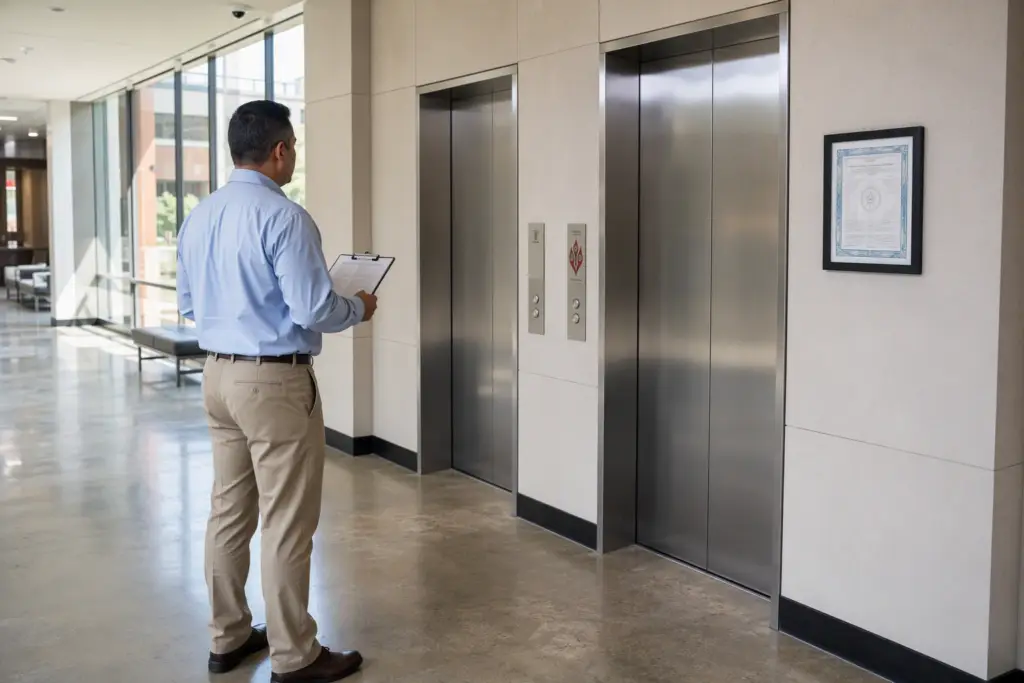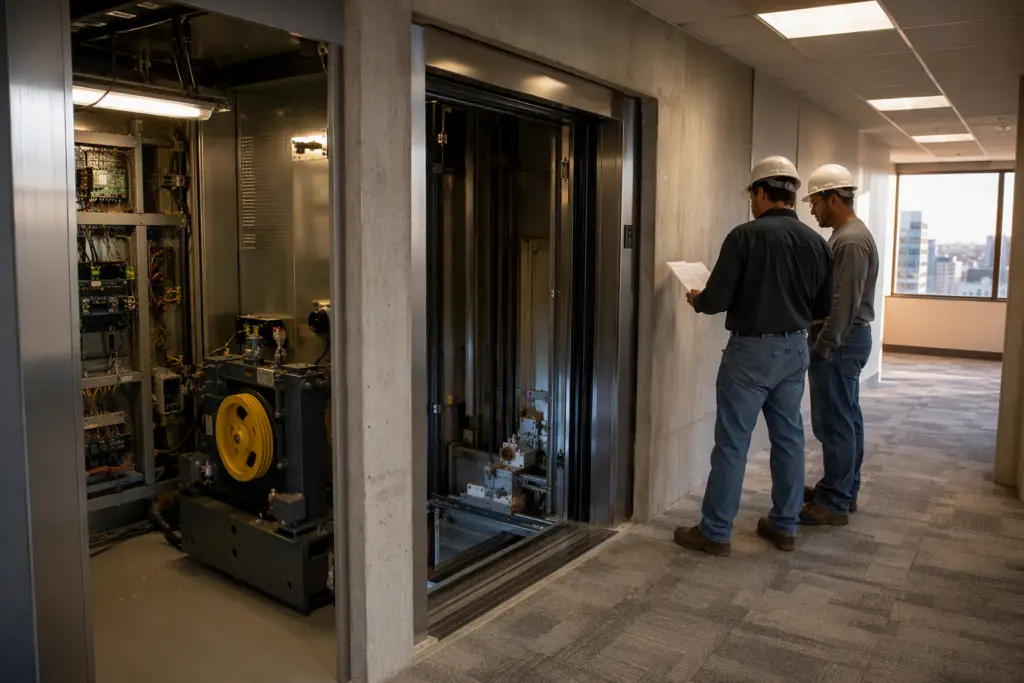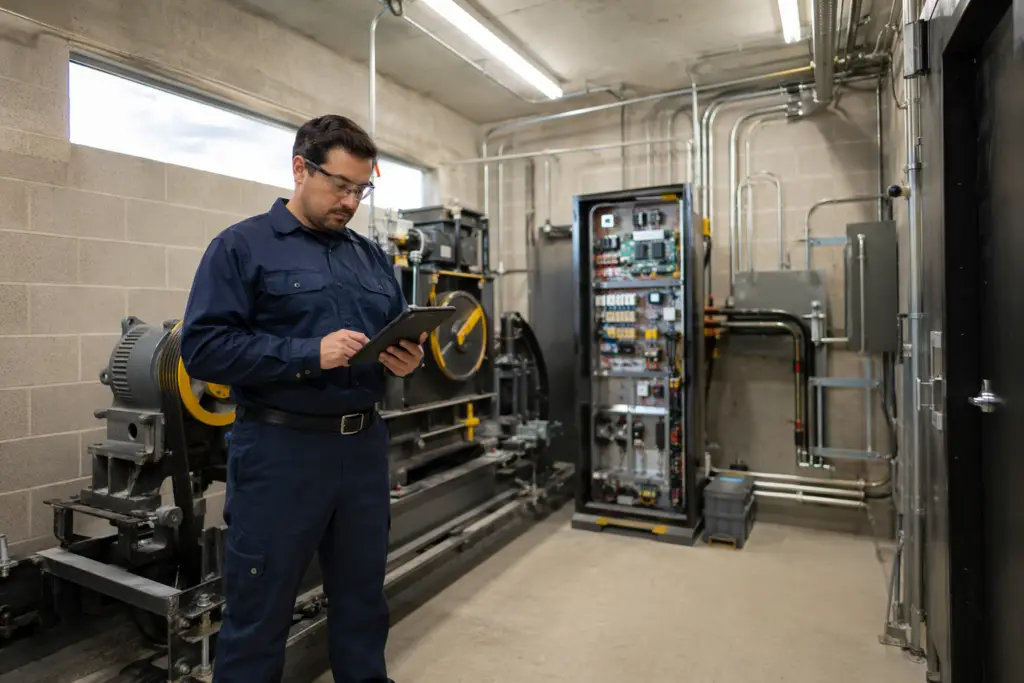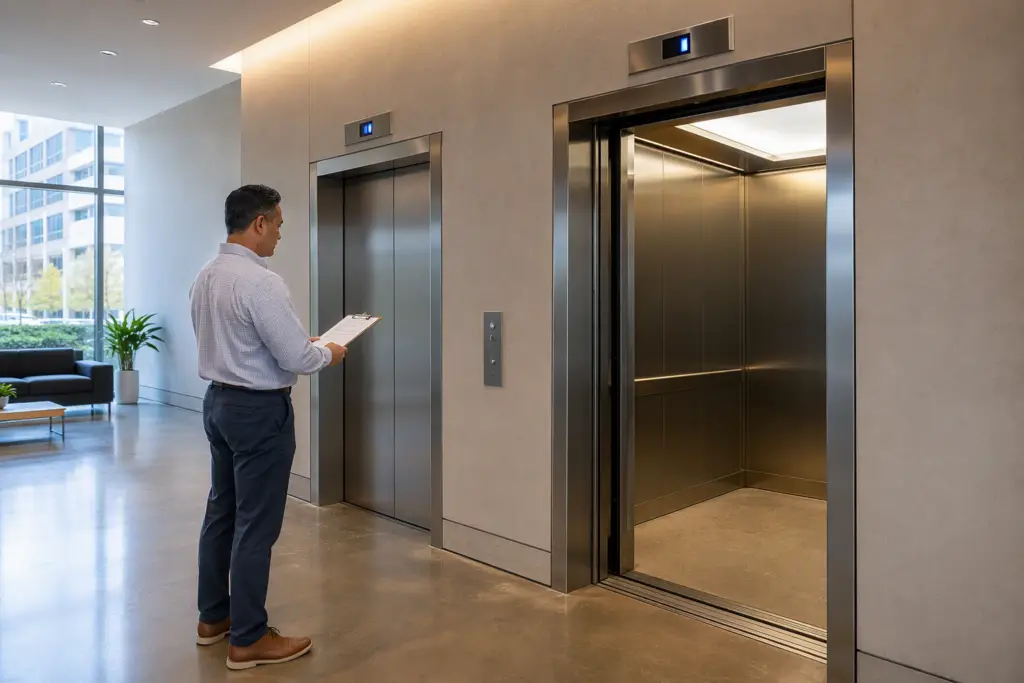
For building owners and facility managers in California and Texas, few maintenance decisions carry more financial and liability weight than determining whether an underperforming elevator needs a targeted repair or a full-scale modernization. The wrong choice can mean wasted capital on a system that will continue to fail, or an unnecessary overhaul of equipment that still has years of reliable life remaining. This guide walks through every factor that matters — cost, compliance, safety, downtime, and long-term ROI — so decision-makers can move forward with confidence.
What Is the Difference Between Elevator Modernization and Major Repair?
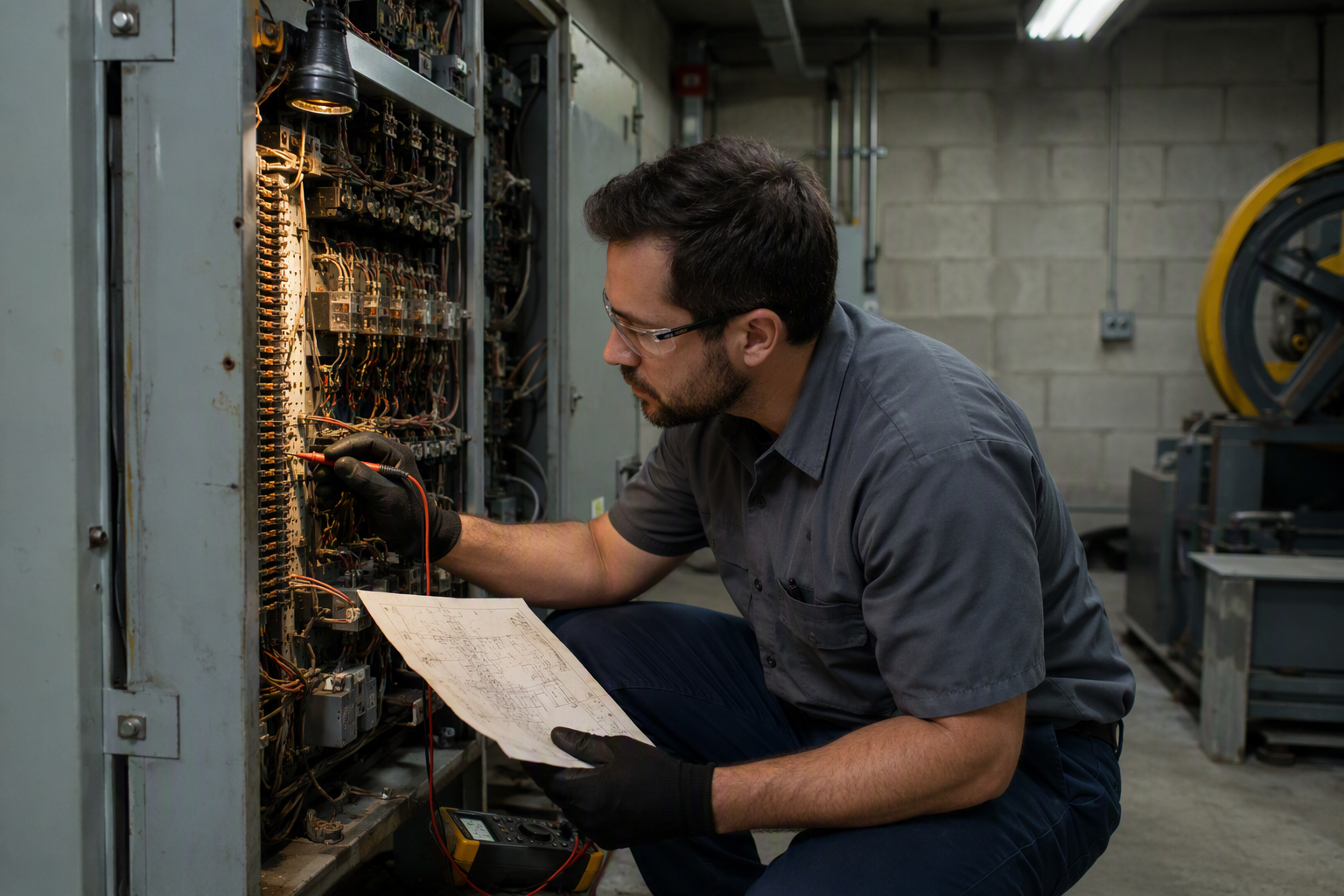
A major repair addresses a specific, failed component — a burned-out motor controller, a broken door operator, worn hoist ropes, or a malfunctioning safety circuit — while leaving the rest of the system intact. The goal is to restore the elevator to its existing operational standard.
Modernization is a systematic replacement of multiple aging subsystems — typically the controls, drive, cab, fixtures, doors, and sometimes the machine itself — with current-generation technology. Modernization does not necessarily mean replacing the entire hoistway or structural components, but it does mean bringing the elevator substantially in line with contemporary performance, energy, and code standards.
The practical boundary between the two blurs when cumulative repair scopes grow large. When the cost and disruption of a repair begin to rival what a phased modernization would cost, modernization almost always delivers better long-term value.
What Are the Warning Signs That an Elevator Needs Modernization Rather Than Repair?
Certain conditions consistently signal that the equipment has reached the end of a serviceable repair cycle:
- Obsolete controls or relay logic: Older relay-based control systems are increasingly difficult to service because components are no longer manufactured. Sourcing parts may mean cannibalizing salvage units, which introduces reliability risk.
- Recurring unplanned shutdowns: When the same elevator requires multiple service calls per quarter, the pattern suggests systemic wear rather than isolated failure.
- Entrapments or leveling problems: Persistent floor-leveling errors put passengers at risk and can expose building owners to liability.
- Code non-compliance: Equipment that cannot be brought into compliance with ASME A17.3 Safety Code for Existing Elevators and Escalators or applicable accessibility requirements under the Americans with Disabilities Act (ADA) may require modernization to satisfy the Authority Having Jurisdiction (AHJ).
- Energy inefficiency: Older DC motor drives and non-regenerative systems consume significantly more power than modern variable-frequency drives (VFDs).
- Passenger comfort and aesthetics: Excessive cab noise, rough rides, and dated interiors affect tenant satisfaction and building reputation.
- Unavailability of spare parts: When a manufacturer has discontinued support for a model, future repairs become increasingly risky and expensive.
How Do I Assess Whether Repair or Modernization Makes Financial Sense?
A commonly applied framework in the elevator industry is a variation of the “repair versus replace” threshold: when the projected cost of a repair exceeds a substantial portion of what a modernization would cost — and the repaired system is still likely to generate additional failures — modernization delivers better financial return. The exact threshold varies by building type, elevator age, and usage intensity, which is why an independent professional assessment is essential before committing to either path.
Key financial questions to answer before deciding:
- What is the total cost of the proposed repair, including parts, labor, and projected downtime?
- How likely is it that additional components will fail within the next two to five years, based on the equipment’s age and service history?
- What is the modernization scope, and can it be phased to manage capital expenditure?
- Are there energy savings from a modernized drive system that will offset part of the investment?
- Will modernization satisfy outstanding code violations and eliminate the cost of re-inspection penalties?
- Does the building’s lease structure or sale timeline favor one option over the other?
Comparison Table: Major Repair vs. Elevator Modernization
| Factor | Major Repair | Full Modernization |
|---|---|---|
| Typical Scope | Single component or subsystem replacement | Controls, drive, cab, doors, fixtures — multiple systems |
| Downtime | Hours to days | Weeks to months (varies by scope and phasing) |
| Relative Cost | Lower upfront | Higher upfront; better long-term value when system is aging |
| Code Compliance Impact | May not resolve outstanding violations | Typically brings system into full current code compliance |
| Expected Useful Life Added | Variable — depends on condition of remaining components | Substantially extends useful life of the system |
| Parts Availability Risk | High if equipment is obsolete | Low — new components are currently manufactured |
| Energy Efficiency | No improvement to existing drive/motor | Modern VFD drives reduce energy consumption |
| ADA Compliance | Not typically addressed | Can incorporate updated cab fixtures, signage, and controls |
| Best Suited For | Isolated failure; newer or well-maintained system | Aging, frequently failing, or non-compliant systems |
What Role Does Code Compliance Play in the Modernization vs. Repair Decision?
Code compliance is often the deciding factor that takes the decision out of a building owner’s hands entirely. In California and Texas, elevator inspections are conducted by state-authorized agencies and third-party qualified elevator inspectors (QEIs). When an inspection identifies violations, the Authority Having Jurisdiction (AHJ) sets a remediation timeline. Depending on the nature of the violation, a repair may satisfy the requirement — or the AHJ may require upgrades that effectively constitute a modernization.
Two federal codes are particularly relevant regardless of which state the building is in:
- ASME A17.1 Safety Code for Elevators and Escalators — the primary standard governing new elevator installations and alterations.
- ASME A17.3 Safety Code for Existing Elevators and Escalators — governs in-service equipment and establishes retroactive safety requirements that existing elevators must meet.
When modernization work is performed, the altered equipment is generally subject to current ASME A17.1 requirements for those systems being modified. Building owners should confirm with their AHJ and a qualified elevator contractor exactly which code edition their jurisdiction has adopted before finalizing any scope of work.
ADA compliance is a separate but parallel consideration. Public accommodations and commercial facilities subject to the ADA must ensure that elevator controls, cab dimensions, and signage meet accessibility requirements. A modernization project is an ideal opportunity to address ADA items that a repair would leave untouched.
What Is the Typical Timeline for Each Path?
Timeline is a critical operational consideration, particularly for buildings where elevator access is essential to tenants, residents, or patients.
| Scope | Typical Timeline | Key Variables |
|---|---|---|
| Emergency repair (single component) | Hours to 1–2 days | Parts availability, labor scheduling |
| Planned major repair | 1 day to 2 weeks | Component lead times, inspection scheduling |
| Partial modernization (controls or cab only) | 2 to 6 weeks | Engineering, permit approval, equipment lead times |
| Full modernization | 6 weeks to 6+ months | Scope complexity, permit timelines, AHJ inspection availability |
Permit issuance timelines vary significantly by AHJ jurisdiction in California and Texas. Planning for permit review time before construction begins is essential to avoid costly delays.
What Are the Pros and Cons of Each Option?
Major Repair — Pros and Cons
| Pros | Cons |
|---|---|
| Lower immediate capital outlay | Does not address systemic aging of other components |
| Shorter downtime for single-component repairs | May not resolve code violations or ADA gaps |
| Appropriate for isolated failures on newer systems | Parts may be unavailable for obsolete equipment |
| Predictable scope when cause of failure is clear | Recurring failures likely if underlying system is aged |
Modernization — Pros and Cons
| Pros | Cons |
|---|---|
| Substantially extends useful life of the elevator | Higher upfront capital investment |
| Resolves code compliance and ADA issues comprehensively | Longer downtime, which may require temporary accommodations |
| Reduces energy consumption with modern drive technology | Requires permitting and AHJ inspection approval |
| Improves reliability, reducing future service call frequency | Scope can expand during construction if hidden issues are discovered |
| Enhances tenant experience and building value | Requires careful project management and contractor coordination |
How Do I Evaluate an Elevator Contractor for Either Type of Work?
The quality of the contractor performing either a repair or a modernization will directly affect the outcome. Building owners and facility managers should evaluate potential contractors on the following criteria:
- Verify that the company holds a valid elevator contractor license in California or Texas, as applicable. Both states require elevator contractors and mechanics to be licensed through their respective labor or regulatory agencies.
- Confirm that mechanics are certified through a nationally recognized certification program and that they are familiar with the specific equipment type (hydraulic, traction, MRL, etc.) in the building.
- Ask for a written scope of work that specifies exactly what will be repaired or replaced, what codes the work will satisfy, and what the permit and inspection process will involve.
- Request references from comparable projects — buildings of similar size, use type, and equipment age — in California or Texas.
- Ask whether the contractor is independent or manufacturer-affiliated. An independent, certified elevator service company is not obligated to recommend a proprietary equipment line, which often results in more objective scoping recommendations.
- Confirm warranty terms for both parts and labor on any repair or modernization work performed.
- Ask about coordination with the AHJ — an experienced contractor will manage the permit application and inspection scheduling process on the building owner’s behalf.
AmeriTex Elevator is an independent, certified elevator service company operating in California and Texas. Because AmeriTex is not tied to a single manufacturer, the team provides objective assessments of whether a building’s elevator genuinely needs modernization or whether a targeted repair is the more appropriate and cost-effective solution.
What Should I Do Immediately if My Elevator Fails or Is Cited for a Violation?
- Take the elevator out of service immediately if there is any safety concern — passenger entrapments, leveling failures, or unusual sounds or movements should prompt immediate shutdown.
- Notify building occupants and post clear out-of-service signage at every landing.
- Contact a licensed elevator service contractor to perform a diagnostic inspection and identify the root cause of the failure or violation.
- Request a written condition report that documents the failed or non-compliant components and outlines repair vs. modernization options with projected costs.
- Review the AHJ’s violation notice carefully and confirm the remediation deadline and whether a repair or upgrade is required to close the violation.
- Consult with your insurance carrier to understand any coverage implications of operating or taking out of service a cited elevator.
- Obtain at least two contractor assessments before committing to a repair or modernization scope, particularly for large-scale projects.
Does Modernization Require a Permit in California and Texas?
Yes. In both California and Texas, elevator modernization work constitutes an alteration under applicable elevator safety laws and requires a permit from the relevant AHJ before work begins. After work is completed, the elevator must pass an inspection by a qualified elevator inspector before it is returned to passenger service. The permitting process is not optional and is not a formality — AHJs in both states actively enforce these requirements. A licensed elevator contractor should manage the permitting process and schedule the required inspections as part of the project scope.
Can a Modernization Be Phased to Reduce Capital Impact?
In many cases, yes. Phased modernization allows a building to spread capital expenditure over time by addressing the highest-priority systems first — typically the controller and drive, which most affect reliability and code compliance — and completing cab, fixtures, and door upgrades in subsequent phases. However, phasing must be carefully planned in coordination with the AHJ to ensure that each completed phase passes inspection independently and that interim configurations do not create compliance gaps. Not all modernization scopes are suitable for phasing; a thorough assessment will clarify what is feasible for a specific installation.
How Does Elevator Age Factor Into the Decision?
Elevator age alone does not determine whether modernization is warranted — service history, maintenance quality, usage intensity, and parts availability all matter equally. A well-maintained elevator in a low-traffic building may have substantially more repair life remaining than a higher-usage unit of the same age in a busy commercial tower. Conversely, an elevator with poor maintenance history may present modernization-level problems at a relatively young age. Age is a useful starting point for the conversation, but a professional condition assessment is the only reliable basis for a decision.
What Questions Should I Ask Before Signing a Modernization or Repair Contract?
- Is the contractor licensed in California or Texas for elevator work?
- What specific components will be replaced, and what codes will be satisfied after completion?
- Who is responsible for obtaining permits and scheduling AHJ inspections?
- What is the estimated downtime, and what happens if it extends beyond the projected schedule?
- Are the replacement parts currently manufactured and available, or are lead times a risk?
- What warranty is provided on parts and on labor?
- How will the contractor handle unforeseen conditions discovered during the work?
- What maintenance agreement, if any, is recommended after the repair or modernization is complete?
Summary: Decision Framework at a Glance
| Condition | Recommended Path |
|---|---|
| Single component failure, rest of system in good condition | Major Repair |
| Multiple systems aging or failing simultaneously | Modernization |
| Code violation that repair alone cannot resolve | Modernization |
| Parts for failed component are unavailable or high-risk | Modernization |
| Repair cost approaches or exceeds modernization value threshold | Modernization |
| Recurring service calls over a short period | Assessment required — likely Modernization |
| Elevator is newer and well-maintained; isolated failure | Major Repair |
| ADA compliance gaps must be addressed | Modernization (incorporate ADA upgrades) |
Get an Expert Assessment Before You Decide
The repair-versus-modernization decision has significant financial, operational, and compliance implications. Making it without a professional evaluation of the specific equipment, service history, and applicable code requirements in California or Texas is a risk no building owner should take. The right path depends on variables that are unique to each installation.
AmeriTex Elevator provides independent elevator assessments for building owners and facility managers in California and Texas — without the bias of a manufacturer affiliation or a predetermined recommendation. Whether the conclusion is a targeted repair, a phased modernization, or a full system upgrade, AmeriTex Elevator’s team delivers honest, code-informed guidance tailored to the building’s actual needs.
Contact AmeriTex Elevator for a Free Elevator Assessment
Building owners and facility managers in California and Texas can schedule a no-obligation elevator assessment with AmeriTex Elevator. A licensed elevator professional will evaluate the current condition of the equipment, review service history, and provide a clear, written recommendation on whether repair or modernization is the right path — along with a realistic scope and timeline.
Call AmeriTex Elevator today: 866-679-4313
Need elevator service you can rely on? AmeriTex Elevator is ready to help.