Elevator Maintenance ROI: The Complete FAQ Guide for Building Owners and Property Managers
What is elevator maintenance ROI and why does it matter for building owners?
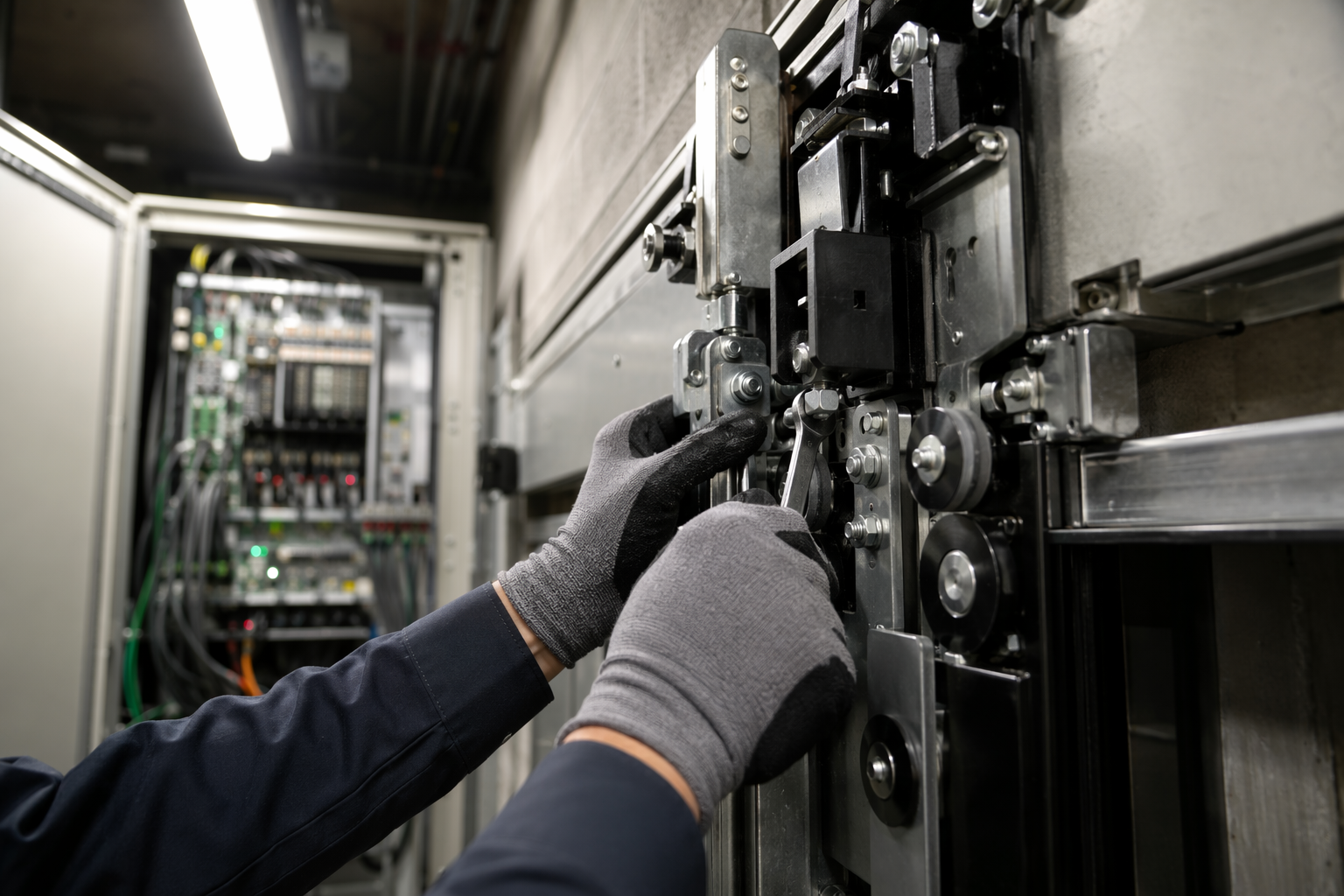
Elevator maintenance ROI refers to the measurable financial and operational return a building owner receives from investing in scheduled, preventive elevator service — relative to the costs of neglect, emergency breakdowns, liability exposure, and premature equipment replacement.
For commercial property owners and facility managers in markets like Houston, Dallas, Austin, San Antonio, Los Angeles, and San Diego, elevators are critical infrastructure. A single out-of-service elevator in a mid-rise office building or multifamily property can affect tenant satisfaction, lease renewals, ADA compliance standing, and liability — all of which carry real dollar consequences. Framing maintenance as an investment rather than a line-item expense is the first step toward understanding its true ROI.
The return is realized across several dimensions: avoided emergency repair costs, extended equipment lifecycle, reduced liability claims, continuous code compliance, and preserved property value. Each of these dimensions compounds over time, meaning the ROI of a disciplined maintenance program grows the longer it is sustained.
How does preventive elevator maintenance compare to reactive (break-fix) maintenance in cost terms?
Preventive maintenance consistently costs less over the life of the equipment than reactive break-fix service, because planned interventions address wear before it escalates into component failure or system shutdown.
Reactive maintenance — also called break-fix or corrective maintenance — means responding to a failure after it occurs. Emergency service calls, expedited parts procurement, and extended downtime all carry premium costs that are absent from a well-executed preventive program. When a controller board, hydraulic pump, or door operator fails unexpectedly, the repair cost can be several multiples of what routine inspection and lubrication would have prevented.
Beyond direct repair costs, reactive maintenance introduces indirect costs: tenant complaints and lease-nonrenewal risk, potential ADA non-compliance periods, and mandatory re-inspections by the authority having jurisdiction (AHJ). A proactive maintenance schedule eliminates most of these variables and gives facility managers predictable budgeting.
What does a typical elevator preventive maintenance program include?
A structured preventive maintenance program covers mechanical, electrical, and safety systems on a defined schedule — typically monthly, quarterly, semi-annual, and annual intervals — as guided by manufacturer specifications and applicable codes.
Core service activities include:
- Lubrication and adjustment of guide rails, rollers, cables, and door mechanisms
- Inspection of safety devices including governor, safeties, buffers, and interlocks
- Controller and drive diagnostics to identify error codes and component degradation
- Door operator calibration for timing, force limits, and obstruction detection
- Hydraulic fluid inspection (for hydraulic units) for contamination, level, and leak detection
- Machine room environmental checks for temperature, humidity, and cleanliness
- Code compliance verification against the ASME A17.1 Safety Code for Elevators and Escalators and applicable state regulations
Full-service maintenance contracts typically include parts and labor for covered components, which further stabilizes operating budgets and removes cost unpredictability from the equation.
How does elevator maintenance impact equipment lifespan?
Regular preventive maintenance measurably extends the functional lifespan of elevator equipment, deferring the substantial capital expenditure of a full modernization or replacement by years.
Elevators are engineered for long service lives, but that longevity is conditional on consistent care. Components such as wire ropes, bearings, door operators, and hydraulic cylinders deteriorate at an accelerated rate when lubrication, adjustment, and inspection are deferred. When these components fail prematurely, the cascade effect can damage adjacent systems — turning a minor wear issue into a major mechanical repair or even a full controller replacement.
A modernization project for a mid-rise commercial elevator represents a significant capital investment. Extending the interval between modernizations through disciplined maintenance is one of the most direct and quantifiable ROI outcomes a building owner can achieve. Properly maintained older equipment can remain safe, code-compliant, and operationally reliable well beyond what neglected equipment of the same vintage would allow.
What are the compliance consequences of deferred elevator maintenance?
Deferred maintenance creates real risk of failing state-mandated inspections, triggering elevator shutdown orders, ADA violations, and potential liability exposure — all of which carry direct financial penalties and operational disruption.
In Texas, elevators are regulated under the Texas Department of Insurance (TDI) Elevator Safety Program, which enforces inspection and testing requirements aligned with the ASME A17.1 Safety Code for Elevators and Escalators. In California, the Division of Occupational Safety and Health (Cal/OSHA) under the OSHA framework enforces the California Elevator Safety Construction and Maintenance Code.
When an elevator fails an annual inspection or a complaint-driven inspection, the AHJ can issue a shutdown order — removing the unit from service until deficiencies are corrected and a re-inspection is passed. In multi-story buildings with a single elevator, this can trigger ADA accessibility violations under the Americans with Disabilities Act, which requires that accessible routes remain functional. Litigation risk, tenant claims, and regulatory fines compound the direct repair costs. Preventive maintenance that keeps equipment in continuous compliance is the most effective way to avoid this chain of consequences.
How does elevator downtime affect building revenue and tenant retention?
Elevator downtime directly threatens tenant satisfaction, occupancy rates, and lease renewals — particularly in commercial office, multifamily, and healthcare facilities where vertical transportation is essential to daily operations.
In a multi-story office building, an elevator outage reduces the effective utility of upper floors. Tenants with mobility limitations lose access entirely, creating immediate ADA concerns. In multifamily residential properties, elevator downtime is frequently cited in negative reviews and lease termination conversations. In retail and hospitality environments, the guest experience impact is immediate and visible.
The relationship between elevator reliability and property value is well-recognized in the commercial real estate sector. Facilities managers and asset managers who track elevator uptime as a KPI consistently find that maintenance investment correlates with reduced unplanned downtime — and that unplanned downtime carries a cost well in excess of the maintenance spend that would have prevented it.
What is the ROI of elevator safety compliance for liability protection?
Maintaining code-compliant elevator systems substantially reduces a building owner’s liability exposure from injury claims, regulatory fines, and ADA enforcement actions — representing a category of risk-avoidance ROI that is often underestimated.
Elevator-related personal injury claims are among the more serious premises liability exposures for property owners. Courts and insurance carriers examine maintenance records, inspection certificates, and service logs when evaluating negligence claims. A well-documented maintenance history demonstrating regular inspections, prompt deficiency corrections, and continuous compliance with the ASME A17.1 Safety Code for Elevators and Escalators is a meaningful defense in litigation and supports favorable insurance underwriting.
Conversely, gaps in the maintenance record, expired inspection certificates, or documented deferred repairs are evidentiary liabilities. Insurance carriers may also adjust premiums or coverage terms based on elevator maintenance practices. The cost of a single substantial liability claim, even if defended successfully, can dwarf years of maintenance investment.
How do I calculate the ROI of my elevator maintenance program?
Calculating elevator maintenance ROI requires comparing the total cost of a preventive maintenance program against the avoided costs of emergency repairs, downtime losses, compliance penalties, and accelerated replacement that would occur without it.
A practical ROI framework includes the following steps:
- Establish the baseline maintenance cost — the annual cost of your current or proposed preventive maintenance contract, including parts coverage.
- Estimate avoided emergency repair costs — document the frequency and cost of emergency call-outs in prior years and project the reduction a preventive program would deliver.
- Quantify downtime costs — estimate the revenue or productivity loss per hour of elevator downtime, multiplied by the hours avoided through reliable maintenance.
- Assess deferred modernization value — if preventive maintenance extends the equipment lifecycle by a meaningful period, calculate the time-value of deferring that capital expenditure.
- Factor in compliance and liability risk reduction — work with your insurance broker and legal counsel to estimate the value of reduced liability exposure and any premium adjustments tied to documented maintenance compliance.
- Sum avoided costs and compare to maintenance investment — the resulting ratio is the maintenance ROI for your specific building profile.
This analysis is most accurate when built on actual service history data. AmeriTex Elevator provides detailed service reporting to clients across Houston, Dallas, Austin, San Antonio, Los Angeles, and San Diego — giving property managers the documentation they need to perform this calculation accurately.
What elevator maintenance benchmarks should building owners use?
Industry-recognized maintenance benchmarks help building owners set performance expectations, evaluate service contracts, and identify when equipment may be approaching the threshold where maintenance ROI diminishes relative to modernization investment.
| Benchmark Category | General Industry Guidance | Notes |
|---|---|---|
| Preventive maintenance visit frequency (traction elevators) | Monthly | High-use commercial applications; may vary by manufacturer specification |
| Preventive maintenance visit frequency (hydraulic elevators) | Quarterly to monthly | Depends on usage level, age, and local AHJ requirements |
| Annual safety test (Category 1) | Annually | Required under ASME A17.1; enforced by state AHJ in TX and CA |
| Category 5 (full-load, full-speed safety test) | Every 5 years | ASME A17.1 requirement; timing enforced by local AHJ |
| Hydraulic pressure/relief valve test | Annually | Required under ASME A17.1 for hydraulic units |
| Wire rope inspection | Ongoing per PM visit; formal inspection annually | Critical safety component; condition affects modernization timing |
| Controller/drive modernization threshold | Typically 20–25 years of service | Varies by manufacturer; parts obsolescence is a key driver |
| Full elevator modernization interval | 25–40 years depending on equipment type and maintenance history | Properly maintained equipment reaches the upper end of this range |
What elevator maintenance tasks are required by ASME A17.1?
The ASME A17.1 Safety Code for Elevators and Escalators establishes minimum maintenance, inspection, and testing requirements that are legally enforceable in Texas and California through their respective state programs.
ASME A17.1, currently in its 2022 edition with ongoing updates into 2026, mandates that elevators be maintained in accordance with a defined maintenance control program (MCP). The MCP must specify the frequency of maintenance tasks, the qualifications of personnel performing them, and the documentation to be retained. Key required activities include periodic lubrication and adjustment, safety device testing, annual Category 1 testing, and five-year Category 5 testing for applicable equipment.
Critically, ASME A17.1 requires that maintenance records be retained and be available to the AHJ upon request. This documentation requirement reinforces the value of working with an established, certified elevator service company that maintains rigorous service records — a practice that directly supports compliance verification and liability defense.
How does elevator maintenance affect property insurance premiums?
Documented elevator maintenance history can positively influence commercial property and general liability insurance underwriting, as insurers use maintenance records to assess the risk profile of vertical transportation equipment.
Insurance carriers underwriting commercial properties with elevators evaluate the maintenance program as part of their risk assessment. Current inspection certificates, a complete service log, and evidence of timely deficiency correction all contribute to a favorable risk profile. Properties with gaps in maintenance documentation, expired permits, or a history of repeated emergency call-outs present a higher risk profile that can affect premium levels or coverage terms.
Building owners should discuss their elevator maintenance program with their insurance broker at each renewal cycle to ensure the value of their maintenance investment is reflected in their coverage terms. Comprehensive service documentation from a provider like AmeriTex Elevator supports this conversation with concrete, auditable records.
What is the ROI difference between full-service and oil-and-grease elevator maintenance contracts?
Full-service maintenance contracts — which include parts and labor for covered repairs — deliver higher and more predictable ROI than oil-and-grease (lubrication-only) contracts, because they absorb the cost of component replacements that would otherwise become unbudgeted expenses.
An oil-and-grease contract covers only basic lubrication and adjustment. Any repair or parts replacement is billed separately, often at premium rates. For aging equipment or high-use applications, this structure can result in maintenance costs that are highly variable and ultimately higher than a full-service contract would have been.
Full-service contracts shift the risk of component failure to the service provider, incentivizing the contractor to maintain equipment diligently to avoid absorbing repair costs. This alignment of incentives is a structural advantage of full-service agreements. Building owners evaluating contract types should compare not just the contract price but the full cost of ownership — including the expected frequency of repairs that fall outside a basic contract’s scope.
How should building owners evaluate elevator service providers to maximize maintenance ROI?
Maximizing maintenance ROI requires selecting a service provider with demonstrated technical competence, transparent reporting, responsive support, and a contractual structure that aligns their incentives with the building owner’s long-term equipment performance goals.
Key evaluation criteria include:
- Scope of contract — full-service versus oil-and-grease; what is and is not covered
- Service documentation — does the provider issue detailed written service reports after every visit?
- Code compliance support — does the provider manage annual inspection scheduling and permit renewals with the AHJ?
- Technician qualifications — are technicians trained and qualified to service your specific elevator manufacturer and model?
- Parts availability — can the provider source parts for your equipment, including older or legacy systems?
- Service coverage area — is the provider locally based with proximity to your building?
- References and tenure — can the provider demonstrate a track record with comparable properties in your market?
AmeriTex Elevator serves building owners and property managers across Houston, Dallas, Austin, San Antonio, Los Angeles, and San Diego — providing locally responsive service with the technical depth and documentation practices that support strong maintenance ROI.
How does elevator door maintenance specifically affect ROI?
Door system maintenance is disproportionately important to elevator ROI because door malfunctions account for the majority of service calls and are the most common cause of elevator downtime in commercial buildings.
Elevator door systems — including operators, hangers, sills, gibs, clutch mechanisms, and safety edges — operate under continuous, high-cycle stress. In a busy commercial building, a single elevator door may open and close hundreds of times per day. Without regular adjustment, lubrication, and component inspection, door timing drifts, safety devices lose sensitivity, and components fail — each triggering a service call.
Door-related failures also carry outsized ADA implications. The Americans with Disabilities Act requires that elevator doors remain open for sufficient time for a person with a disability to enter and exit safely, and that door reopening devices (safety edges and light curtains) function reliably. A failed safety edge not only creates an injury risk but constitutes an ADA compliance failure. Prioritizing door maintenance within a preventive program delivers immediate ROI through reduced call-out frequency and sustained ADA compliance.
What is the ROI impact of elevator modernization versus continued maintenance of aging equipment?
The decision between continued maintenance and modernization hinges on the point at which increasing maintenance costs, parts obsolescence, and energy inefficiency make modernization the more cost-effective path — a calculation that varies by equipment type, age, and usage profile.
Aging elevators do not automatically require replacement. Well-maintained equipment can remain safe and functional well into its third or fourth decade. However, several factors signal that the modernization tipping point is approaching:
- Parts for the controller or drive system are no longer manufactured, forcing costly custom fabrication or system replacement
- Maintenance costs are escalating year-over-year as more components reach end of life simultaneously
- The equipment cannot be brought into compliance with current code requirements (such as firefighter service, door protection, or accessibility provisions) through repair alone
- Energy consumption is significantly higher than modern variable-frequency drive (VFD) systems would deliver
- The AHJ has issued a compliance notice requiring upgrades that effectively mandate modernization
A qualified service provider can help building owners model the crossover point at which modernization delivers better ROI than continued maintenance of aging equipment. AmeriTex Elevator’s assessment process includes an equipment condition evaluation designed to give property managers the data they need to make this capital decision with confidence.
How do Texas elevator regulations affect maintenance ROI for Houston, Dallas, Austin, and San Antonio properties?
Texas elevator regulations under the Texas Department of Insurance (TDI) mandate annual inspections and specific testing intervals that create both compliance obligations and documentation requirements that directly shape the maintenance program and its associated costs.
Texas requires all elevators to be inspected annually by a licensed elevator inspector. The inspection verifies compliance with the ASME A17.1 Safety Code for Elevators and Escalators as adopted by the state. Failed inspections result in shutdown orders, and re-inspection fees add to the cost of non-compliance. Building owners in Houston, Dallas, Austin, and San Antonio who maintain a current, well-documented preventive maintenance program consistently experience smoother annual inspections, fewer correction notices, and lower total compliance costs.
The TDI also maintains a public database of elevator inspection records, meaning that prospective tenants and buyers can review the compliance history of elevators in a building they are considering. A clean inspection record is a tangible asset; a pattern of failures and shutdowns is a visible liability. Proactive maintenance that ensures the elevator is inspection-ready at all times protects both operational continuity and market perception.
How do California elevator regulations affect maintenance ROI for Los Angeles and San Diego properties?
California’s Division of Occupational Safety and Health (Cal/OSHA) enforces the California Elevator Safety Construction and Maintenance Code, which imposes rigorous inspection and maintenance requirements that carry significant penalties for non-compliance in Los Angeles and San Diego markets.
California is among the most stringent states for elevator regulation. Cal/OSHA conducts permit issuance, inspection oversight, and enforcement for conveyances throughout the state. Elevators must hold current permits, and permit renewal is contingent on passing periodic inspections. Permit lapses can result in mandatory shutdown and fines. The OSHA framework that Cal/OSHA operates within also creates employer and building owner obligations related to worker safety in machine rooms and elevator hoistways.
For commercial property owners in Los Angeles and San Diego, the density of regulatory oversight means that maintenance gaps carry a higher likelihood of enforcement action than in less actively inspected jurisdictions. Partnering with a service provider that manages permit compliance, inspection scheduling, and deficiency remediation as part of the maintenance program is particularly valuable in the California market context.
What role does elevator energy efficiency play in maintenance ROI?
Energy efficiency is an increasingly significant component of elevator ROI, as modern drive systems, lighting upgrades, and operational programming can meaningfully reduce electricity consumption — delivering ongoing operational savings that compound over time.
Hydraulic elevators, in particular, are energy-intensive compared to modern traction systems with variable-frequency drives (VFDs). Machine room lighting, standby mode behavior, and pump motor efficiency all affect the energy draw of a building’s elevator system. Maintenance activities that keep drive systems calibrated and operating at design efficiency contribute to energy performance. Modernization of drive systems to VFD technology is one of the most energy-impactful upgrades available for older traction elevators.
In California, where commercial energy costs are among the highest in the nation and sustainability reporting is increasingly required for institutional and Class A properties, elevator energy efficiency has moved from a secondary consideration to a material factor in total cost of ownership analysis. In Texas markets, where energy costs fluctuate and ESG reporting pressure is growing among institutional landlords, the same logic applies with increasing force.
What documentation should building owners maintain to support elevator maintenance ROI claims?
Maintaining comprehensive elevator service documentation is essential to substantiating ROI, supporting insurance underwriting, demonstrating ADA and code compliance, and providing evidentiary protection in the event of a liability claim.
Best-practice documentation for a well-managed elevator program includes:
- Current operating permit and inspection certificate posted in or near the elevator cab (required by state regulations in Texas and California)
- Signed service reports for every preventive maintenance visit, documenting work performed, components adjusted or replaced, and technician identity
- Records of all emergency service calls, including date, nature of the complaint, corrective action taken, and return-to-service status
- Annual and Category 5 test reports with AHJ sign-off
- Maintenance Control Program (MCP) documentation as required under ASME A17.1
- Records of any deficiency notices issued by the AHJ and documentation of their resolution
- Parts replacement and modernization records with dates and component descriptions
This documentation package is the physical evidence of maintenance ROI — it transforms the investment into a demonstrable, auditable asset rather than an intangible claim.
When is the right time to conduct an elevator maintenance ROI assessment for my building?
The optimal time to conduct an elevator maintenance ROI assessment is before renewing or entering a maintenance contract, following a pattern of increased service calls or failures, or when planning a capital budget cycle — allowing data-driven decisions rather than reactive spending.
Specific triggers that indicate an ROI assessment is overdue include: a service contract approaching renewal with no competitive evaluation in recent years, a recent inspection failure or shutdown order, escalating emergency call-out frequency, a modernization proposal from the current service provider, or a change in building ownership or management. In each of these situations, an objective assessment of the elevator’s current condition, the performance of the existing maintenance program, and the cost trajectory of continued maintenance versus modernization provides the information needed to make financially sound decisions.
AmeriTex Elevator offers free elevator assessments for property owners and managers in Houston, Dallas, Austin, San Antonio, Los Angeles, and San Diego — providing a professional condition evaluation and maintenance program review designed to help building owners understand exactly where they stand and what their options are.
Need elevator service you can rely on? AmeriTex Elevator is ready to help.