Elevator Service in Houston, TX | AmeriTex Elevator
Hotels in California are required to maintain their elevators in safe operating condition and submit to state-mandated inspections administered through California’s elevator safety program. This page explains which inspection intervals apply, what maintenance obligations hotel owners carry, how federal accessibility standards intersect with state law, and how to keep a hotel elevator fleet in continuous compliance in 2026.
—
What State Agency Governs Hotel Elevator Inspections in California?
California’s elevator safety program is administered by the Division of Occupational Safety and Health (Cal/OSHA), operating under the California Department of Industrial Relations (DIR). Within Cal/OSHA, the Elevator, Ride and Tramway Unit (ERTB) is responsible for permitting, inspecting, and enforcing elevator safety standards across the state — including elevators installed in hotels, motels, and resort properties.
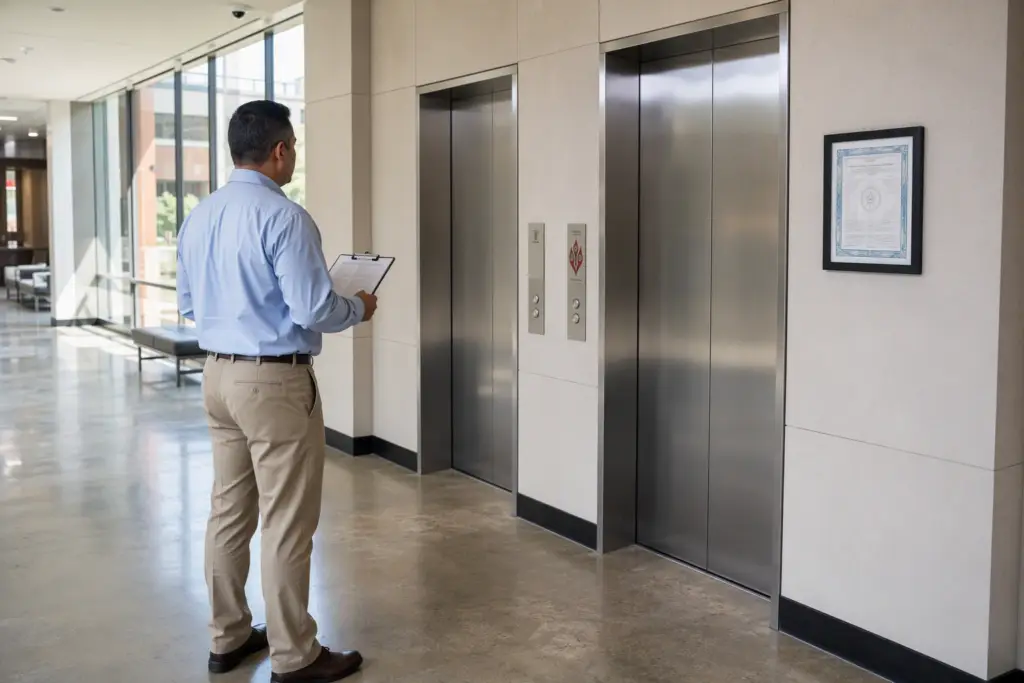
Before any elevator in a California hotel may be placed into service, the owner must obtain a Permit to Operate from the ERTB. That permit must be renewed on a schedule tied to inspection intervals, and it must be posted in or near the elevator car at all times. Hotels that allow guests to use an elevator without a valid posted permit are subject to civil penalties and potential shutdown orders.
The base technical standard referenced by California’s program is the ASME A17.1 Safety Code for Elevators and Escalators for new installations and the ASME A17.3 Safety Code for Existing Elevators and Escalators for equipment already in service. California adopts and enforces these standards as part of its Title 8 regulations governing elevators.
—
How Often Must Hotel Elevators Be Inspected in California?

California requires that conveyances subject to the elevator safety program — including traction, hydraulic, and other passenger elevators found in hotels — undergo periodic inspections at intervals established by Cal/OSHA. The frequency of required inspections is set by state regulation and is tied to the type of conveyance and its usage classification.
In addition to state-mandated periodic inspections, California hotels are expected to maintain a documented routine maintenance program between inspections. Regulatory inspections alone do not satisfy a hotel’s duty of care; ongoing maintenance is a separate, continuous obligation that falls on the equipment owner.
Hotels should be aware that Cal/OSHA may also conduct complaint-driven or incident-triggered inspections at any time, separate from the scheduled periodic cycle. A guest complaint, entrapment, or reported malfunction can initiate an unscheduled inspection and may result in a temporary shutdown order until corrective repairs are verified.
—
What Maintenance Obligations Apply to California Hotel Elevator Owners?
Under California’s elevator safety framework, the owner of a hotel elevator — not merely the maintenance contractor — bears legal responsibility for keeping the equipment in safe operating condition. This creates several practical obligations:
- Written maintenance records: California requires that maintenance records be kept and be available for review by ERTB inspectors. Records should document all routine maintenance visits, lubrication, adjustments, and repairs.
- Qualified maintenance personnel: Elevator maintenance in California must be performed by qualified elevator mechanics. California requires elevator mechanics to hold a state certification, and contractors performing maintenance must be licensed accordingly.
- Prompt defect correction: When an inspection — whether by a state inspector or a private qualified inspector — identifies a deficiency, the hotel owner is responsible for arranging timely corrective work. Operating an elevator with a known cited deficiency exposes the owner to significant liability.
- Entrapment response plan: Hotels should have a documented procedure for responding to passenger entrapments, coordinating with a qualified elevator service provider who can perform emergency releases in compliance with ASME A17.1 emergency operation requirements.
- Accurate permit posting: The current Permit to Operate must remain posted in the elevator. Failure to maintain a current permit is an independent violation regardless of the elevator’s mechanical condition.
—
Do ADA Requirements Apply to Hotel Elevators in California?
Yes. Hotels open to the public are places of public accommodation subject to Americans with Disabilities Act (ADA) requirements. The ADA Standards for Accessible Design establish minimum requirements for elevator cab dimensions, door width and timing, control panel height and button specifications, floor call buttons, tactile and Braille signage, and audible signals.
For hotels undergoing renovation or adding new elevator equipment in 2026, ADA requirements must be incorporated into the project design from the start. Alterations that affect usability can trigger path-of-travel obligations, potentially requiring accessible upgrades to adjacent areas as well.
California also has its own accessibility standards under the California Building Code (CBC) and the Unruh Civil Rights Act, which in some respects exceed federal ADA minimums. Hotel owners should confirm that elevator accessibility is evaluated against both federal and California-specific standards during any compliance review.
—
What Happens If a Hotel Elevator Fails a California Inspection?
When a California elevator fails a state inspection, the ERTB inspector issues a written notice of violation identifying each deficiency. Depending on the severity of the findings, the inspector may:
- Issue a correction order specifying the deficiencies and a required correction deadline.
- Place the elevator out of service by red-tagging or revoking the Permit to Operate, if conditions present an imminent hazard to passengers.
- Require a follow-up inspection after corrections are made before the Permit to Operate is reinstated.
- Refer the matter for civil penalties if the hotel has operated the elevator without a valid permit or failed to correct previously cited violations.
A hotel that loses a Permit to Operate for a guest-accessible elevator must immediately take that elevator out of service. Continuing to allow guest use of a red-tagged elevator is a serious regulatory and liability exposure. Engaging a qualified elevator contractor promptly after a failed inspection is critical to minimizing downtime and restoring compliance.
—
How Do Hotels Select a Qualified Elevator Maintenance Contractor in California?
California requires that elevator contractors performing maintenance, repair, and inspection work hold appropriate state licensure. When evaluating contractors, hotel facilities managers should verify:
- The contractor holds a valid California elevator contractor license in good standing.
- Mechanics dispatched to the property hold California elevator mechanic certifications.
- The contractor is familiar with the specific equipment brands and drive types installed in the hotel — traction, hydraulic, machine-room-less, or otherwise.
- The contractor can provide references from comparable hotel or hospitality accounts where they manage ongoing maintenance programs.
- Emergency service availability is offered, ensuring that entrapments and critical failures can be addressed on a priority basis.
- The contractor provides clear written maintenance agreements that specify scope, visit frequency, and record-keeping practices that support Cal/OSHA compliance.
AmeriTex Elevator serves hotel and hospitality clients and brings deep familiarity with California’s elevator regulatory environment, helping hotel teams navigate ERTB requirements, maintain current permits, and keep guest-accessible elevators running safely.
—
What Should Hotels Do Immediately After an Elevator Entrapment or Incident?
- Contact emergency services if passengers are in distress, injured, or require medical attention.
- Notify your elevator maintenance contractor so a qualified mechanic can perform the emergency release procedure in accordance with ASME A17.1 emergency operation requirements — do not attempt an unauthorized manual release.
- Take the affected elevator out of service and post an out-of-service notice for guest safety.
- Document the incident in writing, including the time, number of passengers, nature of the malfunction, and all actions taken.
- Report to Cal/OSHA’s ERTB if the incident meets the threshold for mandatory reporting under California regulations (injuries, entrapments, or incidents involving significant mechanical failure may trigger reporting obligations).
- Retain all maintenance and inspection records related to the elevator, as they may be requested by the ERTB or by legal counsel in connection with any follow-up investigation.
- Do not return the elevator to service until a qualified elevator mechanic has inspected the equipment, identified the root cause, made necessary repairs, and confirmed the elevator is safe for passenger use.
—
Does OSHA Play a Role in Hotel Elevator Safety in California?
Federal OSHA standards address elevator safety primarily in the context of worker protection during maintenance, construction, and repair activities. For hotel operations, OSHA requirements apply to the safety of employees — including housekeeping, maintenance, and engineering staff — who work in elevator machine rooms or perform tasks adjacent to elevator shafts and equipment.
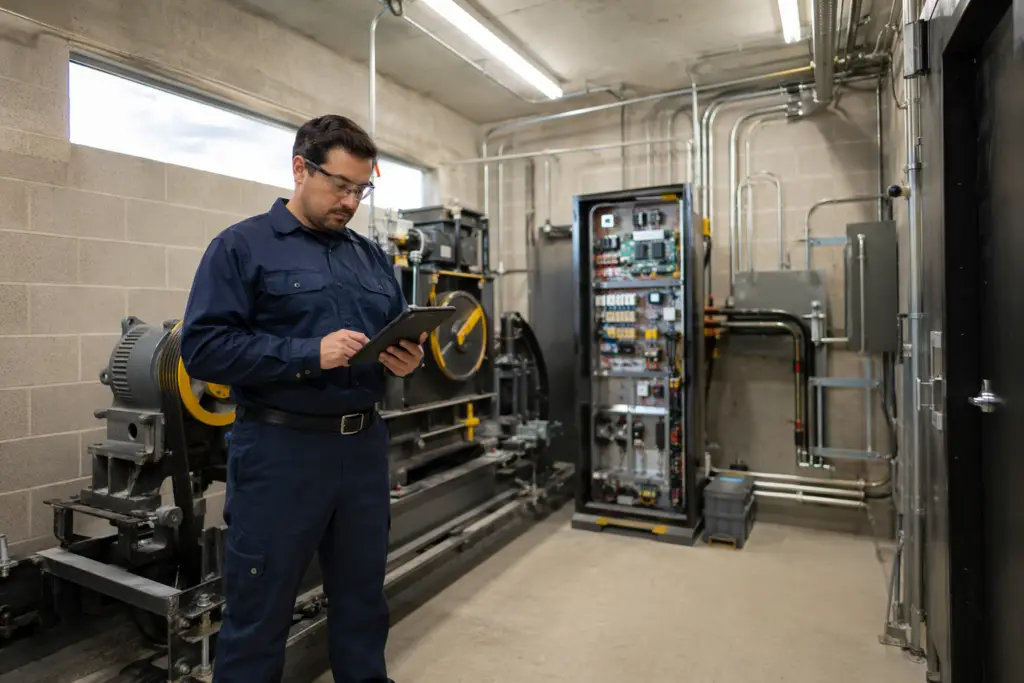
In California, Cal/OSHA operates a state plan that covers both public and private sector workers and has authority over elevator safety for workers as well as the public. Hotel employers should ensure that any staff who access elevator machine rooms or perform any elevator-related tasks receive appropriate training and that machine room access is restricted to authorized personnel in compliance with applicable OSHA and Cal/OSHA requirements.
—
How Can AmeriTex Elevator Support Hotel Elevator Compliance in California?
AmeriTex Elevator provides elevator maintenance, inspection coordination, repair, and modernization services to hotel and hospitality properties. The AmeriTex team assists hotel clients in understanding their obligations under California’s elevator safety program, organizing maintenance records to support ERTB compliance, and developing proactive maintenance schedules designed to reduce unplanned outages and support uninterrupted guest service.
AmeriTex Elevator is available for emergency service when hotel elevators experience critical failures or entrapments, offering priority response to minimize disruption to hotel operations and guests. The team is experienced with the full range of elevator types and manufacturers commonly found in California hotel properties.
Hotels seeking a maintenance partner who understands California’s regulatory requirements — from Permit to Operate obligations to ASME code compliance — are encouraged to reach out for a no-obligation consultation.
—
Schedule a Free Consultation
Keep your hotel elevators compliant, safe, and operating at peak performance. Contact AmeriTex Elevator today to discuss a maintenance program tailored to your California hotel property’s needs.
Call AmeriTex Elevator: 866-679-4313
Need elevator service you can rely on? AmeriTex Elevator is ready to help.