What Elevator Code Changes Are Coming in 2027 That My Building Needs to Prepare For?
Several significant elevator code updates take effect or become enforceable in many U.S. jurisdictions by 2027, drawn from the most recent editions of the ASME A17.1 Safety Code for Elevators and Escalators and coordinated state adoptions. Buildings in Texas and California — particularly those served by AmeriTex Elevator in Houston, Dallas, Austin, San Antonio, Los Angeles, and San Diego — face specific regulatory timelines that demand proactive planning, budgeting, and phased retrofits beginning no later than early 2026.
Which specific ASME A17.1 provisions are expected to be enforced by 2027?
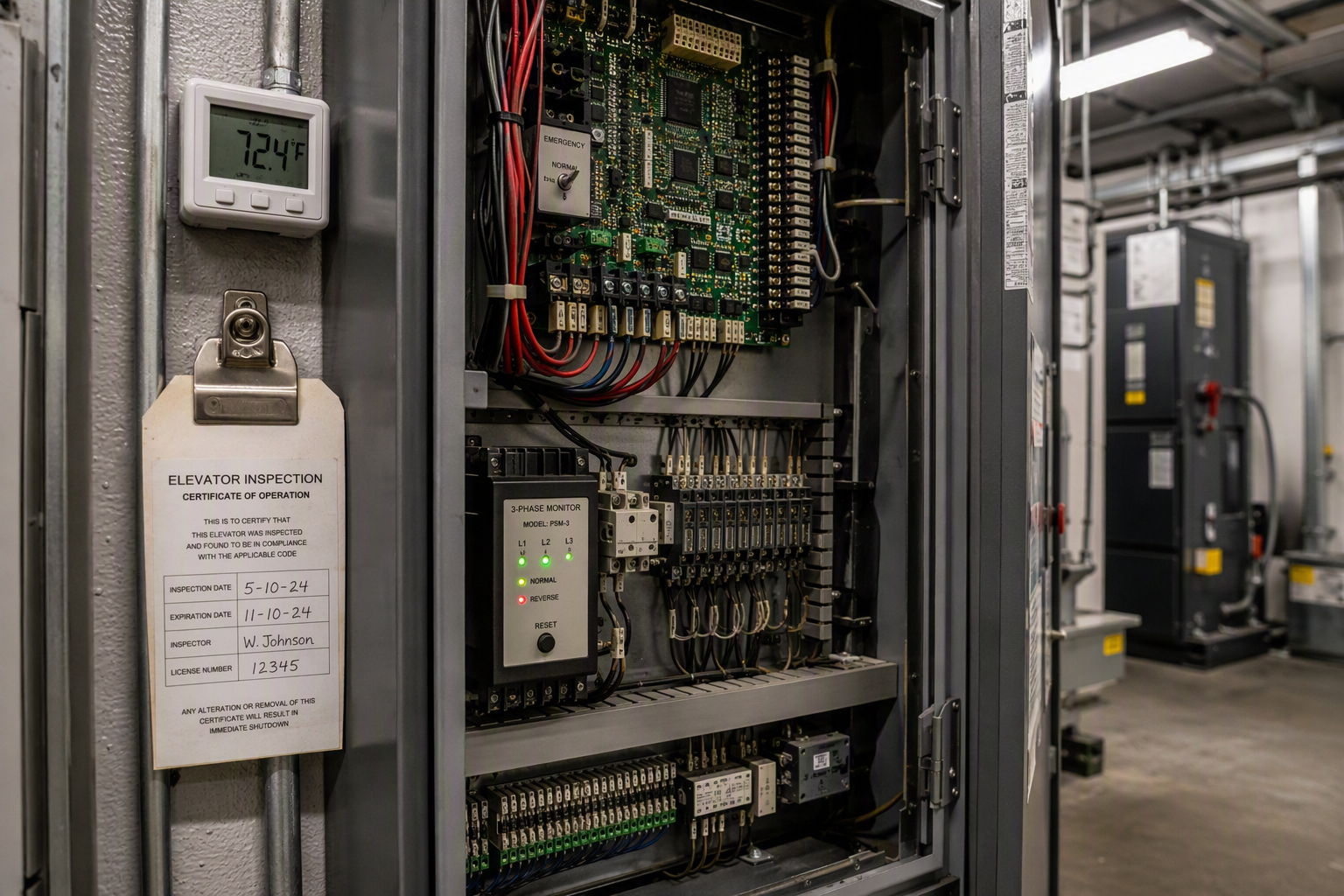
The 2025 edition of ASME A17.1, which most jurisdictions adopt on a one-to-three-year lag, introduces or strengthens requirements around door reopening devices, firefighters’ emergency operation, remote monitoring, machine room conditions, and seismic provisions.
The ASME A17.1 Safety Code for Elevators and Escalators is updated on a regular cycle, and individual states adopt each edition at different intervals. By 2027, jurisdictions that have not yet adopted the 2022 or 2025 editions will face increasing pressure — and in many cases regulatory mandates — to enforce the newer provisions. Key enforceable areas include:
- Upgraded door reopening device sensitivity and response-time tolerances
- Phase I and Phase II firefighters’ emergency operation system updates
- Requirements for uninterruptible power or standby power in high-rise buildings
- Machine room temperature control thresholds to protect modern solid-state controllers
- Enhanced seismic design requirements in Seismic Design Categories C, D, E, and F
- Remote monitoring and communication device compatibility for two-way communication systems
Building owners should not wait for a jurisdiction’s formal adoption notice. The lead time for sourcing parts, scheduling inspections, and completing retrofits routinely exceeds twelve months for multi-elevator facilities.
How do Texas elevator code adoption timelines affect my compliance deadlines?
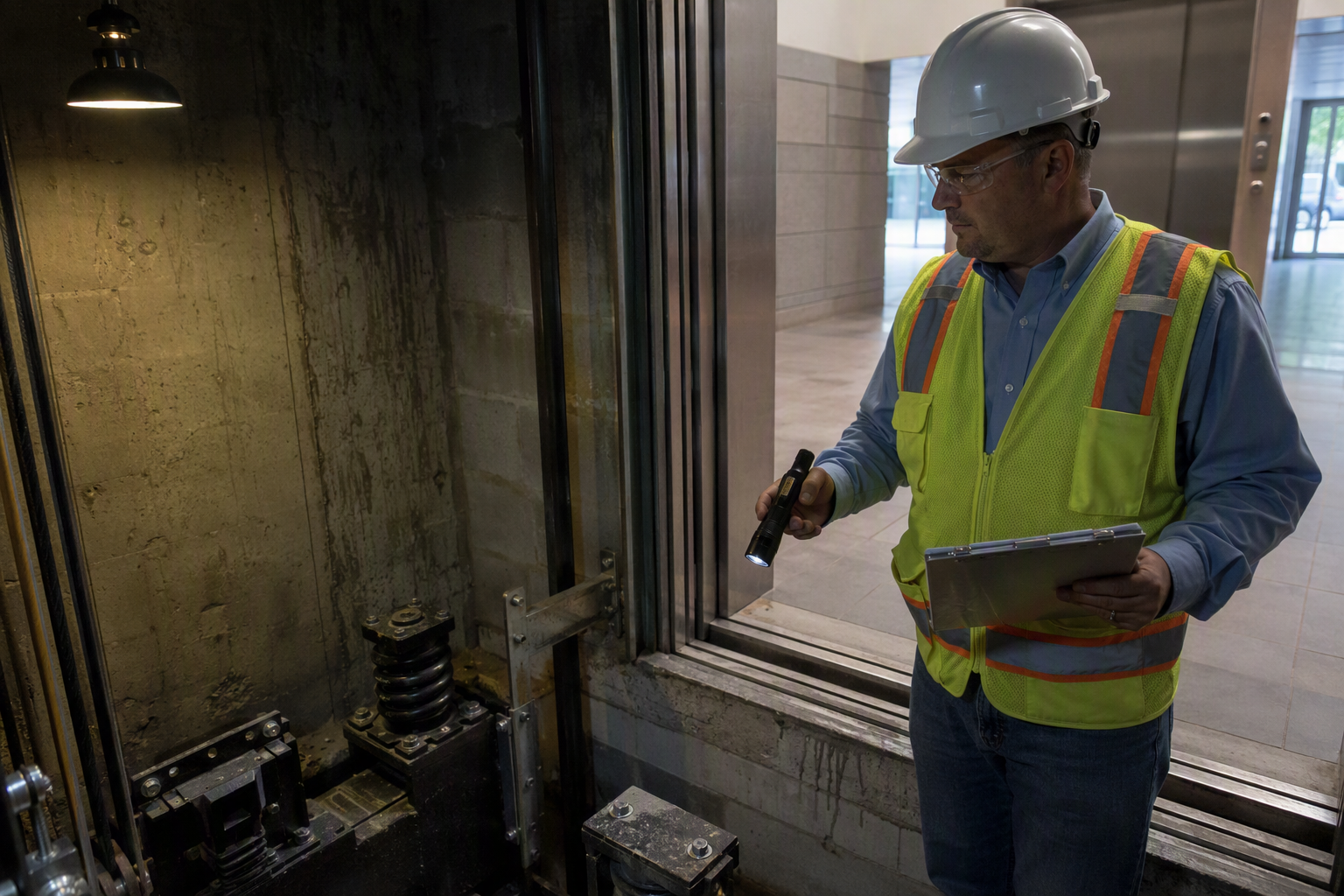
Texas adopts ASME A17.1 through the Texas Department of Insurance (TDI) Elevator Safety Program, and buildings in Houston, Dallas, Austin, and San Antonio must comply with whichever edition TDI has officially adopted at the time of their scheduled inspection.
The Texas elevator safety program enforces compliance at the time of annual inspection. When TDI formally adopts a newer ASME edition — which can happen with limited advance notice — existing installations may be required to bring deficient components into compliance within a specified correction window, often ranging from thirty to ninety days for life-safety items. Because Texas is a high-enforcement state for elevator safety, building managers in Houston, Dallas, Austin, and San Antonio should treat 2026 as their effective preparation year for any code changes expected to be adopted by 2027.
How does California elevator code adoption affect buildings in Los Angeles and San Diego?
California enforces elevator safety through the Division of Occupational Safety and Health (Cal/OSHA) Elevator, Ride, and Tramway Unit, and the state has historically been among the earliest adopters of updated ASME A17.1 editions.
Buildings in Los Angeles and San Diego operate under California’s Title 8 regulations, which incorporate ASME A17.1 provisions. California additionally enforces seismic requirements that exceed baseline ASME standards in many areas of the state, given the state’s high seismic hazard classification. For Los Angeles and San Diego building owners, this means seismic snubbers, car tie-downs, rope isolation systems, and counterweight safeties may require inspection or upgrade by 2027 depending on the installation year and prior retrofit history. AmeriTex Elevator provides assessments specifically structured to address the combined California and ASME compliance landscape.
What are the door reopening device requirements changing in the updated code?
Updated ASME A17.1 provisions tighten performance specifications for door reopening devices, requiring that safety edges and light curtains detect obstructions within defined response-time tolerances and reverse door travel without contact or with minimal contact force.
Older light curtain arrays with limited vertical detection zones — particularly those that only detect obstructions at mid-door height — may no longer satisfy updated detection envelope requirements. Full-height detection curtains, which cover from near floor level to near the top of the door opening, are increasingly specified. Buildings with aging door equipment dating from the 1990s or early 2000s should budget for door operator and detector replacement as part of 2027 compliance planning. A professional assessment can confirm whether existing door equipment meets the performance thresholds required by the applicable code edition.
What firefighters’ emergency operation changes should building owners anticipate?
Phase I and Phase II firefighters’ emergency operation requirements in updated ASME A17.1 editions address key switch locations, signal timing, car lighting during emergency operation, and the behavior of elevators during fire alarm activation — all areas where older installations frequently fall short.
Specific areas of updated firefighters’ emergency operation requirements that affect existing installations include:
- Standardized key switch types compatible with fire department master keys
- Updated Phase I recall behavior when smoke detectors activate at multiple landings
- In-car lighting levels required to be maintained during Phase II operation
- Communication between the elevator controller and the building fire alarm system
Buildings that have not updated their firefighters’ service systems since original installation may face significant controller and wiring modifications. These are life-safety items that jurisdictions typically treat as priority corrections during inspections.
Are there new machine room environmental requirements coming?
Updated code provisions establish defined temperature and humidity ranges for elevator machine rooms, recognizing that modern variable-frequency drives (VFDs), programmable controllers, and solid-state components are sensitive to heat and moisture in ways that older relay-logic systems were not.
Where older installations relied on passive ventilation, updated provisions may require active HVAC or dedicated cooling equipment in machine rooms. Building owners should audit machine room conditions — particularly in older commercial buildings in climates like Houston and San Antonio where summer temperatures can stress electrical equipment — and consult with their elevator service provider about whether existing ventilation meets current or incoming code thresholds.
What seismic code requirements are affecting elevator compliance in 2027?
ASME A17.1 includes seismic requirements for elevators installed in Seismic Design Categories (SDC) C through F, and California’s Title 8 regulations impose additional seismic provisions specifically applicable to Los Angeles and San Diego buildings.
For existing installations, seismic compliance retrofits may include:
- Rope retainer guards to prevent ropes from jumping sheave grooves during ground motion
- Counterweight guards or derailment protection
- Seismic switches that halt elevator operation when motion exceeds a specified threshold
- Guide rail bracket reinforcement to withstand lateral seismic forces
- Car and counterweight tie-down systems for traction elevators
California building owners in Los Angeles and San Diego should request a seismic compliance review as a distinct component of any 2027 code-readiness assessment, as seismic deficiencies are among the more capital-intensive retrofits to address.
What ADA compliance requirements should elevator-owning buildings review for 2027?
The Americans with Disabilities Act (ADA) sets accessibility standards for elevators in commercial facilities, covering car dimensions, control button height and tactile markings, audible signals, door dwell times, and two-way communication systems.
While the ADA itself does not change on the same cycle as ASME A17.1, enforcement priorities and building renovation triggers can bring older elevators into renewed compliance scrutiny. Any “alteration” to a building or elevator system triggers a requirement to bring the altered element — and in some cases the elevator serving it — into current ADA compliance. Building owners planning capital improvements in 2026 or 2027 should evaluate whether those projects constitute alterations that trigger ADA elevator upgrades, including:
- Braille and tactile button markings on all control panels
- Visual and audible floor-passing signals
- Door reopening dwell time compliance
- Two-way emergency communication accessible to people with hearing impairments
- Minimum car interior dimensions per ADA Standards for Accessible Design
What is the timeline for completing a compliant elevator retrofit before 2027?
Realistic retrofits for multi-elevator buildings require planning to begin no later than early 2026, given typical lead times for engineering assessments, equipment procurement, permit approval, and scheduled downtime.
A general sequence for 2027 compliance readiness:
- Commission a code gap assessment — an elevator professional evaluates each unit against the adopted or pending code edition for your jurisdiction (allow two to four weeks).
- Prioritize findings by life-safety classification — items classified as immediately hazardous, serious, or moderate risk are sequenced accordingly.
- Develop a scope of work and budget — work with your service provider to generate itemized estimates for parts, labor, and downtime.
- Submit permit applications — elevator retrofit permits in Texas and California typically require state or local authority approval before work begins (allow four to twelve weeks depending on jurisdiction).
- Order long-lead equipment — VFDs, door operators, controllers, and seismic components can carry six-to-twelve-month lead times from manufacturers.
- Schedule and execute retrofit work — coordinate downtime in phases to minimize building disruption, especially in multi-car installations.
- Schedule and pass compliance inspection — request the inspection from the relevant authority having jurisdiction (AHJ) after work is complete.
- Obtain updated certificate of inspection — ensure the certificate is posted in the elevator car as required by code.
AmeriTex Elevator structures its assessment process to support each of these steps for building owners in Houston, Dallas, Austin, San Antonio, Los Angeles, and San Diego.
How much do elevator code compliance retrofits typically cost?
Retrofit costs vary significantly based on the number of elevators, their age and existing condition, the specific code deficiencies identified, and the local permitting environment — a professional assessment is the only reliable basis for a cost estimate.
That said, building owners can use scope categories as a planning framework. Minor corrections such as button replacements, signage updates, or two-way communication device upgrades generally represent lower capital outlay than major mechanical retrofits such as door operator replacement, VFD installation, or seismic system upgrades. Full modernizations — where an aging elevator is brought comprehensively to current code — represent the highest investment but can eliminate recurring partial-retrofit costs over the building’s life. A written assessment from a certified elevator service company is the essential first step in any realistic budget process.
What is the difference between a code violation and a deficiency notice, and which is more urgent?
A code violation is a finding issued by the authority having jurisdiction (AHJ) that requires correction within a mandated timeframe, while a deficiency notice from a private inspector identifies a deviation from code that may become a violation if not corrected before the next inspection cycle.
Both require action, but violations carry enforcement consequences including elevator shutdown orders, fines, or certificate revocation if not corrected within the prescribed window. Deficiency notices from annual inspection reports are best treated with the same urgency as formal violations, since they will become violations when the jurisdiction adopts the relevant code edition or at the next inspection cycle. Building owners who receive either type of finding should contact their elevator service provider immediately to begin the correction process.
Do hydraulic elevators face different 2027 code requirements than traction elevators?
Yes — hydraulic elevators have distinct code provisions under ASME A17.1 related to their hydraulic fluid systems, cylinder integrity, and pit safety equipment that differ from traction elevator requirements and are subject to their own update cycle.
Key areas of hydraulic elevator compliance review for 2027 include:
- Hydraulic fluid type and fire resistance classification
- Cylinder integrity testing requirements and single-bottom cylinder phase-out considerations
- Pit stop switch and lighting compliance
- Rupture valve and pressure relief valve condition and certification
- Vented enclosures or secondary containment for underground cylinders
Single-bottom cylinders installed in older hydraulic elevators have been a subject of ongoing regulatory attention due to corrosion risk. Building owners with hydraulic elevators installed before the mid-1990s should specifically request a hydraulic system integrity review as part of any compliance assessment.
What remote monitoring requirements are emerging for elevators?
Updated ASME A17.1 provisions and growing insurance and risk management requirements are driving adoption of remote monitoring systems that can detect performance anomalies, door cycle irregularities, and entrapment conditions and transmit alerts without requiring a passenger to initiate contact.
Remote monitoring is not yet universally mandated for all existing installations, but it is increasingly specified in new construction and in modernization contracts, and some jurisdictions are moving toward requiring it in high-rise or high-traffic buildings. Additionally, updated two-way communication requirements under both ASME A17.1 and the ADA require that the two-way system in the elevator car be functional and connected to a location staffed around the clock or to an approved monitoring center. Building owners should audit their existing emergency communication systems to confirm they meet this requirement.
How does building age affect the scope of 2027 compliance work?
Buildings constructed before the mid-1990s that have not undergone elevator modernization typically face the broadest compliance gaps, because multiple successive ASME A17.1 editions have introduced requirements that were not retroactively enforced until adoption deadlines caught up with them.
| Installation Era | Typical Compliance Risk Level | Common Deficiency Areas | Recommended Action |
|---|---|---|---|
| Pre-1985 | High | Door detectors, Phase II firefighters’ service, seismic, hydraulic cylinders, ADA controls | Full modernization assessment; partial or full modernization likely |
| 1985–1999 | Medium-High | Door operators, machine room HVAC, remote monitoring, updated Phase I/II key switches | Targeted retrofit assessment; component upgrades likely |
| 2000–2012 | Medium | Two-way communication, ADA signage/Braille, seismic switches (CA), VFD compatibility | Code gap assessment; selective upgrades probable |
| 2013–2019 | Low-Medium | Minor ADA updates, communication device compatibility, machine room environment | Annual inspection review; targeted corrections |
| 2020–Present | Low | Generally current; monitor jurisdiction adoption of 2025 ASME edition | Maintain annual inspection schedule; monitor regulatory updates |
What should building managers do right now to prepare for 2027 elevator code changes?
The most effective immediate action is to commission a professional code gap assessment from a certified elevator service company and use the findings to build a phased compliance budget and timeline before equipment lead times and inspector scheduling become constraints.
A practical preparation checklist for building managers:
- Locate and review the most recent elevator inspection certificates and any outstanding deficiency reports for every elevator unit in the building.
- Confirm the current ASME A17.1 edition adopted by your jurisdiction (Texas TDI or California Cal/OSHA) and request your service provider’s assessment against that edition and the next.
- Identify the installation year and last major modernization date for each elevator — this determines baseline compliance risk.
- Request a written code gap assessment report with findings categorized by severity and estimated correction timeline.
- Submit findings to your insurance carrier and legal counsel — unaddressed code deficiencies affect liability exposure.
- Build a multi-year capital budget line item for elevator compliance, targeting completion of all life-safety items by mid-2026 to allow buffer before 2027 inspection cycles.
- Establish a maintenance agreement with a qualified elevator service company to ensure ongoing code monitoring, not just annual compliance snapshots.
How does elevator code compliance affect building liability and insurance?
Buildings with documented code violations or unaddressed inspection deficiencies face materially elevated liability exposure in the event of an elevator-related incident, and some commercial property insurers now require proof of current inspection certificates as a condition of coverage.
In both Texas and California, building owners owe a duty of care to elevator passengers that includes maintaining the equipment in a safe and code-compliant condition. Deficiency notices and prior inspection reports are discoverable documents in litigation. Proactive compliance — supported by documented assessment reports, completed retrofit records, and current inspection certificates — is the most defensible position a building owner can maintain. This is an area where working with a recognized service provider like AmeriTex Elevator, which operates across the primary Texas and California markets, provides both technical and documentation support.
What is the difference between annual inspection compliance and full code compliance?
Annual inspection compliance confirms that an elevator meets the code edition in effect at the time of inspection and is safe for continued operation, while full code compliance means the installation meets every applicable provision of the current adopted code edition — these are not always the same condition.
Annual inspections by the authority having jurisdiction (AHJ) typically focus on safety-critical items and may grandfather certain older equipment that does not pose an immediate hazard. Full code compliance is triggered by alterations, modernizations, or when a jurisdiction adopts a newer code edition and mandates retroactive compliance for specific items. Building owners should not assume a passing annual inspection means the elevator is current with all provisions of the most recently adopted or pending code edition. A targeted code gap assessment fills this gap.
Can building owners phase elevator compliance work to spread costs over multiple years?
Phasing is generally permissible for non-life-safety items and for categories of work where the jurisdiction’s adopted code allows a compliance window, but life-safety deficiencies typically require correction within mandated timeframes that cannot be extended through phasing.
A practical phasing strategy separates findings into three tracks:
- Immediate / life-safety: Must be corrected before or shortly after inspection; cannot be deferred.
- Short-term (within twelve months): Items flagged as serious or major that do not require immediate shutdown but must be corrected before the next inspection cycle.
- Planned (twelve to thirty-six months): Modernization or upgrade items that are anticipated in the next code edition adoption cycle, suitable for capital budget planning.
AmeriTex Elevator helps building owners in Houston, Dallas, Austin, San Antonio, Los Angeles, and San Diego structure phased compliance plans that align with both regulatory requirements and capital budget realities.
How does OSHA factor into elevator compliance for buildings with worker access?
The Occupational Safety and Health Administration (OSHA) regulates elevator safety as it applies to worker exposure, including requirements for elevator pit access safety, lockout/tagout procedures during maintenance, and safe access for elevator mechanics.
For building owners, OSHA compliance primarily concerns the conditions under which elevator maintenance and repair work occurs — pit lighting and access ladders, top-of-car clearances, machine room accessibility, and documentation of hazard communication. Buildings that fail to maintain these conditions can face OSHA citations independent of elevator inspection findings from the AHJ. An OSHA compliance review of pit and machine room conditions is a worthwhile component of any comprehensive 2027 readiness assessment.
How should building owners choose an elevator service company for 2027 compliance work?
Building owners should select an elevator service company that is familiar with the specific code editions adopted in their jurisdiction, employs mechanics trained to current ASME A17.1 standards, and can provide documented assessment reports — not just verbal findings.
Key evaluation criteria include:
- Familiarity with the authority having jurisdiction in the specific city or county
- Experience with the specific elevator types in the building (hydraulic, traction, MRL)
- Ability to provide written gap assessment reports with itemized findings
- Established relationships with equipment manufacturers for parts procurement
- Track record of obtaining permits and passing inspections in the relevant jurisdiction
- Transparent maintenance agreement terms with defined scope of service
AmeriTex Elevator operates across Houston, Dallas, Austin, San Antonio, Los Angeles, and San Diego and provides structured code gap assessments designed to give building owners a clear, documented picture of their compliance standing and a realistic path to 2027 readiness.
Where can building owners find authoritative information on elevator code requirements?
The primary authoritative sources for elevator code requirements are the ASME A17.1 Safety Code for Elevators and Escalators, the ADA Standards for Accessible Design, applicable state regulatory agency publications, and the authority having jurisdiction in the building’s locality.
For Texas buildings, the Texas Department of Insurance Elevator Safety Program publishes adopted code editions and compliance guidance. For California buildings, the Cal/OSHA Elevator, Ride, and Tramway Unit is the primary regulatory authority. Building owners should also subscribe to updates from their local building department and maintain a relationship with a qualified elevator service company that monitors regulatory developments as a routine part of their service offering. Regulatory adoption notices frequently arrive with shorter timelines than building owners anticipate, making an established service relationship the most reliable early-warning system available.
Need elevator service you can rely on? AmeriTex Elevator is ready to help.